


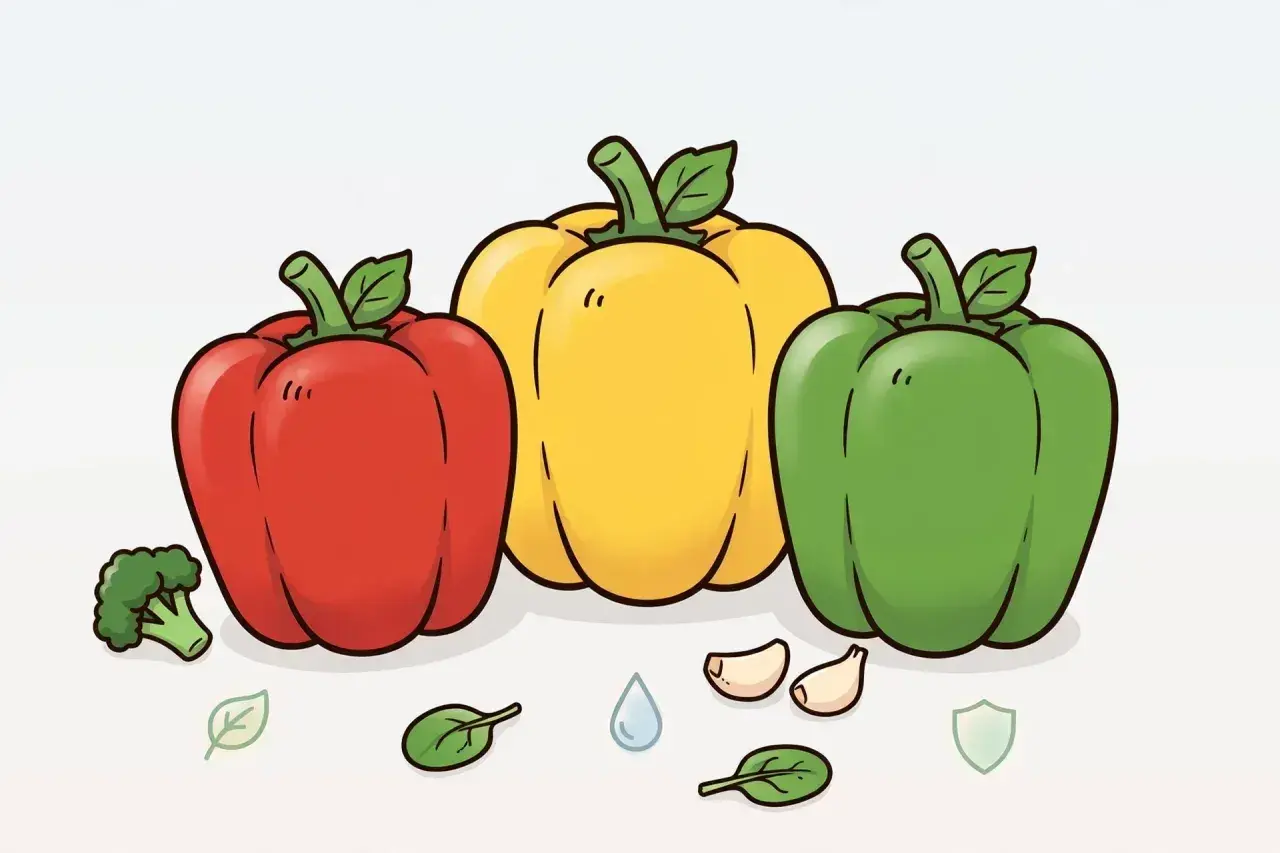

Bell peppers add color and a crisp texture to salads and japchae, a Korean stir-fried glass noodle dish. Their color can be more than just pleasing to the eye: it can also offer a clue to the nutrients they contain. Comparison data released by South Korea’s Rural Development Administration (농촌진흥청) showed that red bell peppers had the highest beta-carotene content among the four colors studied.
Background and context
The nutrients in bell peppers can vary by color. The source explains that a precursor to vitamin A—a substance that can be converted into vitamin A in the body—helps with vision in dim light, that some components help protect the retina, and that vitamin C improves iron absorption.
This explanation presents pepper color as a useful clue when considering their nutrients. However, the specific comparison results in the source are limited to beta-carotene in red bell peppers, so the nutritional benefits of peppers of other colors cannot be compared on the same basis.
Beta-carotene, which is abundant in red bell peppers, is a pigment that can be converted into vitamin A in the body. It is also a natural pigment that gives fruits and vegetables their yellow and orange colors.
What this news means
Considering color when choosing bell peppers may help people take the nutrients they are interested in into account. In particular, readers interested in beta-carotene can note that the comparison data showed red bell peppers had the highest content among the four colors. However, these results alone do not show that peppers of other colors have lower nutritional value, nor do they mean that choosing a particular color guarantees health benefits.
For example, someone choosing bell peppers with nutrients related to vision in dim light could use the fact that beta-carotene can be converted into vitamin A, along with the comparison result for red bell peppers, as a reference. However, the data do not provide beta-carotene amounts by color or the best way to eat bell peppers.
What is confirmed and what remains unknown
Confirmed facts
- Bell peppers add color and a crisp texture to salads and japchae.
- The nutrients in bell peppers can vary by color.
- In the Rural Development Administration’s comparison data, red bell peppers had the highest beta-carotene content among the four colors studied.
- Beta-carotene can be converted into vitamin A in the body.
- The source describes the role of vitamin A precursors in vision, the contribution of some components to retinal protection, and the role of vitamin C in improving iron absorption.
What remains unknown
- What are the specific nutrients and health benefits of bell peppers in colors other than red?
- What is the best way to consume bell peppers to get the most from their nutrients?
- What were the beta-carotene amounts for each color in the comparison data?
What readers can check
- When comparing nutritional information by bell pepper color, readers can check which nutrients the data cover and whether actual amounts are provided.
- The beta-carotene result for red bell peppers should be understood within the scope of the comparison among the four colors studied.
- To use information about vision or iron absorption, readers should check whether the source links those nutrients to bell peppers of a specific color. Based on the information provided, it is difficult to assess the benefits of colors other than red.