

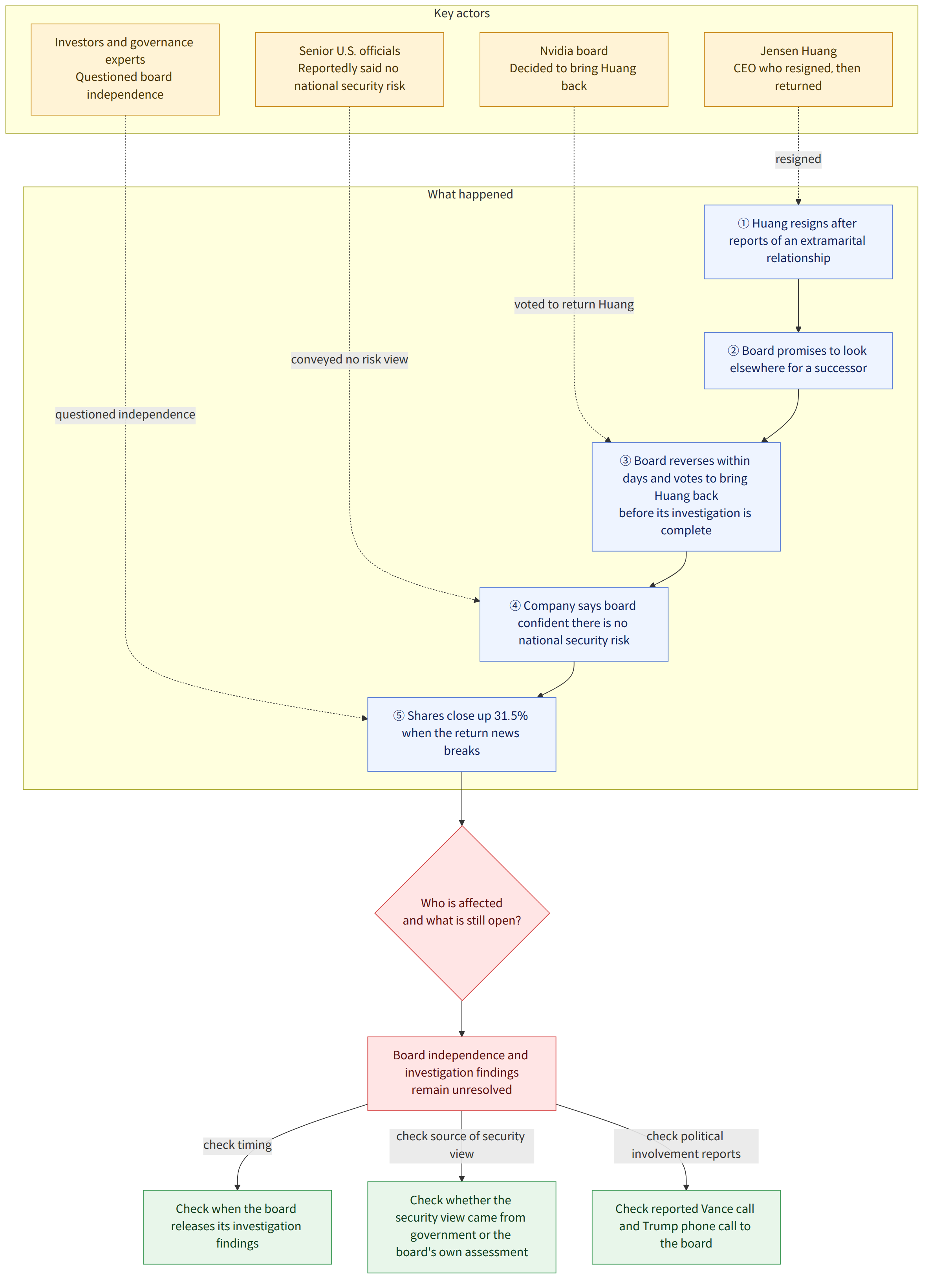
Nvidia’s board brought CEO Jensen Huang back, but because it made the decision before completing its own investigation into his conduct, questions have been raised about the board’s independence and decision-making process. Investors and corporate governance experts said the board had effectively vouched for Huang’s candor and fitness as CEO without waiting for the investigation’s findings. The company said that, after discussions with senior U.S. officials, the board was confident Huang’s return posed no national security risk. On Monday, when news of his return broke, Nvidia shares closed up 31.5%.
Background and context
Huang resigned on November 12 after reports emerged about an extramarital relationship. The reports included a relationship with someone suspected of being a Chinese spy. Other reports described a relationship with a woman alleged to have links to Chinese intelligence services, as well as allegations of an affair within the company. The fact that allegations and accusations were reported does not, by itself, mean that unlawful conduct has been established.
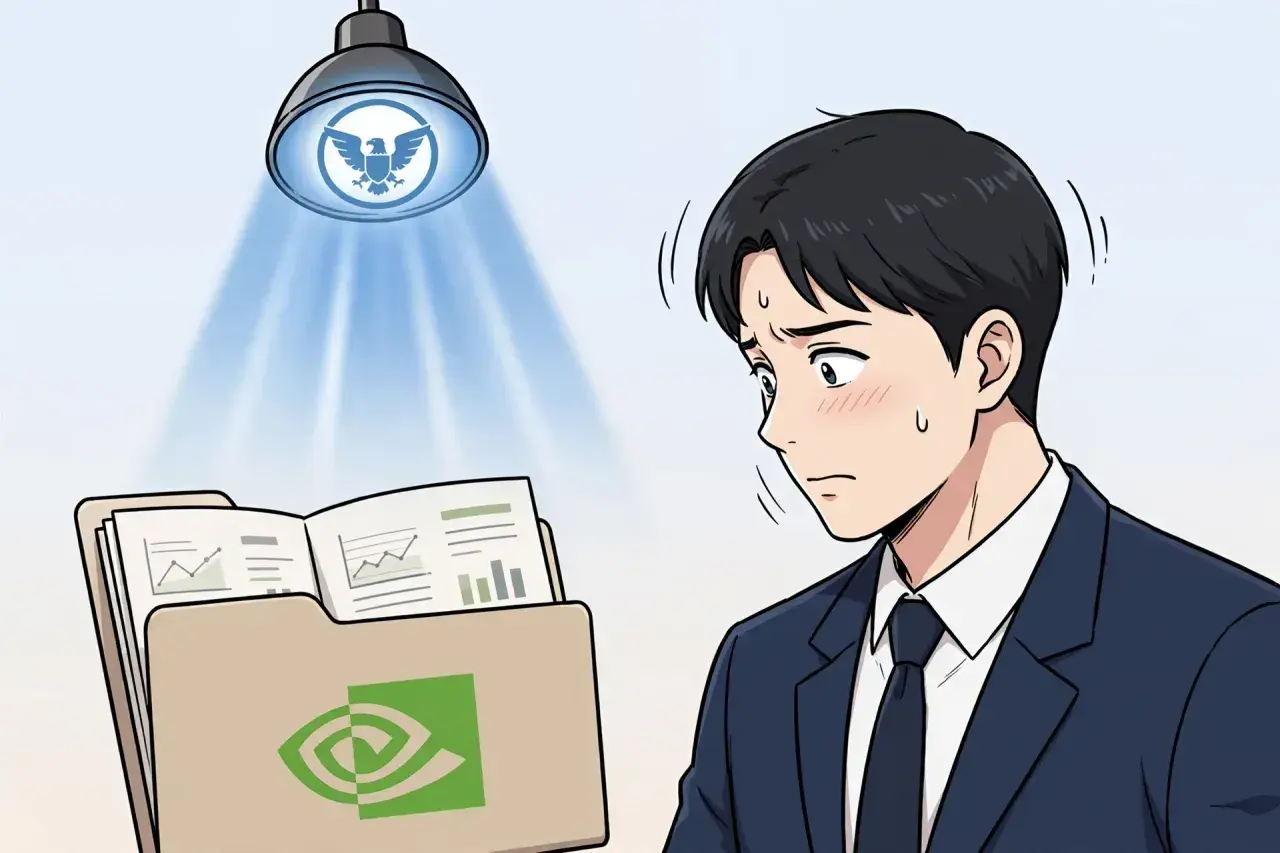
After accepting Huang’s resignation, the board promised to look elsewhere for a successor, but reversed its decision within days. One report said the board voted unanimously to bring him back. The board made the decision before its own investigation was complete, and the company explained that the board had concluded there was no national security risk after discussions with senior U.S. officials. However, the assessment of national security concerns and the completion of the board’s investigation into Huang’s conduct are separate questions.
Reports also said political figures were involved in the process leading to Huang’s return. According to one report, Huang’s Silicon Valley allies formed an informal “war room” to help secure his return and arranged a call between Huang and Vice President JD Vance. Another report said Vance told the board that the government did not view Huang as a national security risk, and that President Trump joined a board meeting by phone and urged the board to bring Huang back. If these accounts are accurate, a key question is how the board distinguished external political signals from the findings of its own investigation in reaching its decision.
What this news means
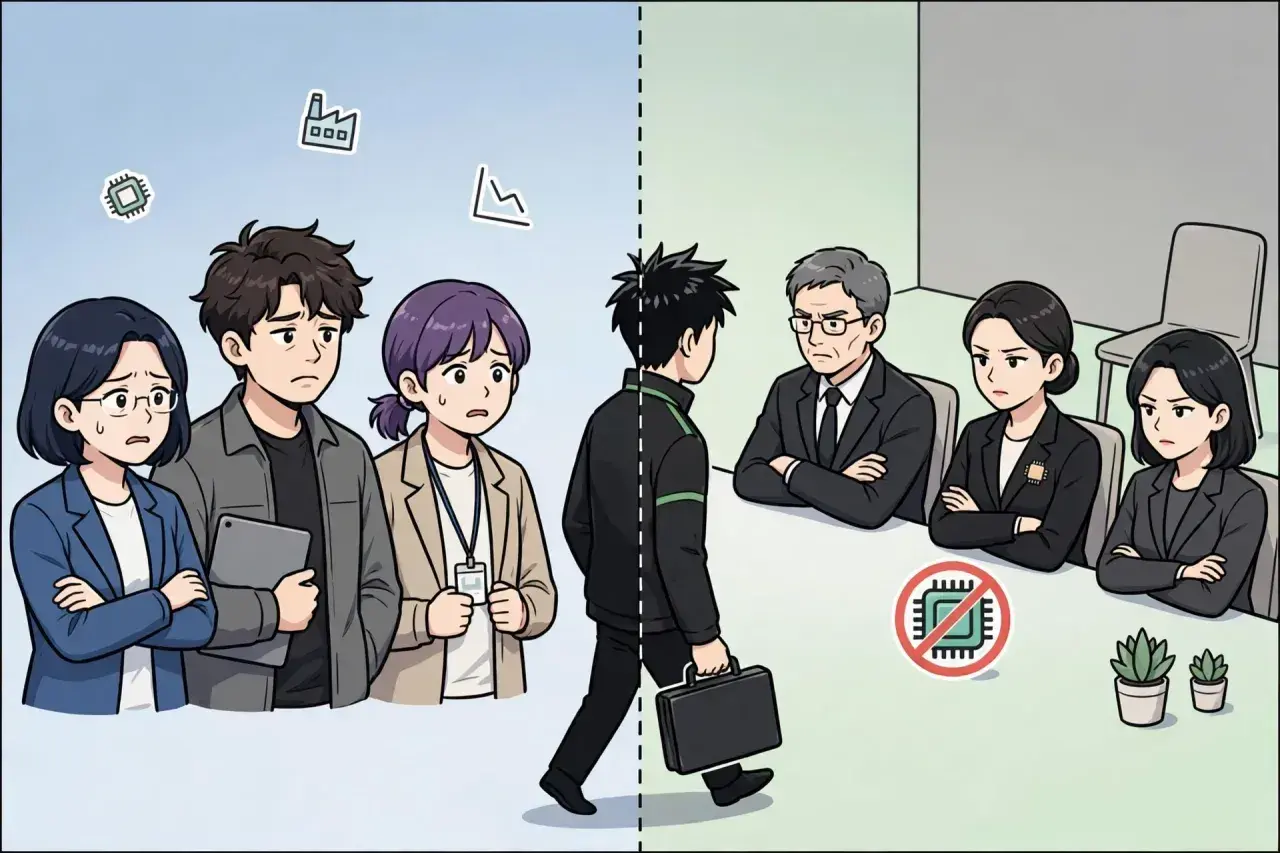
Board independence refers to whether a board can make decisions for the company and its shareholders without being influenced by management or outside power. The criticism is not focused solely on Huang’s return, but also on whether the board had enough information about a matter under investigation and whether it made the decision independently before bringing him back. Deciding on his return before the investigation is complete may make it harder for the board to explain publicly whether it used the investigation’s findings as the basis for its decision.
Reports of political involvement make the question more complicated. The fact that the government conveyed its view on national security risks and the claim that the board independently assessed the CEO’s fitness or conduct are not the same thing. The company’s stated confidence on national security grounds therefore cannot, by itself, be taken to resolve concerns about the board’s investigation or corporate governance.
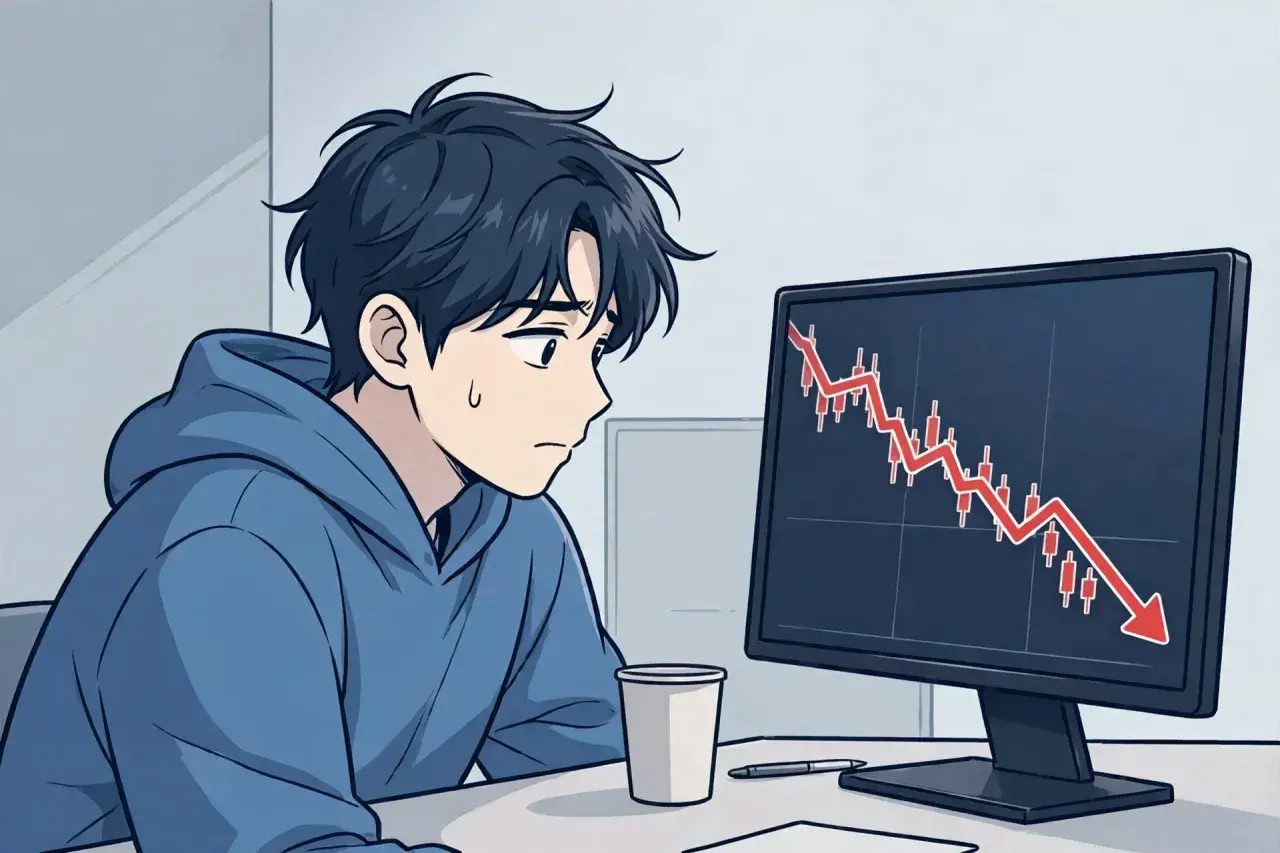
But a rise in the stock price does not, by itself, establish that the investigation was adequate or that the board was independent. For example, investors who own Nvidia shares may want to look not only at the stock’s movement, but also at when the board releases its findings and how it explains the grounds for bringing Huang back.
What reports described differently
Reports differed in what they emphasized about the details of the process leading to Huang’s return. One report said it was emerging that the board acted after coming under pressure from President Trump and others, while another described Trump’s role as a major factor in the return. A further report gave details about lobbying by Huang’s allies, a call with Vice President Vance, and Trump joining a board meeting by phone, but those details were based on other reports and accounts from people cited by that outlet.
Reports also described employees’ reactions and comments after Huang returned. One report said employees at the company’s headquarters greeted him with cheers and quoted Huang as saying, “I’ll be a better CEO the second time around.” Another report said Huang apologized and promised to make amends for his mistakes. The employees’ welcome and Huang’s pledge offer a picture of the scene after his return, but they do not explain the board’s investigation or the basis for its decision.
What is confirmed and what remains unknown
Confirmed facts
- Huang resigned on November 12 after reports emerged about an extramarital relationship.
- The board decided to bring him back after promising to look elsewhere for a successor.
- The company said that, after discussions with senior U.S. officials, the board was confident Huang’s return posed no national security risk.
- Investors and corporate governance experts said that bringing Huang back before the investigation was complete raised questions about the board’s independence.
- Nvidia shares closed up 31.5% on Monday.
What remains unknown
- When the board’s investigation into Huang’s conduct will be completed and what its findings will be.
- What pressure President Trump and other figures exerted on the board.
- What process and discussions the board went through between Huang’s resignation and his return.
- What evidence and standards of judgment underpinned the board’s confidence regarding national security risks.
What readers should watch for
- Readers can watch for when the board’s investigation is completed, whether its findings are made public, and whether the company explains how they relate to the decision to bring Huang back.
- It is worth checking what information and grounds the board considered when deciding to bring him back, and how much it discloses about discussions with government officials.
- Investors can look beyond stock-price movements and watch for whether concerns about the board’s independence are addressed and whether further explanations or actions follow.
References
- Other coverage consulted: koreatimes.co.kr
- Other coverage consulted: hani.co.kr