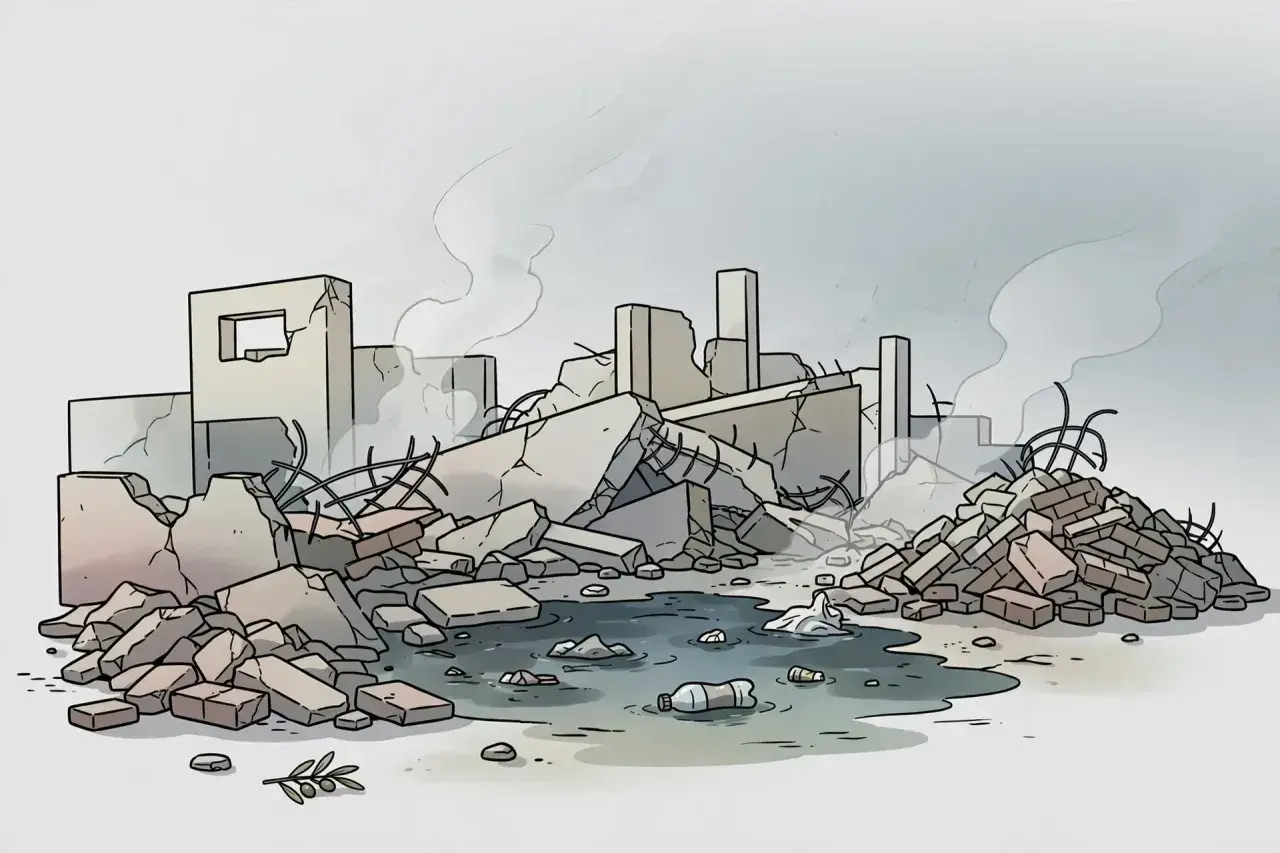


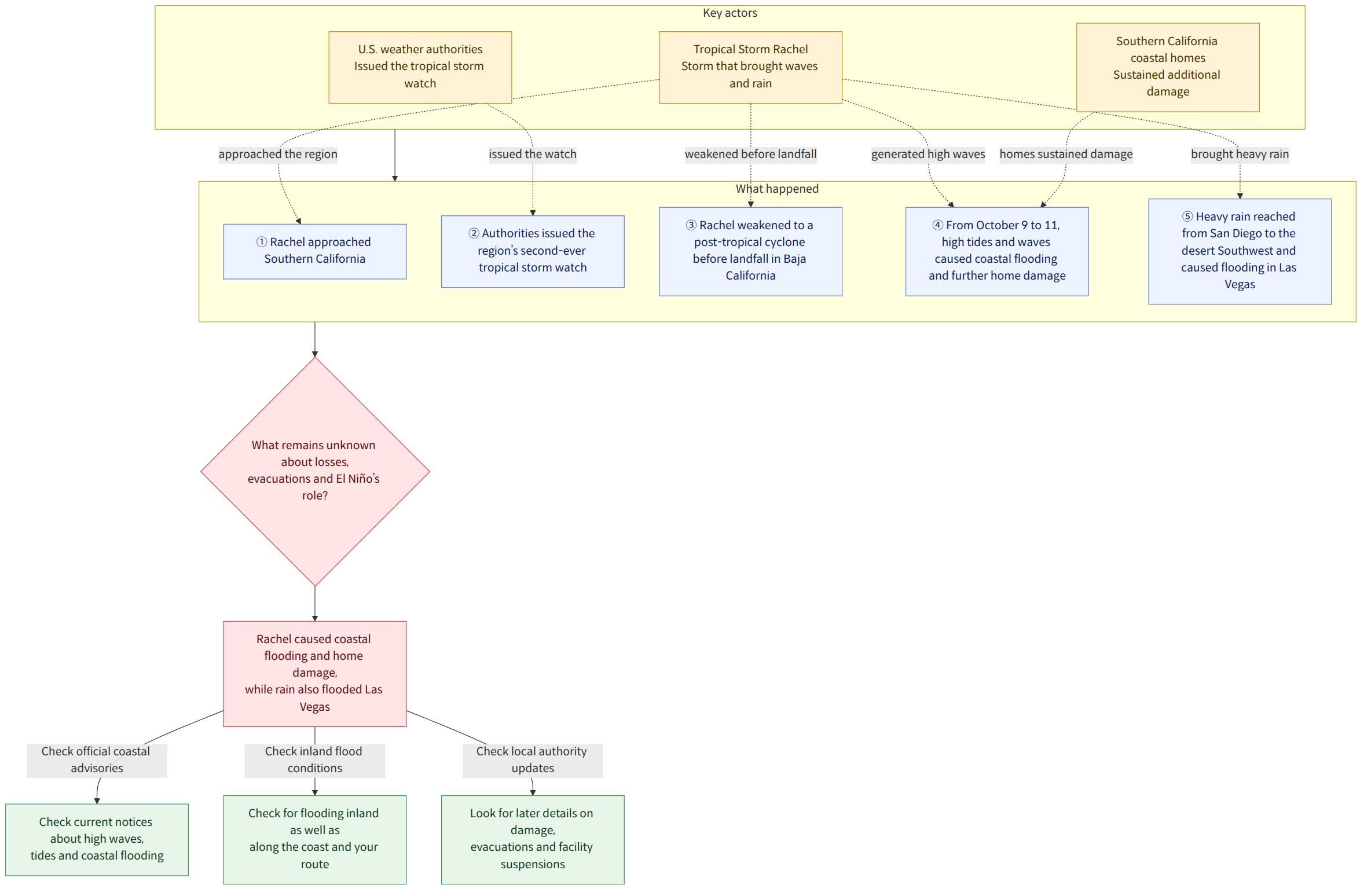
As Tropical Storm Rachel approached Southern California, U.S. weather authorities issued the region’s second-ever tropical storm watch. Rachel weakened into a post-tropical cyclone before making landfall in Baja California, but from October 9 to 11, 2026, it brought high tides and waves, coastal flooding and heavy rain. Coastal homes sustained additional damage, and rain fell from San Diego to the desert Southwest, causing flooding in Las Vegas as well.
Background and context
Tropical storm impacts in Southern California are rare, but not unprecedented. The region’s first tropical storm watch was issued three years ago, as Hurricane Hilary approached. Hilary’s remnants caused widespread flooding in Southern California in 2023 and brought 10 inches of rain to mountain areas.
The earliest event mentioned in the article is the 1858 San Diego hurricane. The Category 1 hurricane brushed the coast of San Diego County, bringing tropical-storm-force winds to the area. The only tropical storm known to have made landfall on the California coast was a storm that came ashore in Long Beach, Los Angeles County, in 1939. It brought tropical-storm-force winds to a broad area of Southern California and more than 4 inches of rain to some locations. In response to that storm, the U.S. Weather Bureau (미국 기상국) opened an office in Southern California in 1940.
Rachel was not the only notable feature of 2026. The Eastern Pacific hurricane season was described as one of the most active in modern history. Three hurricanes passed near Hawaii and brought heavy rain, which the article describes as rare in Hawaii. In September, Hurricane Marie generated waves large enough to damage coastal homes near Los Angeles before turning away from the coast.
What this means
Rachel’s case shows that damage can occur even if a storm does not make landfall or remain a strong tropical system. Rachel weakened into a post-tropical cyclone before making landfall in Baja California, but it generated high waves in Southern California, further damaging homes and flooding streets. The effects of rain and flooding also extended beyond the coast, reaching Las Vegas.
El Niño is a natural climate pattern in which sea-surface temperatures in the eastern tropical Pacific become unusually warm. The article says El Niño increases the frequency of storms in the Eastern Pacific. It also notes, however, that waters off Southern California and northern Baja California are usually too cold to support hurricanes. It is therefore important to distinguish the explanation that El Niño can increase storm risk from the fact that a particular storm caused damage in the region. The article alone does not establish that El Niño directly caused the 2026 season’s activity or the damage from Rachel.
For example, if you live close to the coast, it may be important to check official advisories about high waves, tides and coastal flooding rather than assume the danger has passed just because a storm has weakened. As Rachel’s case shows, changes in a storm’s strength and its local effects on waves and rainfall can differ.
What is confirmed and what remains unknown
Confirmed facts
- Rachel brought high tides, coastal flooding and heavy rain to Southern California from October 9 to 11, 2026.
- Rachel weakened into a post-tropical cyclone before making landfall in Baja California.
- Rachel’s high waves caused further damage to coastal homes and flooded streets, while its rain also caused flooding in Las Vegas.
- The tropical storm watch issued for Southern California during Rachel was the second ever for the region.
What remains unknown
- The article does not provide the number of deaths or injuries caused by Rachel or the total cost of property damage.
- It is not confirmed whether evacuation orders were issued or public facilities suspended operations.
- The article alone does not show how much El Niño affected the activity of the 2026 season or Rachel’s path and impacts.
What readers can check
- If you are staying in a coastal area, check current official weather advisories and notices about high waves and coastal flooding.
- If rain is falling where you live or along your route, check for flooding in inland areas as well as along the coast.
- If you need to know the extent of the damage or whether evacuations were ordered or facilities suspended operations, check subsequent announcements from the relevant local authorities, as the article does not provide that information.