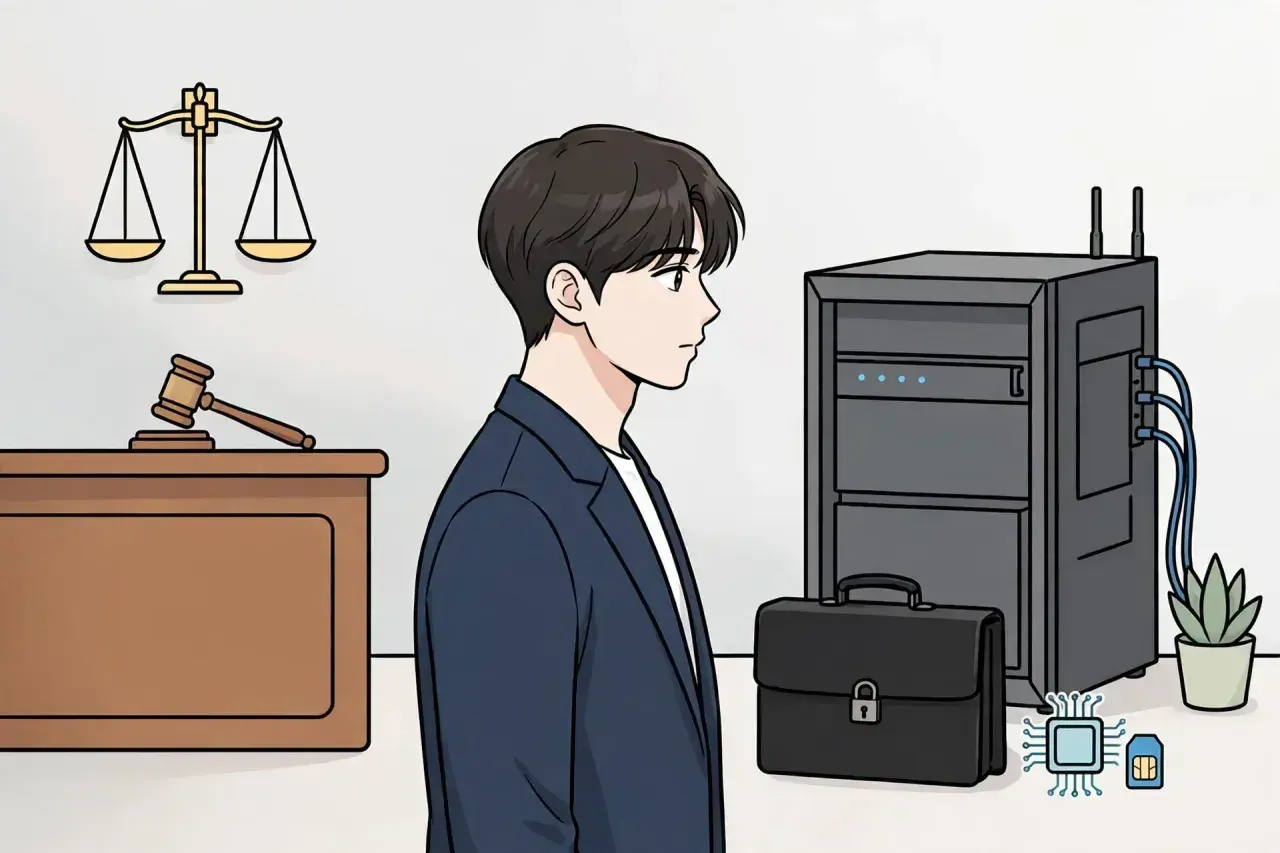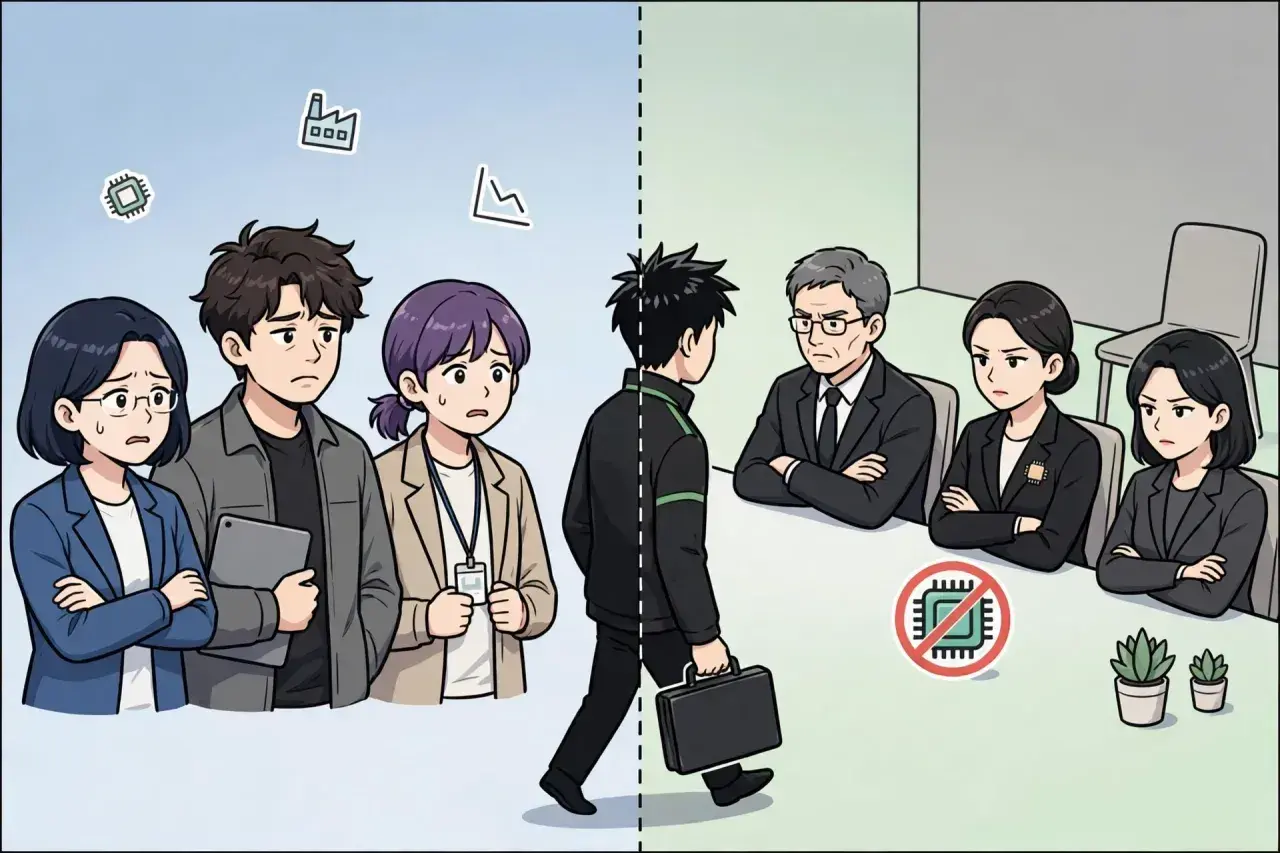



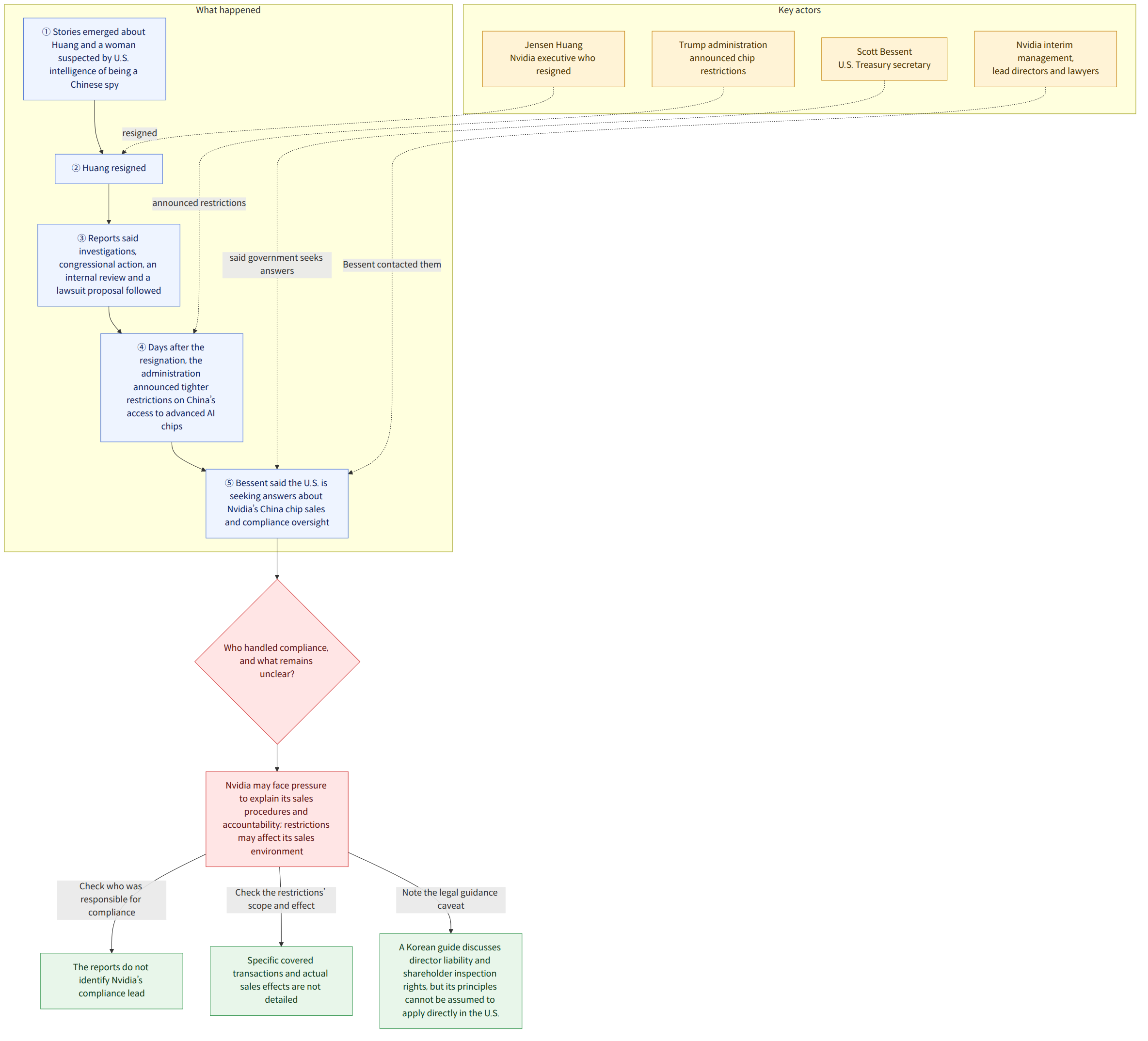
U.S. Treasury Secretary Scott Bessent said Sunday that the U.S. government is seeking answers from Nvidia about the company’s chip sales to China. He said he had contacted Nvidia’s interim management, lead directors and lawyers, and that the company needed to respond promptly. Bessent said on CBS’s “Face the Nation” that the U.S. government also wants to determine how Nvidia’s corporate culture is organized and who was responsible for compliance work—ensuring that laws and regulations are followed.
Background and context
According to reports, Jensen Huang resigned after stories emerged about his relationship with a woman suspected of being a Chinese spy and an extramarital relationship with a company executive. It was reported that U.S. intelligence agencies suspect the woman who was involved with Huang of being a Chinese spy, but the information provided does not establish the basis for that suspicion or whether it is true.
Reports said the stories were followed by investigations by U.S. regulators and the FBI, congressional action, an internal company review, and a proposal for an investor class-action lawsuit. This means that various responses related to the allegations were initiated; the information provided does not establish that wrongdoing was confirmed or that a lawsuit was actually filed or pursued.
Days after Huang’s resignation, the Trump administration announced rules further restricting China’s access to advanced AI chips from companies such as Nvidia. The reports describe the move as tightening controls ahead of President Donald Trump’s visit to China last week. The matter therefore involves both a review of the company’s internal compliance oversight and government policy to restrict China’s access to advanced chips.
What this means
Nvidia may face growing pressure to explain what procedures and accountability systems were in place regarding sales to China. Bessent’s statement that he would identify the person responsible for compliance in particular shows that the government’s interest extends beyond the sales themselves to who handled regulatory compliance within the company and how it was managed. However, the reports do not say which specific transactions or suspected regulatory violations are under investigation, or what information the government has requested.
Rules restricting China’s access to advanced AI chips may also affect the sales environment for companies doing business with China. However, the information provided does not detail the rules’ specific scope or their actual effect on Nvidia’s sales. For example, if a company were seeking to sell advanced chips to a customer in China, it might need to check whether the product and transaction fall under the new restrictions. This is a hypothetical scenario; the article does not identify whether any specific transaction is covered.
Related legal guidance and support information
An in-house legal guide treats a company and its shareholders, directors and chief executives as separate legal entities in principle. If a director neglects their duties and causes the company harm, they may be liable to compensate the company, but it has not been established in this matter who breached which duty or whether any harm occurred. This principle comes from a Korean legal guide and cannot be assumed to apply directly to a U.S. company or a U.S. investigation.
The guide explains that shareholders may request to inspect and copy materials such as board minutes and accounting books. A company may refuse if it proves the request is unjustified, taking into account its purpose and circumstances; the fact that a shareholder is seeking a hostile takeover does not, by itself, make the request automatically unjustified. This addresses both shareholders’ rights to review company decisions and accounting information and the limits on those rights. However, it has not been established whether these rights are directly connected to the investor class-action lawsuit proposal mentioned in the article.
What is known and what remains unclear
What is known
- Bessent said the U.S. government was seeking answers from Nvidia about chip sales to China.
- He said he had contacted the company’s interim management, lead directors and lawyers.
- According to reports, Huang’s resignation was followed by investigations, congressional action, an internal review and a proposal for an investor class-action lawsuit.
- The Trump administration announced rules further restricting China’s access to advanced AI chips from companies such as Nvidia.
What remains unclear
- Who was responsible for compliance work at Nvidia?
- What specific answers or information has the U.S. government requested about chip sales to China?
- What are the specific claims and status of the proposed investor class-action lawsuit?
- What is the specific scope of the new rules, and what effect have they had on Nvidia’s sales?
What readers should look into
- It is worth watching to see whether Nvidia’s response or the results of any investigation become public, and whether the person responsible for compliance and the company’s oversight system are identified.
- If details of the rules on chip sales to China are made public, readers should check which products and transactions are covered.
- Shareholders in Korean companies can consult the in-house guide’s explanation of the right to inspect and copy board minutes and accounting books, as well as the circumstances in which a company may refuse such a request, when seeking information about company decisions or accounting.