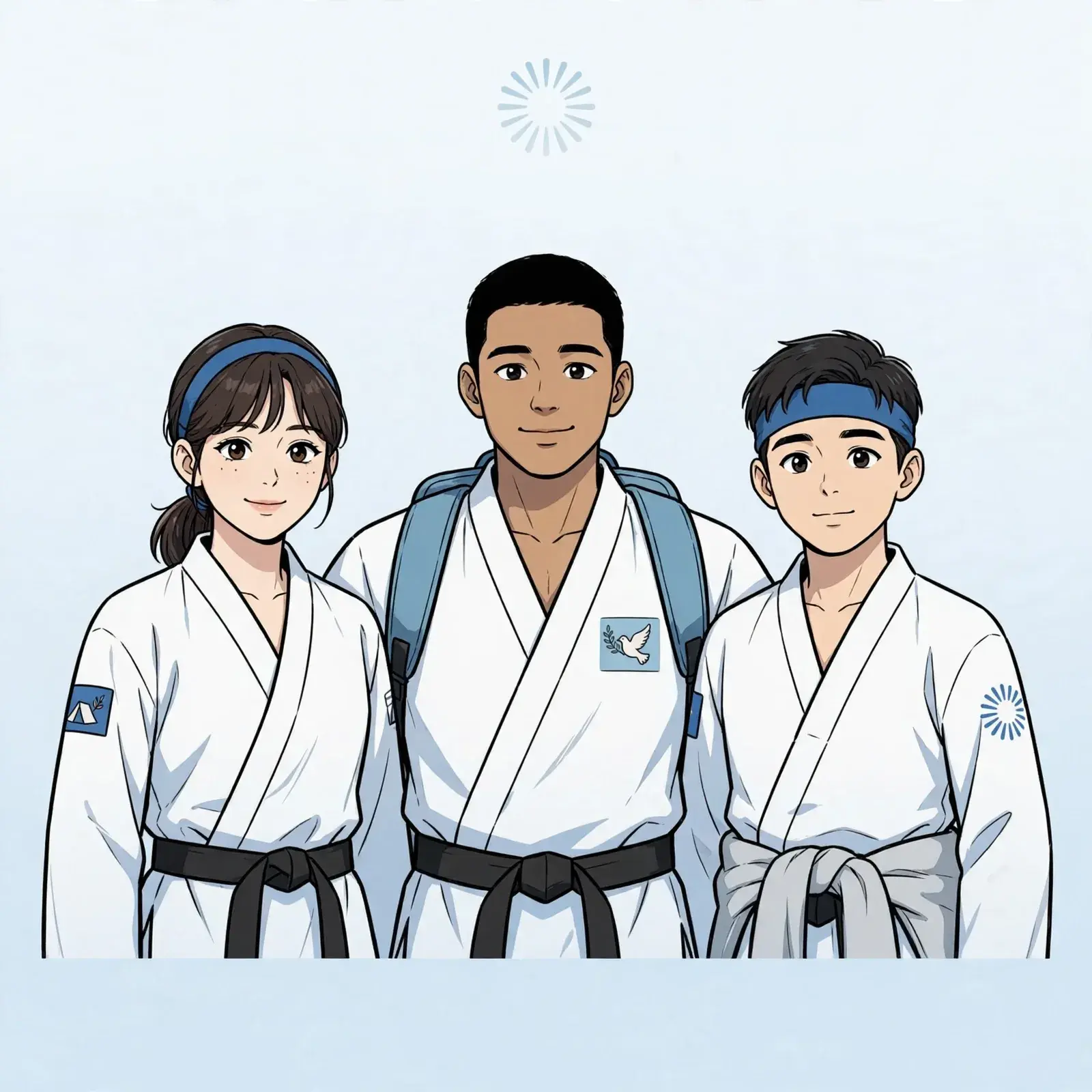
A debut built on more than medals
At the 2026 Aichi-Nagoya Asian Games in Japan, Syrian taekwondo athlete Talah Hassan Hunaidi made history as one of the first two competitors on the Games’ refugee team. She lost her opening bout in the women’s under-49-kilogram division, but the result did not define the day for her. “I’m very happy,” the 18-year-old said, describing the experience as a turning point that gave her goals and excitement about the future.
In elite sport, a loss can be difficult to accept, especially when athletes have spent years preparing for a chance to compete. Hunaidi instead said she felt happy from the moment the referee began the match’s countdown. She was proud of herself for reaching the Asian Games and grateful to have a new ambition to pursue.
“This competition changed my life 180 degrees. I have a goal now, and I’m excited. Now I have a dream, too.”
The Asian Games’ first refugee team
The Asian Games had never before sent a refugee team onto the field of play. The Olympic Games began including refugee athletes at Rio 2016, but it took another decade for a refugee team to appear at the continental multisport event. The Asian Olympic Council assembled the first Asian refugee team for the 2026 Games, with Hunaidi and fellow taekwondo competitor Mahmoud Jassim Muhammad representing it.
Muhammad competed in the men’s under-80-kilogram division. He, too, was eliminated in the round of 16, so neither athlete won the team’s first medal. Still, their participation marked a milestone: athletes forced from their homes were able to compete under a shared team identity on one of Asia’s biggest sporting stages.
- Hunaidi competed in women’s under-49-kilogram taekwondo.
- Muhammad competed in men’s under-80-kilogram taekwondo.
- Both athletes reached the round of 16, the first knockout stage in their events, before their tournament ended.
For the two athletes, the value of the event went beyond the result. Hunaidi called it a new and positive experience and said she wanted to continue competing against other athletes. She also hopes to win a medal at a future Olympic Games.
From Syria to a new home in Jordan
Hunaidi and Muhammad are both from Syria and settled in Jordan’s Azraq refugee camp after fleeing the Syrian war. Displacement can disrupt nearly every part of daily life: families may lose familiar homes and routines, while young people can find it especially difficult to picture what their lives might look like years later. For Hunaidi, sport offered a way to regain a sense of direction.
Taekwondo entered the camp through a program created by the World Taekwondo Federation, which established the nonprofit Taekwondo Humanitarian Foundation in 2016. The foundation brought instruction to refugee camps around the world and opened a dedicated academy at Azraq in 2018. Hunaidi first tried the sport there when she was nine.
“Taekwondo has changed many things in my life for the better.”
At first, the sport felt unfamiliar. But practicing the same movements—learning a stance, repeating a kick and trying again after a mistake—helped her build confidence that she could accomplish difficult things. That confidence grew over time as she developed from a child at the camp’s academy into a competitor selected for the Asian refugee team.
How training can help rebuild confidence
A martial art is not a substitute for safety, housing or other support people need after being displaced. But regular training can give a young person structure, a community and achievable goals. A child who learns to complete a difficult sequence, for example, can carry the feeling of progress into other parts of life.
For Hunaidi, the path from her first class to the Asian Games gave her a chance to think beyond the hardships she had experienced. Competing did not erase the past, but it helped her imagine what she might do next.
A loss that feels like a beginning
Hunaidi left the competition without a medal, but she described her defeat as the start of something rather than its end. She said she was proud to have reached the tournament and planned to keep working toward the next opportunity. Her ambition is to compete at a future Olympics and win a medal there.
“I lost today, but this is the beginning of success.”
The distinction matters because a sporting result is only one measure of what an athlete has achieved. For someone whose future once felt uncertain, earning a place at an international competition can itself represent years of persistence, training and support. Hunaidi’s words framed the match not as a final judgment, but as a first step toward a longer goal.
Muhammad also used his experience to address refugees around the world. Through a message shared by the Games’ organizers, he urged people not to give up when they are hurt in life or in competition, and to keep following their dreams. His words connected the familiar struggle of losing a match with the much larger challenge of continuing through adversity.
Why representation matters
A refugee team cannot resolve the conflicts and hardships that force people to leave home. Its presence can, however, make displaced athletes visible in a setting where countries and communities gather to watch competition. Instead of being defined only by the circumstances that displaced them, athletes can be recognized for their training, skill and personal goals.
The team’s debut also highlights how access to sport can depend on sustained support. Hunaidi’s journey involved a camp-based academy, years of practice and selection for a new regional team. Programs that provide safe places to train and opportunities to compete can help young people develop their abilities, even when their lives have been disrupted.
- For athletes: competition offers goals, routine and a chance to test their skills.
- For audiences: seeing refugee athletes compete can bring individual stories into view.
- For sports organizations: inclusion requires pathways that support athletes from local training to major events.
These are not guarantees of success, and not every young person will choose sport as a way forward. But Hunaidi and Muhammad showed what can happen when an opportunity to train is followed by a chance to compete at the highest level available to them.
The next goal is still ahead
The first refugee team at the Asian Games did not leave with a medal, and both athletes’ tournaments ended in the round of 16. Yet their presence created a new point of reference for future refugee competitors: the Asian Games can include athletes who have been displaced from their homes, just as the Olympics have done since 2016.
For Hunaidi, the most important outcome was personal. She said the experience gave her a dream and strengthened her desire to keep competing. Her hope is that other refugees will see their own possibilities in her story and continue to move toward the goals they have chosen.
“Even if you are hurt in life or in a match, you must not give up. Follow your dreams and keep moving forward.”
Their kicks did not bring the first Asian refugee-team medal. They did, however, carry a message about what sport can offer: not a cure for displacement, but a source of confidence, connection and hope while building a future remains difficult.