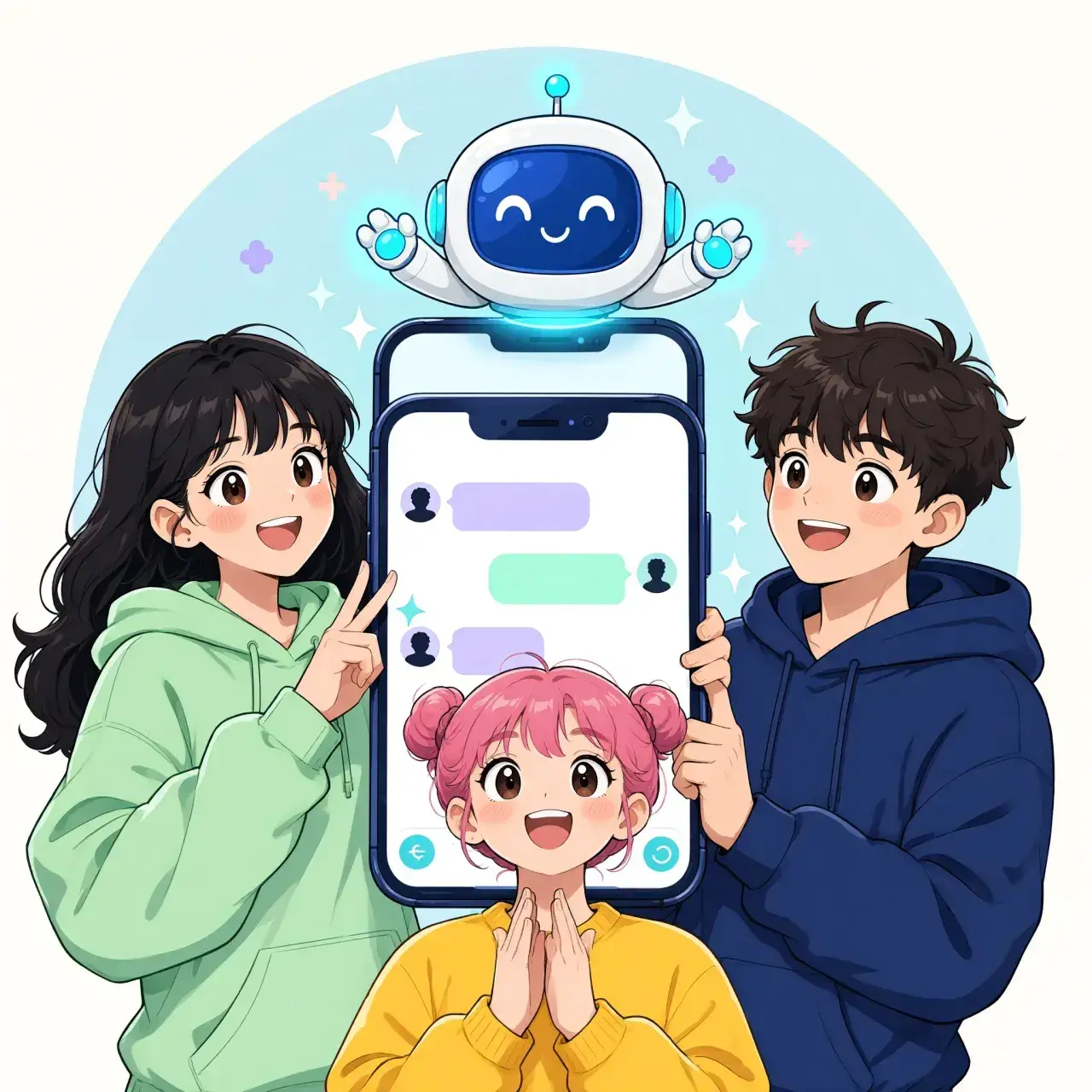
AI agent startup Instinct announced a feature that adds its agent to group chats with friends. According to the company, the agent can be used even if the friends in the chat do not have Instinct accounts. The feature is initially available to early-access users, and the company said it plans to expand access to all users soon.
Background and context
When AI joins a group chat, it can help several people coordinate decisions in one conversation. Examples cited in the article include planning trips, securing event tickets, managing fantasy leagues, organizing carpools and coordinating Thanksgiving meal preparations. However, the original article does not explain exactly how friends without accounts can interact with the agent.
Instinct was valued at $10 billion in its latest funding round. The article reported that Meta’s competing service, Muse, does not yet have a group-chat feature. However, Meta’s older app, Meta AI, can be added to group chats on WhatsApp, Messenger, Instagram and Facebook, according to reports. Both services recently added phone-call features, within the past few weeks, and last week OpenAI launched ChatGPT Dots, a personal AI agent for use by people and AI agents together, in ChatGPT Spaces.
What this means
The significance of the feature is that an agent could serve not just as one person’s personal assistant, but also as a coordination tool in a conversation involving multiple people. For example, when friends are planning a trip, they could use it to consider options together and coordinate their plans within the group. This is a potential use cited in the article, not a guarantee of any particular feature or outcome.
Allowing friends without accounts to participate could reduce the burden of requiring everyone to set up a separate account before getting started. At the same time, it becomes important to obtain consent and maintain boundaries so that personal conversations or information are not mixed into the group. In particular, group membership can change, so what information can be shared may depend on who is in the conversation.
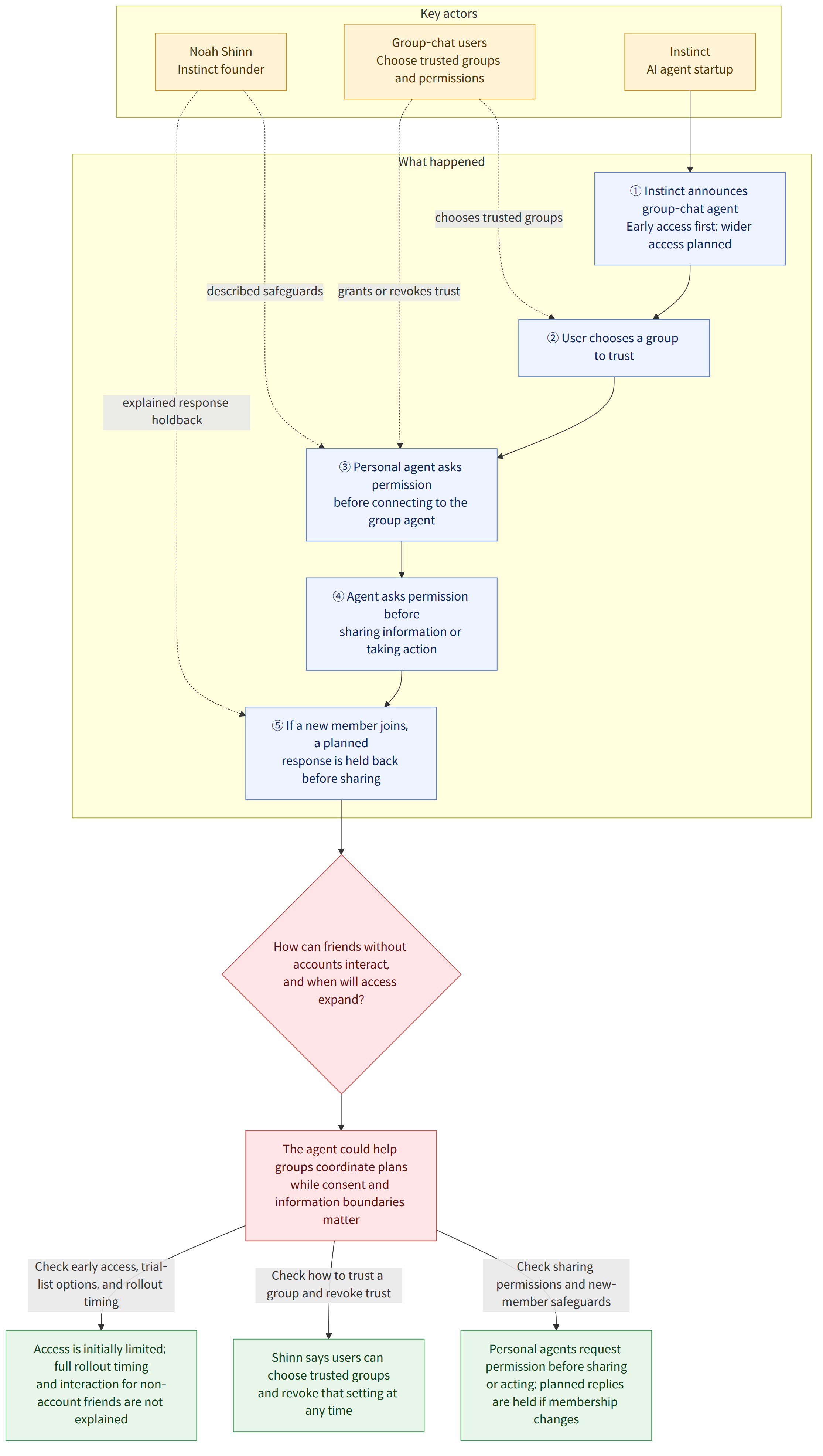
Instinct founder Noah Shinn explained that a personal agent asks the user for permission before connecting to a group agent. He also said users can choose groups they trust and revoke that trust setting at any time. According to Shinn, Instinct in a group is separate from personal accounts and cannot access them, and personal agents also ask users for permission before sharing information or taking action. He added that if a new member joins a group chat, a response the personal agent was about to send is held back before it can be shared with the group.
The details about consent and account separation describe safeguards explained by the founder. Users should check when they will be asked to consent and what information or actions the requests cover.
Confirmed facts and what is not yet known
Confirmed facts
- Instinct said its agent can be used in group chats that include friends without accounts.
- The feature will be available to early-access users first, with access set to expand to all users.
- Shinn said users can choose groups they trust and revoke that trust setting at any time.
- Shinn said a personal agent’s planned response is held back from the group if a new member joins, before it is shared.
What is not yet known
- The exact date when the feature will be available to all users has not been announced.
- The company has not explained how friends without Instinct accounts can interact with the agent.
- The original article does not say which messaging apps or chat platforms the group-chat feature works on.
What readers can check
- If you are not an early-access user, you can ask the Instinct agent to add you to the trial list if you want to check whether the feature has become available on your account. The company suggested this approach to users who want to try new features.
- Before connecting an agent to a group, check how to designate that group as trusted and how to revoke the trust setting.
- It is worth checking what permissions the personal agent requests before sharing information or taking action, and how it holds back responses when a new member joins.