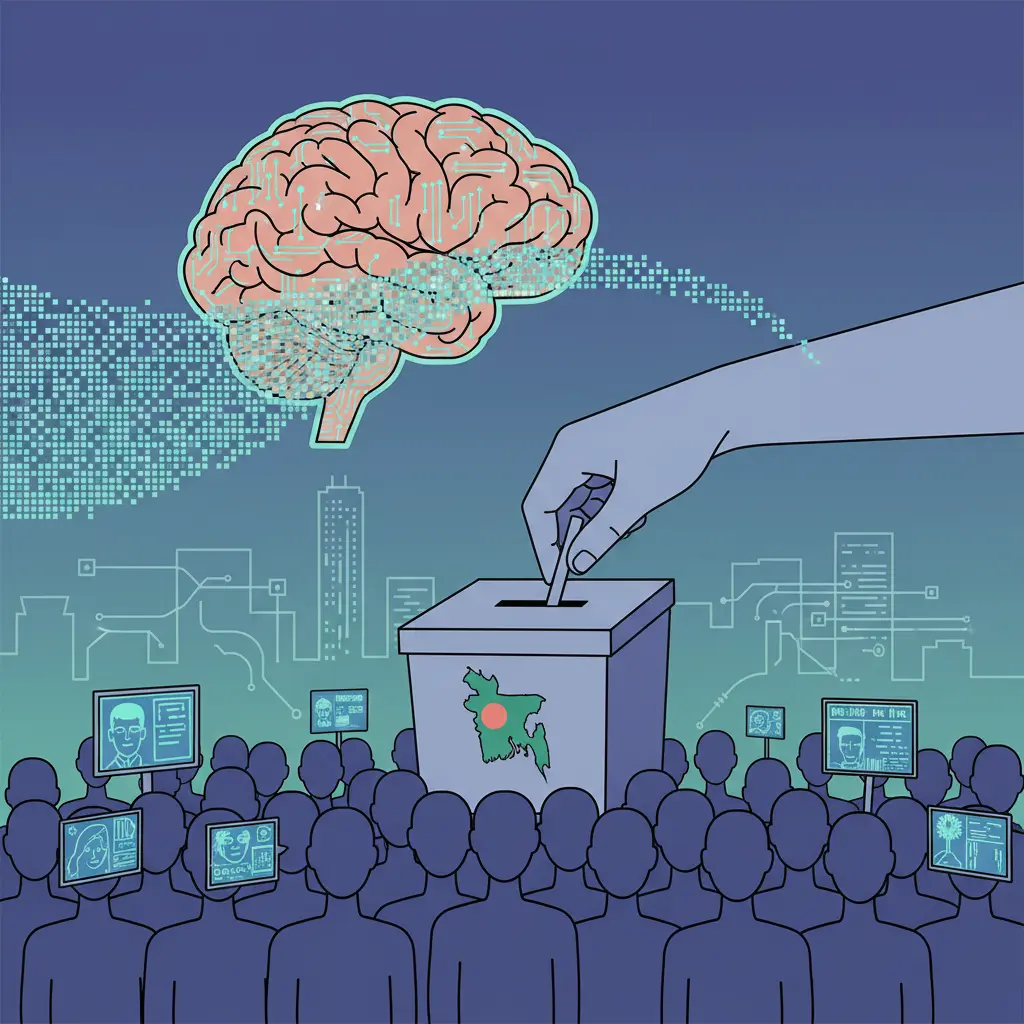
AI as a Strategic Political Weapon
In the lead-up to Bangladesh’s national election, Artificial Intelligence and Synthetic Reality (digitally created or altered media that appears lifelike) were deployed as high-tech tools for political warfare.
These technologies were not just used for campaigning, but were specifically engineered to mislead the public and alter the perceptions of voters. This marks a significant shift in how digital tools are used to influence national power structures.
"AI has evolved from a simple technological tool into a formidable weapon capable of swaying national election outcomes."
The Impact of 72 Fabricated Narratives
An analysis of 72 distinct pieces of AI-generated content showed they were central to creating False Narratives (untrue stories designed to push a specific agenda).
By using Deepfakes (AI-based techniques that can replace a person's face or voice in a video), actors were able to produce convincing footage of politicians saying things they never actually said.
- Information Fabrication: Mimicking real voices and faces to deliver deceptive messages.
- Public Opinion Shaping: Mass-distributing tailored content to favor specific political factions.
- Erosion of Truth: Making it nearly impossible for the average citizen to distinguish fact from fiction.
A New Challenge for Global Democracy
This case study in Bangladesh serves as a warning for how AI can jeopardize the fairness and transparency required for a healthy democracy.
As Synthetic Reality becomes more indistinguishable from real life, the public faces an uphill battle in verifying the information they consume.
Ensuring the integrity of future elections will require more than just technical fixes; it will necessitate a higher level of Media Literacy (the ability to critically analyze and evaluate information) among citizens worldwide.