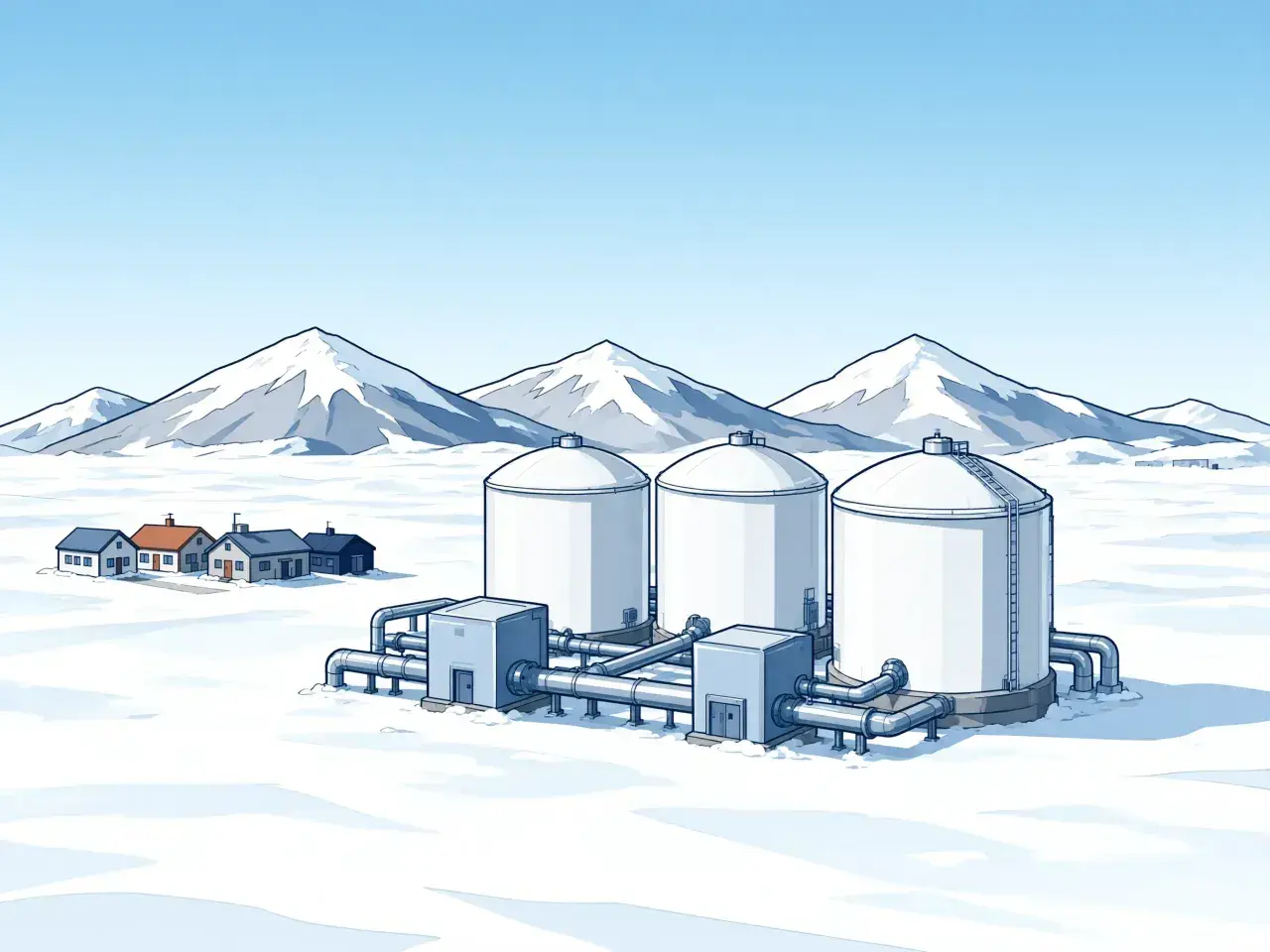
U.S. Vice President Vance said the United States and South Korea still need to work out details of the Alaska gas project. However, he also expressed confidence that the project would go ahead, citing strong demand in Asia for U.S. natural gas. The article was published at 3:12:41 a.m. KST on October 6, 2026.
The remarks drew attention because they conveyed both an expectation that the project would proceed and the fact that an agreement has not yet been finalized. Vance’s comments were optimistic about the project’s prospects, but they do not mean that its detailed terms have been settled.
Background and context
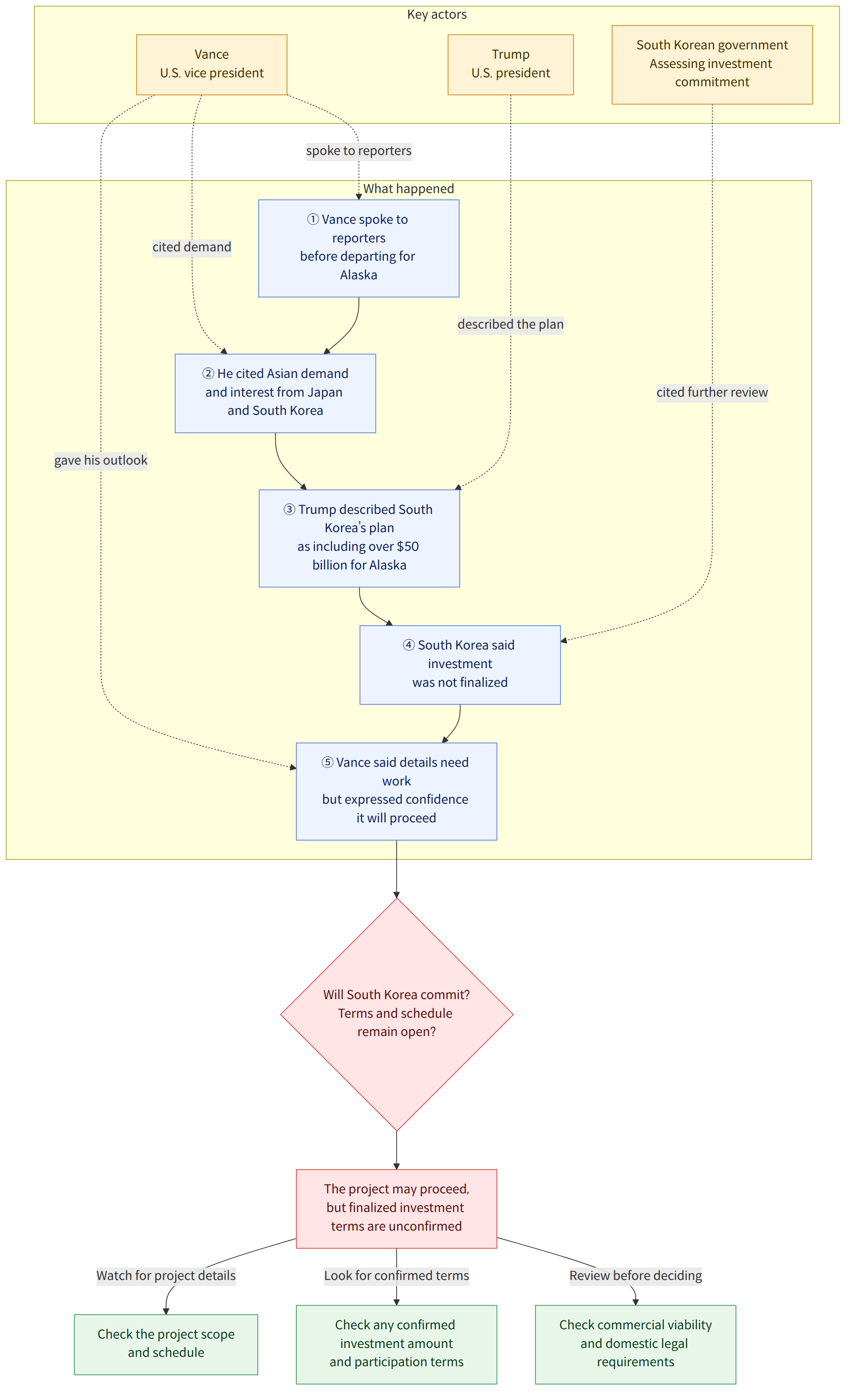
According to the report, Vice President Vance spoke with reporters at Joint Base Andrews (앤드루스 합동기지) in Maryland before departing for Alaska on October 5 (local time). He said that Japan, as well as South Korea, wanted the project, and that East Asian economies that have faced the burden of natural gas prices wanted to receive more U.S. gas. His point was that strong demand would help bring the project to fruition.
Meanwhile, the two countries’ accounts of South Korea’s investment commitment differ in tone. The report said that President Donald Trump had spoken as if South Korea’s investment plan in the United States included an investment of more than $50 billion in the Alaska project. The South Korean government (한국 정부), the report said, drew a line at interpreting this as a finalized investment, saying that the project’s commercial viability and domestic legal requirements still needed to be examined further.
After being asked whether South Korea had denied an investment agreement, President Trump was reported to have said, in effect, that if they said they had not agreed, they should be told that the investment amount would be doubled if they did not agree soon. In contrast, Vance acknowledged that further coordination remained necessary while emphasizing the likelihood that the project would go ahead. His remarks can therefore be read as showing both that discussions are ongoing and that the U.S. side is committed to moving the project forward, rather than confirming that an agreement has been completed.
Vance’s expectation that the project will go ahead should be distinguished from his explanation that the details still need to be worked out.
What this news means
For South Korean readers interested in energy cooperation, the important thing is not to treat “willingness to move the project forward” and “finalized investment and participation terms” as the same thing. Saying that details need to be worked out does not specify which terms, such as costs or the form of participation, remain unresolved. It is therefore difficult to conclude from these remarks alone that South Korea’s investment amount, final participation, or the project schedule has been settled.
For the South Korean government and companies considering participation in the project, an assessment of commercial viability and domestic legal procedures could be key to actual decision-making. This is an analysis that follows from the reported need for further discussions and the South Korean government’s account; it does not mean that negotiations have broken down.
For example, if a South Korean company were considering participating in the project, it should not assume that an investment decision has been made based only on Vance’s optimistic remarks. Instead, it should look for confirmation of the commercial assessment, legal requirements, and specific terms of any agreement. For the general reader, too, the key is to distinguish the project’s prospects from a finalized South Korean investment commitment.
Points reported differently across articles
The project’s name and description vary. Headlines describe it as the “Alaska gas project” or the “Alaska LNG project,” while another article reporting Vance’s remarks also uses the term “pipeline.” This can be understood as a difference in how the reports describe the project—as a gas development and supply project or from the perspective of its transportation infrastructure—and the material provided does not allow its specific scope to be determined conclusively.
One report dates the remarks to October 5 (local time), while another describes them as having been made on Monday. The materials provided do not establish that these two descriptions conflict. However, neither report gives specific details about the items still under discussion or the project’s schedule.
What is confirmed and what remains unknown
Confirmed facts
- Vice President Vance said the United States and South Korea need to work out more details of the Alaska gas project.
- He expressed confidence that the project would go ahead and mentioned Asian demand for U.S. natural gas.
- The reports said the South Korean government’s position was that the project’s commercial viability and domestic legal requirements needed further review.
- The article was published at 3:12:41 a.m. KST on October 6, 2026.
What remains unknown
- Which specific items the two countries still need to work out
- Who the project’s final participants will be and how each participant’s role will be determined
- The project schedule and whether South Korea’s investment and its amount have been finalized
What readers should watch for
- Look at how follow-up announcements address the commercial assessment and domestic legal procedures.
- When language such as “investment amount” or “participation finalized” appears, check whether the actual terms of the agreement and its final status are also provided.
- See whether the items for further discussion and the project schedule are made public, so you can distinguish expectations about the project from confirmed facts.
References
- Other coverage consulted: hani.co.kr
- Other coverage consulted: koreatimes.co.kr