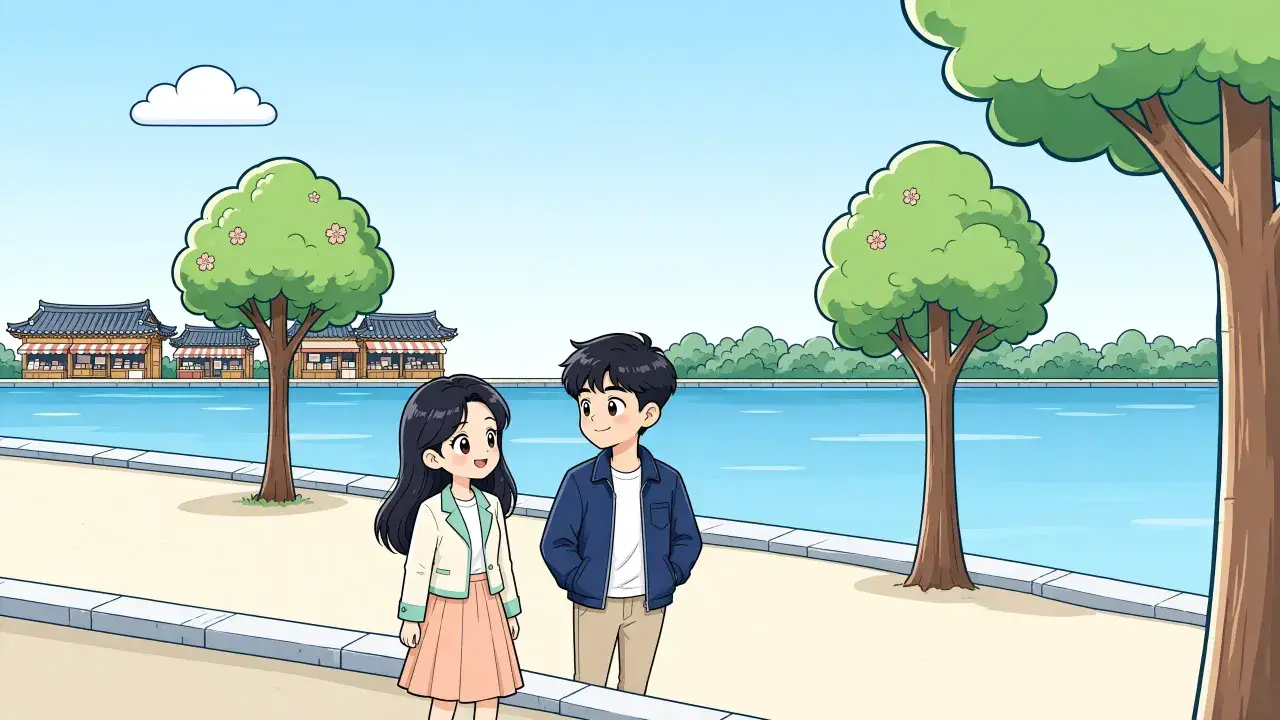
Sejong, a city newly developed to accommodate government ministries, has been introduced as a travel destination with green spaces and a traditional market. According to the article, traditions that continue from Jochiwon sit alongside the green spaces of the planned city; the National Sejong Arboretum (국립세종수목원) and Sejong Lake Park (세종호수공원) offer sights to see, while Sejong Traditional Market (세종전통시장) offers food.
Background and context
The term “administrative city” may bring government offices and workplaces to mind before travel destinations. But the article portrays Sejong as a place that differs from that preconception. It presents the combination of traditions carried on from Jochiwon, the old center, and the orderly green spaces of the new city as a defining feature of Sejong.
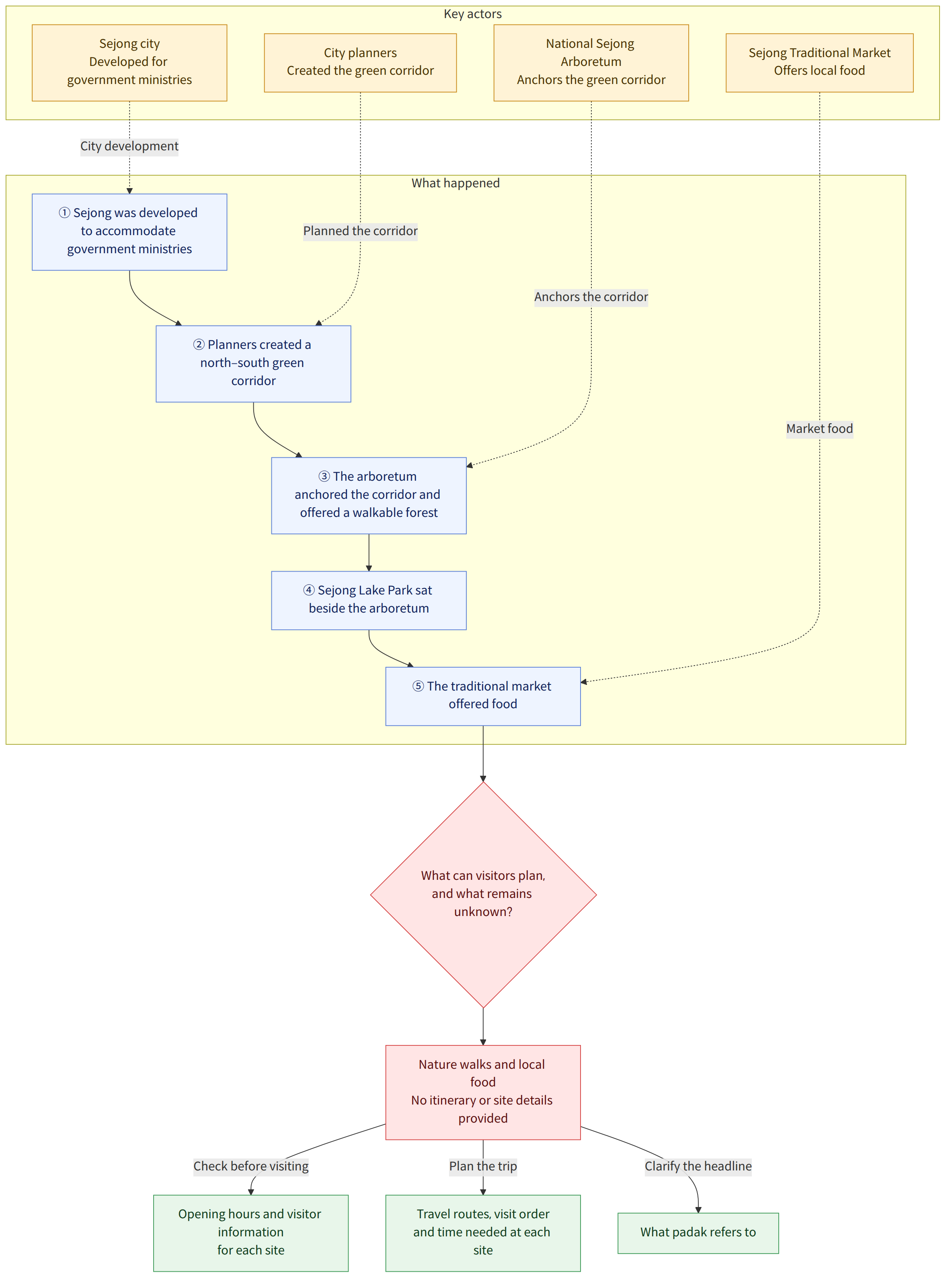
The city’s planners created a green corridor running north to south through the city center. The National Sejong Arboretum anchors this corridor and, according to the article, helps mitigate the urban heat-island effect while providing residents with a forest they can reach on foot. Sejong Lake Park is beside the arboretum, and together the two spaces offer sights to see in the city.
The article describes the National Sejong Arboretum as South Korea’s third national arboretum. The National Arboretum (국립수목원) in Pocheon, Gyeonggi Province, is mentioned earlier.
What this news means
Sejong’s appeal as a travel destination is not limited to one particular place. With urban green spaces, a lakeside park and a traditional market all featured, the city may offer options for travelers who want to walk in nature and seek out local food. In particular, describing the arboretum as a forest residents can reach on foot suggests that Sejong’s green spaces serve both as everyday places and as destinations for visitors.
For example, travelers looking to combine a nature walk with food from a market could consider the arboretum, lake park and Sejong Traditional Market mentioned in the article. However, the article introduces these places without giving an actual order for visiting them or the time needed to get from one to another.
What is confirmed and what remains unknown
Confirmed facts
- Sejong is described as a city newly developed to accommodate government ministries.
- Traditions carried on from Jochiwon and the green spaces of the planned city are found side by side.
- The city has a north–south green corridor, anchored by the National Sejong Arboretum.
- Sejong Lake Park is beside the National Sejong Arboretum, and Sejong Traditional Market is presented as a place to find food.
- The National Sejong Arboretum is described as South Korea’s third national arboretum; the one mentioned earlier is the National Arboretum in Pocheon, Gyeonggi Province.
What remains unknown
- The original does not explain what “padak,” which appears in the headline, refers to.
- The article does not provide a specific order for a Sejong travel itinerary or opening hours and visitor information for each site.
What readers should check
- Before planning a visit, it is best to check the opening hours and visitor information for the National Sejong Arboretum, Sejong Lake Park and Sejong Traditional Market separately. The original does not provide this information.
- The article also does not specify travel routes or the time needed at each site, so these should be checked separately based on the purpose and schedule of the visit.