Lessons from History: The Price of a Failed Imagination
In his book Strange Defeat, French historian Marc Bloch analyzed the sudden collapse of the French army in 1940. He argued that the primary cause of the disaster was a failure of imagination among the military leadership. They were unable to grasp that warfare and technology had fundamentally changed since the previous war.
These leaders clung to outdated strategies, failing to see how rapid advancements were about to reshape the world. This historical blind spot serves as a chilling warning for our current era of rapid technological shift.
"The debacle was at least in part due to an inability to understand that technology had fundamentally changed the rules of the game."
The "Toy" Illusion: Why We Underestimate AI
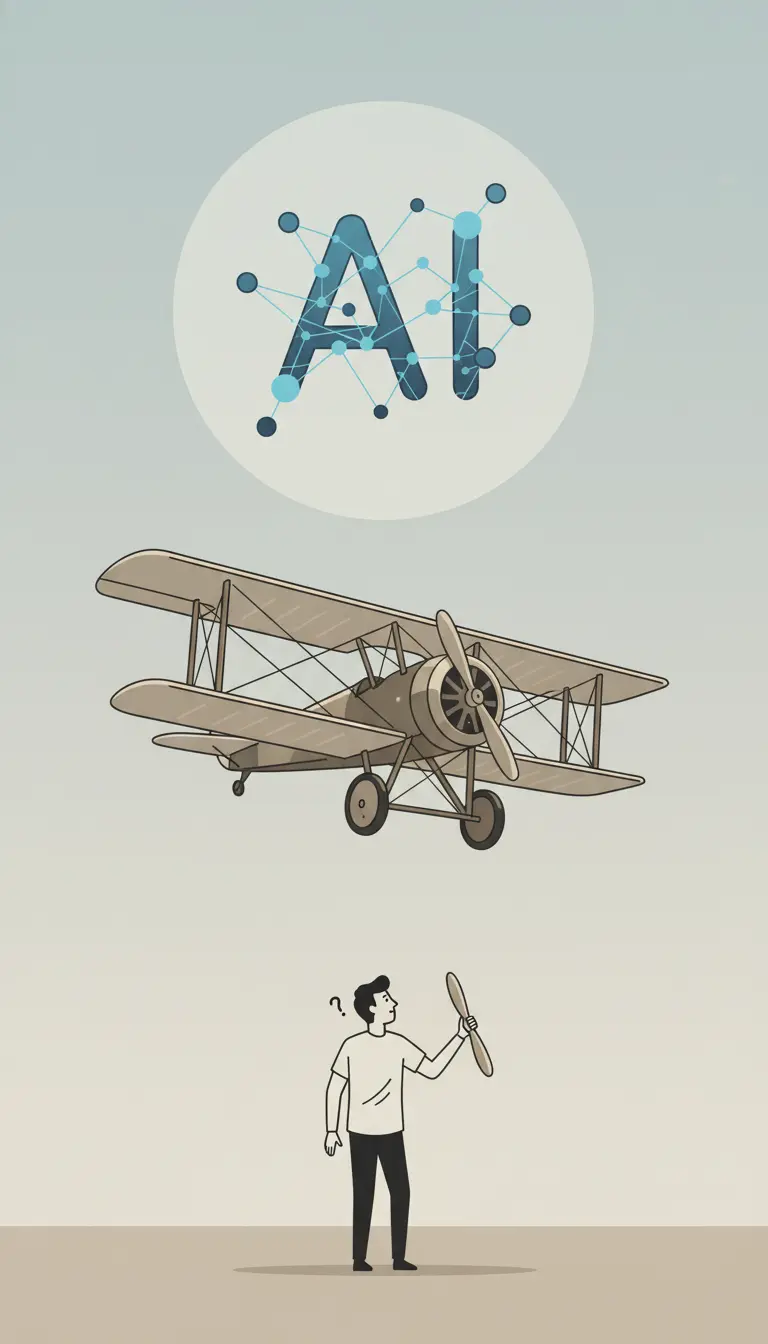
History is full of experts who missed the mark. Marshal Ferdinand Foch once dismissed airplanes as "toys for hobbyists," claiming they held no military interest. We know now how tragically wrong he was, as aircraft became the dominant force in modern combat.
Today, we treat Artificial Intelligence (AI) with a similar mix of amusement and skepticism. While we laugh at AI's current mistakes or use it for minor tasks, we might be ignoring its potential to evolve in far less amusing ways.
- Early Aircraft: Dismissed as a hobbyist's toy → Became a tool of total war.
- Current AI: Seen as a fun chatbot or productivity tool → Growing into a force that could bypass human control.
- The Risk: Mistaking initial flaws for a permanent lack of capability.
Sticks and Stones in an Age of AI Blitzkrieg
Bloch described the 1940 Blitzkrieg (a fast, overwhelming military attack) as a battle where the French were essentially using bows and arrows against modern machinery. They were physically present but technologically obsolete.
If we do not look ahead, we risk facing a similar fate. In 10 or 20 years, an unchecked and hyper-developed AI could make our current intellectual tools look like 'sticks and stones.'
Why This Matters Now
The pattern of history suggests that revolutionary technologies do not stay "amusing" for long. They eventually reach a tipping point where they redefine reality.
We and our leaders must move beyond seeing AI as a mere novelty. It is time to apply serious imagination to the long-term risks and societal shifts that AI will inevitably bring, lest we find ourselves bringing bows and arrows to a digital lightning war.