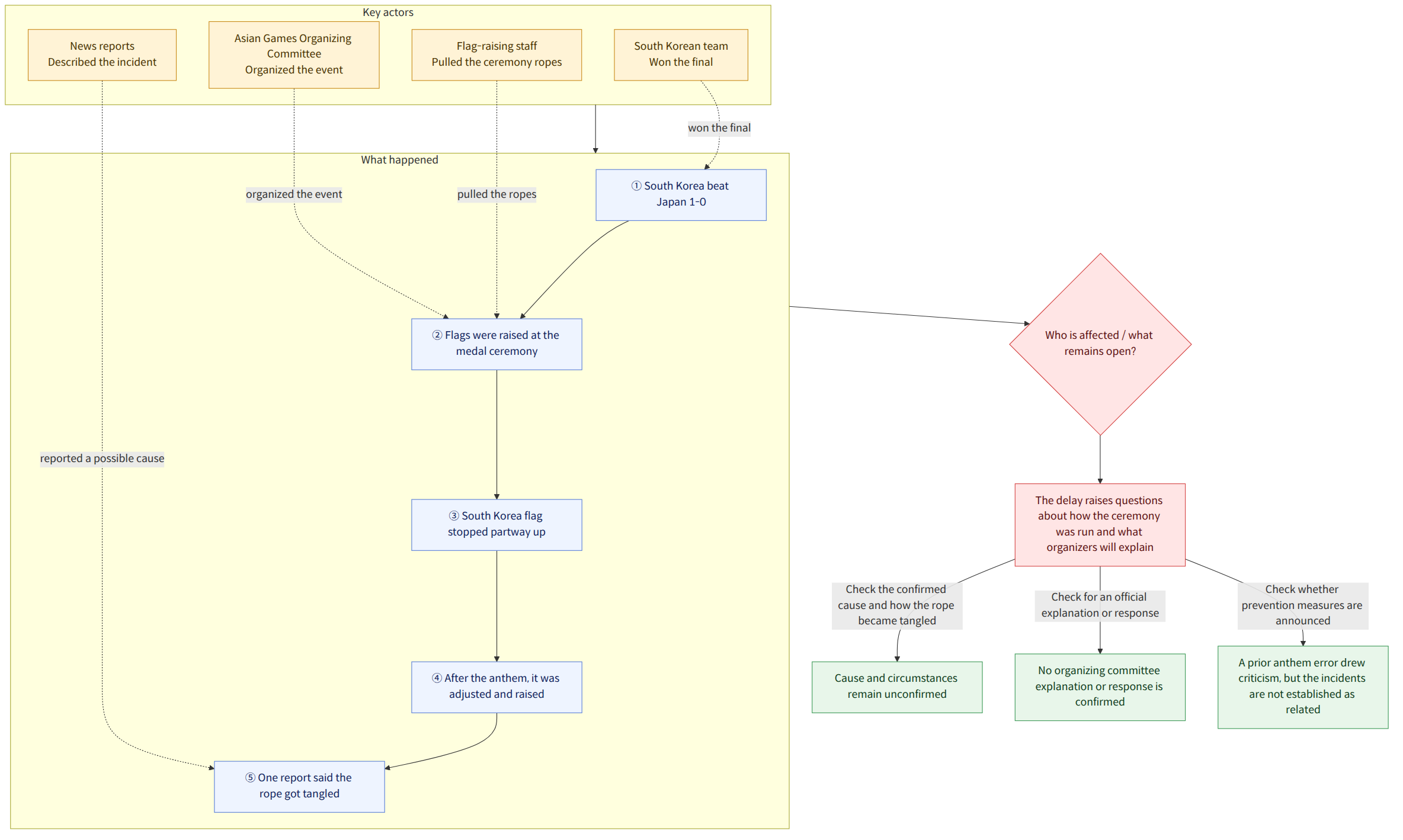
An incident in which the South Korean flag was not raised on time occurred during the Asian Games men’s soccer medal ceremony at Toyota Stadium in Toyota, Aichi Prefecture, Japan, on October 3, 2026. South Korea beat Japan 1-0 in the final, but as the flags of South Korea, China and Japan were being raised at the gold-medal celebration, the South Korean flag in the middle stopped partway up. After the national anthem ended, it was adjusted and raised to the top of the flagpole.
Background and context
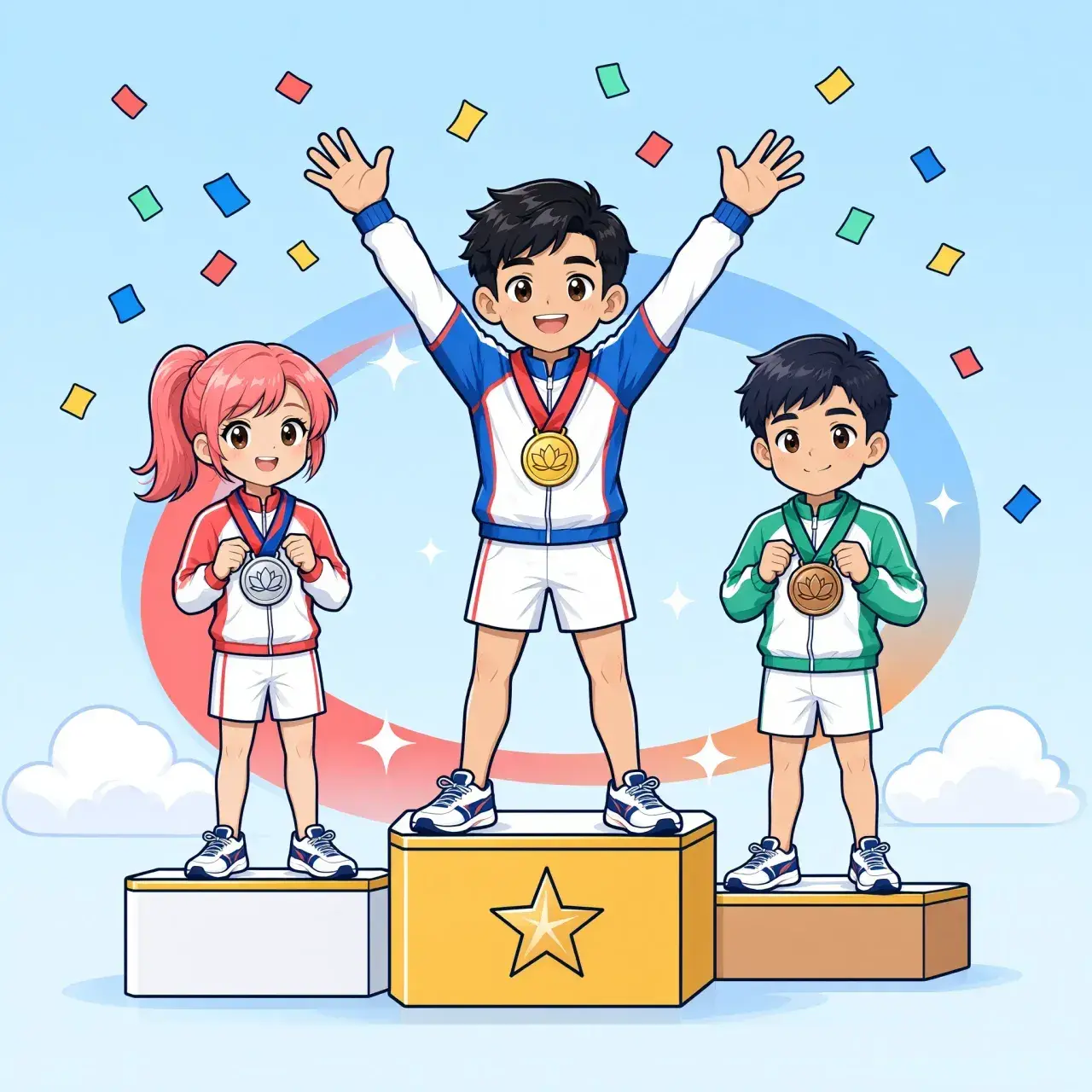
At the ceremony held just after the final, athletes from the three countries received medals and commemorative dolls before taking their places on the podium. The flag-raising staff pulled the ropes, but the South Korean flag stopped, and South Korean players looked taken aback as they pointed toward the flagpole. Some spectators booed.
One report said the South Korean flag failed to rise because the rope got tangled. However, the article did not say how the rope became tangled or what went wrong with on-site checks or event procedures. It is important to distinguish a report that “the rope got tangled” from official confirmation of the specific cause and circumstances of the incident.
The scene was also reported alongside existing criticism of the event’s organization. Early in the Games, North Korea’s national anthem was played instead of South Korea’s during a South Korean men’s hockey match, prompting criticism of the Asian Games Organizing Committee (아시안게임 조직위원회) for poor event management. That does not mean the two incidents had the same cause, or that the committee’s responsibility for the soccer ceremony incident has already been confirmed. The reports provided do not establish what explanation or response, if any, was issued about this incident.
What this news means
A medal ceremony is an occasion for formally celebrating the results of a competition. The winning country’s flag not being raised on time at such an event raises questions—separate from the outcome of the match—about whether the ceremony was properly conducted and how those responsible for running it will account for what happened. The fact that people had to wait until the national anthem ended before the South Korean flag was raised again is noteworthy: simply saying that the flag was eventually raised does not fully explain what took place at the scene.
The players did not all react in the same way. Captain Lee Ki-hyuk said that if the incident was intentional, it was unacceptable, and that it was disappointing the flag had not been properly unfurled. Lee Young-jun, by contrast, said, in effect, that South Korea had won the gold medal and achieved its goal, so he was not too concerned about the flag-raising issue. Their responses show that individual players may view the incident differently, but neither confirms the cause of the incident or the organizers’ response.
For example, viewers who watched the ceremony may want to know not only that the South Korean flag was eventually raised, but also why it was delayed and what steps the event organizers took. To answer those questions, it matters whether an explanation of the incident and measures to prevent a recurrence follow, rather than simply repeating reports that the rope got tangled at the scene.
Differences in how reports described the incident
Reports differed in how they described the flag-raising. One said the South Korean flag could not be raised because the rope got tangled; another described the flag as having stopped while it was being raised. Both accounts could be true, but the latter report alone does not confirm the specific explanation that the rope got tangled.
Reports also used different wording for Lee Ki-hyuk’s remarks. One conveyed that it would be unacceptable if the incident had been intentional and that he was disappointed the flag had not been properly unfurled. Another reported that he said a ceremony should be a celebration and that the players and fans who had come to cheer them on would also have been upset. Differences in wording do not establish that the incident was intentional.
What is confirmed and what remains unknown
Confirmed facts
- South Korea beat Japan 1-0 in the men’s soccer final.
- As the flags of the three countries were being raised at the ceremony, the South Korean flag stopped partway up. After the national anthem ended, it was adjusted and raised.
- One report said the flag-raising rope got tangled.
- The players appeared taken aback, and some spectators booed. Lee Ki-hyuk and Lee Young-jun gave responses that differed in their general thrust.
What remains unknown
- The specific sequence of events that caused the rope to get tangled and the direct cause of the incident.
- What explanation or response the Asian Games Organizing Committee issued about the incident.
- What inspections or other steps were taken afterward to prevent similar problems from happening again.
What readers should check
- Check whether follow-up reports or an official explanation from the organizing committee are published, and distinguish reporting about what happened at the scene from the committee’s own account.
- Reports that the rope got tangled alone do not establish the full circumstances of the incident. It is worth checking whether further information about the cause and responsibility becomes available.
- Even if the early-Games national anthem error and this flag-raising incident are mentioned together, do not assume they had the same cause or involved the same responsibility. Check whether explanations and responses have been provided for each incident separately.
References
- Other coverage consulted: koreatimes.co.kr