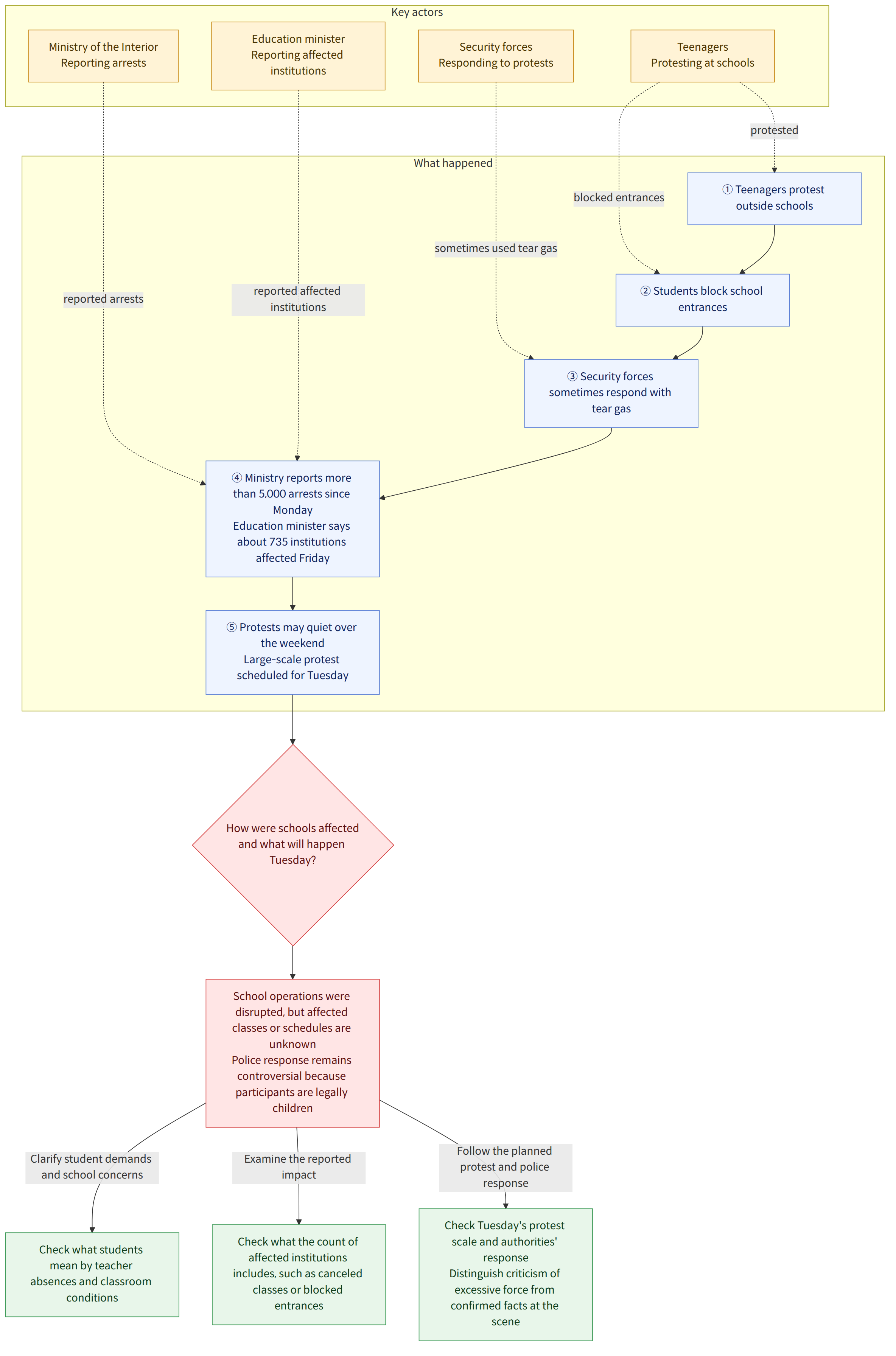
In recent days, teenagers in France have continued to protest outside schools, blocking entrances, and security forces have sometimes responded with tear gas. According to the Ministry of the Interior (내무부), more than 5,000 people have been arrested since Monday, and the education minister said about 735 educational institutions were affected on Friday. Protests may quiet down over the weekend, but a large-scale protest is scheduled for Tuesday.
Background and context
The protests are taking place at lycées, schools in France generally attended by young people aged 15 to 18. They are comparable to high schools in the United States or sixth-form colleges in the United Kingdom. Students have a range of grievances, with teacher absences and classroom conditions among the main concerns.
However, the available information does not specify what concretely triggered the protests or provide details about the teacher absences and classroom conditions students have described. It is therefore difficult to conclude that a particular policy or event sparked the protests beyond the grievances that have been confirmed.
The government said students’ grievances may be legitimate, but violence is not. It also accused the far left of encouraging the protests. Critics, meanwhile, said some police officers used excessive force against participants. Because those taking part in the protests are legally still children, the appropriateness of the response to the demonstrations has become a major issue alongside demands concerning conditions in schools.
What this news means
This is a case in which grievances about students’ school lives have been expressed through protests, while the authorities’ handling of the demonstrations has become another point of controversy. The blocking of school entrances and the impact on educational institutions show that school operations were disrupted, but it has not been confirmed which classes or schedules were affected at each school.
The fact that participants are legally children is an especially important consideration in assessing the police response. However, the claim that some police officers used excessive force comes from critics, and the available information is not enough to determine what happened at individual locations. The government’s stated position against violence and its acknowledgment that students’ grievances may be legitimate should also be considered together.
For example, even if a student is concerned about teacher absences or classroom conditions, that alone does not mean the student took part in a protest or was involved in violence. Conversely, since the protests blocked school entrances and led to a response from security forces, the demands concerning conditions in schools should be distinguished from the actions that took place at the scene.
Confirmed facts and what remains unknown
Confirmed facts
- In recent days, teenagers in France have protested outside schools and blocked school entrances.
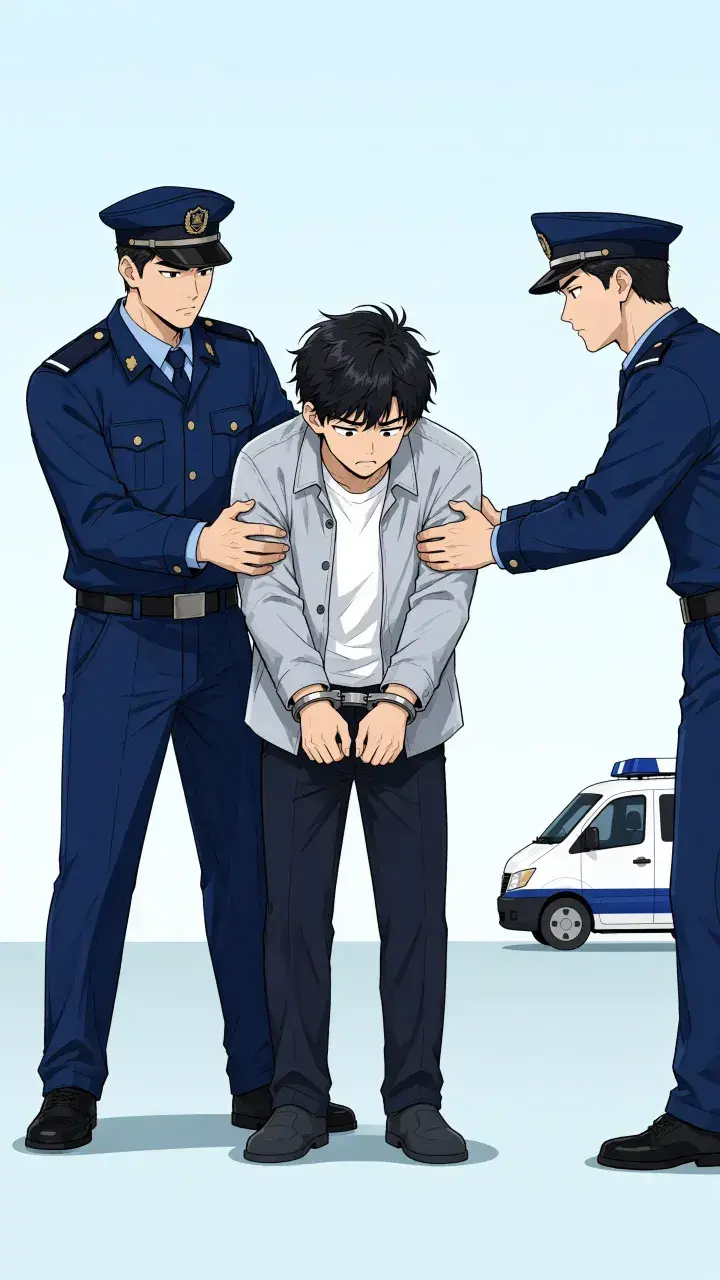
- Security forces have sometimes responded with tear gas.
- According to the Ministry of the Interior (내무부), more than 5,000 people have been arrested since Monday, and the education minister said about 735 educational institutions were affected on Friday.
- Teacher absences and classroom conditions were cited among the main grievances.
- Protests may quiet down over the weekend, but a large-scale protest is scheduled for Tuesday.
What remains unknown
- What specifically triggered the protests?
- What specific circumstances do students mean when they cite teacher absences and classroom conditions?
- How large will Tuesday’s protest be, and how will the government respond?
- In what ways were about 735 educational institutions affected?
What readers should look for
- Follow-up reporting should clarify what students are specifically demanding and what situations their concerns about teacher absences and classroom conditions refer to.
- Examining what the count of affected educational institutions includes—such as canceled classes or blocked entrances—would provide a more accurate understanding of the impact on school operations.
- Readers should check the actual scale of Tuesday’s planned protest and the authorities’ response, while distinguishing criticism of excessive police force from confirmed facts about what happened at the scene.