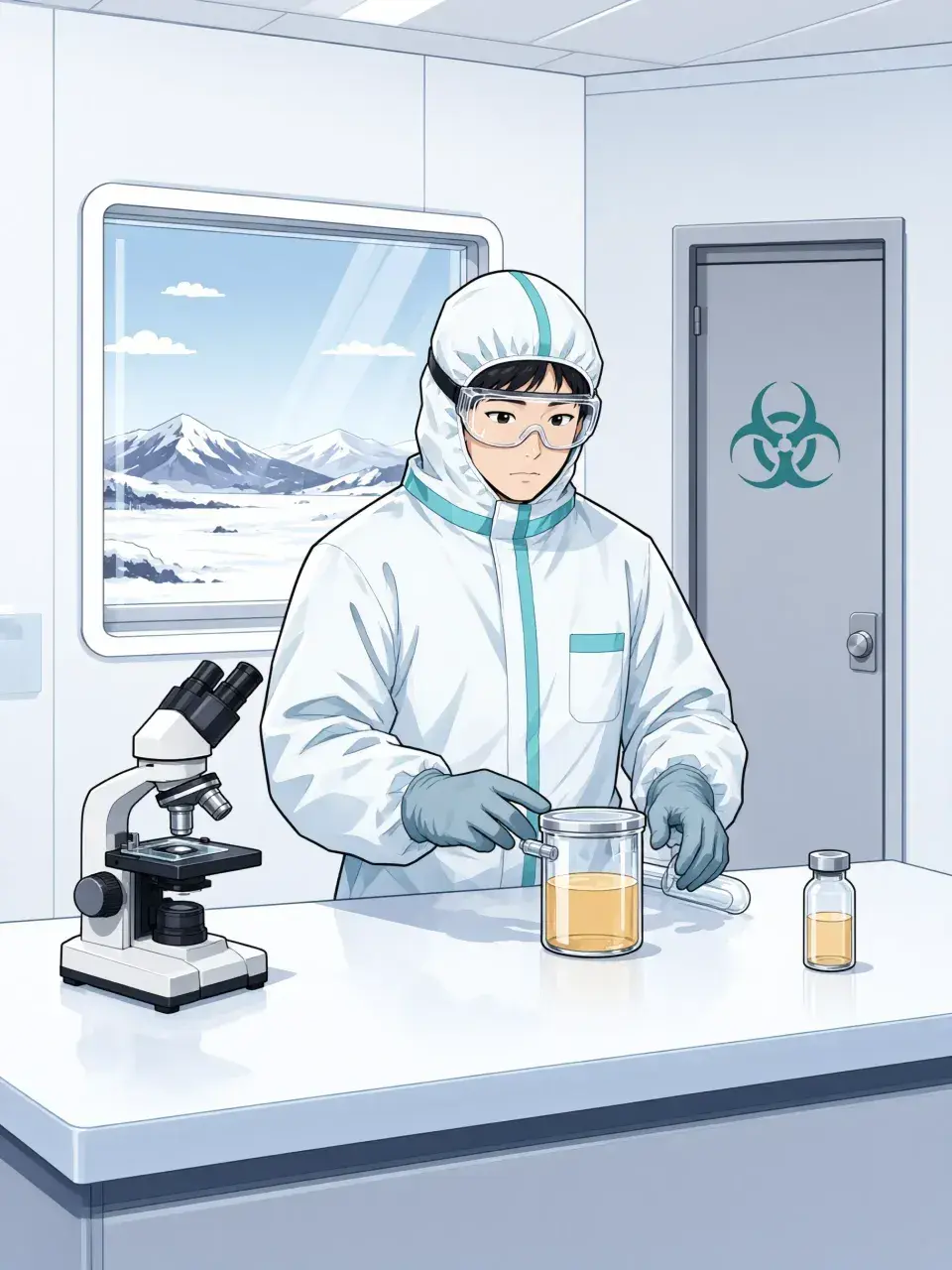
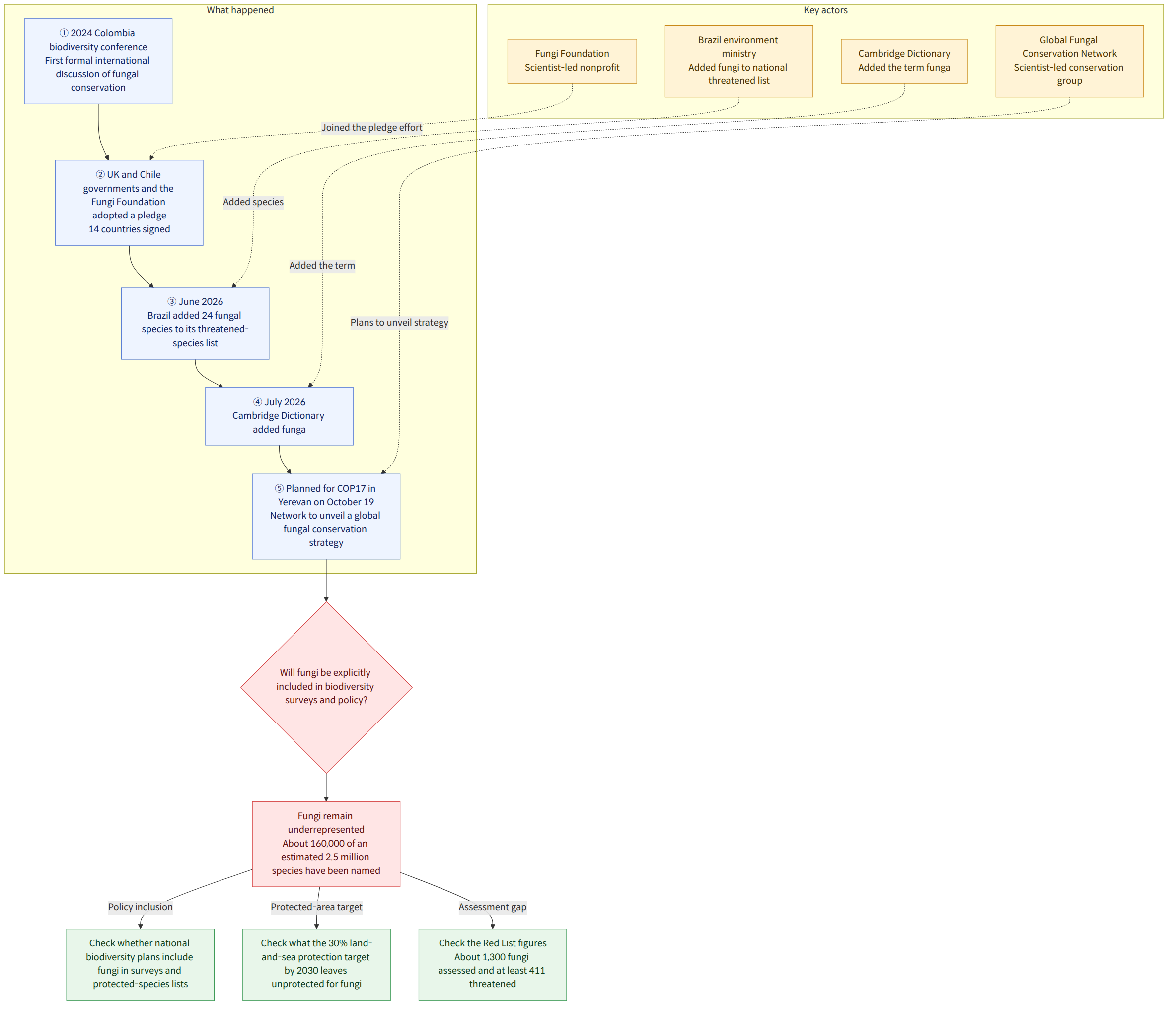
An estimated 2.5 million fungal species exist on Earth, but only about 160,000 have been scientifically named—less than 5% of the total. Only about 1,300 fungi have been assessed for the International Union for Conservation of Nature (세계자연보전연맹; IUCN) Red List, and at least 411 of them are classified as threatened with extinction. The Global Fungal Conservation Network (전세계균류보전네트워크), a scientist-led group, plans to unveil a global fungal conservation strategy at the Conference of the Parties to the Convention on Biological Diversity (유엔생물다양성협약 당사국총회; COP17), which will be held in Yerevan, Armenia, on October 19.
These figures show more than simply that fewer fungal species have been discovered. They point to a longstanding problem: a group of organisms that underpins the cycling of matter in ecosystems has not been adequately represented in international conservation policy.
Background and context
Fungi are eukaryotes (organisms whose cells contain a nucleus) that, unlike plants, cannot photosynthesize and instead absorb nutrients by decomposing other organic matter. A mushroom is the fruiting body (a structure that produces spores) that underground fungi form to reproduce. This group includes not only visible mushrooms but also a wide range of molds and other fungi.
In a 2024 report, the Global Fungal Conservation Network described fungi as “decomposers” and “nutrient cyclers.” Fungi make the elements in dead plants and animals available for reuse, live in symbiosis with most plants, and serve as food for many animals. Fungi’s importance, then, lies not only in protecting individual species but also in recognizing the processes that connect matter and organisms within ecosystems.
Yet when people talk about biodiversity, animals and plants often come to mind first. According to the article, scientists have proposed a “three Fs” terminology that adds “funga” to fauna and flora. This is more than a proposal to add another word. It is a call to identify and account for fungi as a distinct group of organisms when conducting biodiversity surveys, compiling lists of protected species, and setting policy goals.
The first attempt to formally discuss fungal conservation at the international level began at the 2024 United Nations Biodiversity Conference in Colombia. At the time, the governments of the United Kingdom and Chile, together with the Fungi Foundation (균류재단), a scientist-led nonprofit, adopted the “Fungal Conservation Pledge” (균류 보전 서약), calling for fungi to be recognized as an independent group of organisms on an equal footing with animals and plants. According to the article, 14 countries signed the pledge.
What this news means
The Convention on Biological Diversity has 196 parties. Its Global Biodiversity Framework (글로벌생물다양성프레임워크), the international framework of shared biodiversity goals, includes a target to designate at least 30% of land and sea as protected areas by 2030. Countries translate these shared goals into practice by developing, implementing, and reviewing National Biodiversity Strategies and Action Plans (국가생물다양성전략·행동계획).
But meeting the target for the area of protected land and sea will not automatically protect fungi. The concern raised in the article is that if conservation value is assessed with a focus on plants and animals, areas important to fungi may be overlooked in surveys or protection efforts. The call to explicitly include fungi in biodiversity policy extends beyond protected areas: it also means including fungi in biodiversity surveys, protected-species lists, and research.
For example, if a country primarily considers the distribution of plants and animals when designating protected areas, places that are important to fungi may not be fully recognized in the assessment. This is a hypothetical example, but it shows how the groups of organisms that are counted and surveyed can affect conservation priorities. For readers, this discussion matters because protecting nature also means deciding which organisms to study and include in policy.
Related policy developments
Efforts to treat fungi as a distinct part of biodiversity are also emerging outside international discussions. According to the article, Brazil’s Ministry of the Environment and Climate Change (브라질 환경기후변화부) added 24 fungal species to the country’s national list of threatened species in June 2026. In July of the same year, the Cambridge Dictionary added “funga,” defining it as all the fungi that live in a particular place or at a particular time.
These examples do not mean that fungal conservation is already established across countries’ policies. They do, however, show continuing efforts to name fungi alongside plants and animals and include them in national lists and biodiversity discussions. Whether the strategy to be unveiled at COP17 leads to actual policy goals and systems for surveying and protection remains to be seen.
What is known and what remains unclear
What is known
- An estimated 2.5 million fungal species exist, but only about 160,000 have been scientifically named.
- About 1,300 fungi have been assessed for the IUCN Red List, and at least 411 are classified as threatened with extinction.
- The Global Fungal Conservation Network plans to unveil a global fungal conservation strategy at COP17 on October 19.
- The Fungal Conservation Pledge was adopted at the 2024 United Nations Biodiversity Conference in Colombia, and the article says 14 countries signed it.
- Brazil added 24 fungal species to its national list of threatened species in June 2026.
What remains unclear
- The article does not say what specific measures or implementation procedures the strategy to be unveiled at COP17 will include.
- It is not known how many countries have incorporated fungal conservation goals into their National Biodiversity Strategies and Action Plans.
- The article does not say how the extinction risk of the majority of fungi that have not been assessed by the IUCN will be surveyed and evaluated.
What readers can check
- Readers can review the strategy to be unveiled at COP17 and the implementation plans that countries issue afterward to see whether the proposals lead to actual policy.
- Checking whether National Biodiversity Strategies and Action Plans include fungal surveys and conservation goals can show how fully international targets are reflected in national policy.
- It is also important to check whether fungi are included in surveys related to protected-area designations and threatened-species lists. Knowing and assessing species is the starting point for conservation.