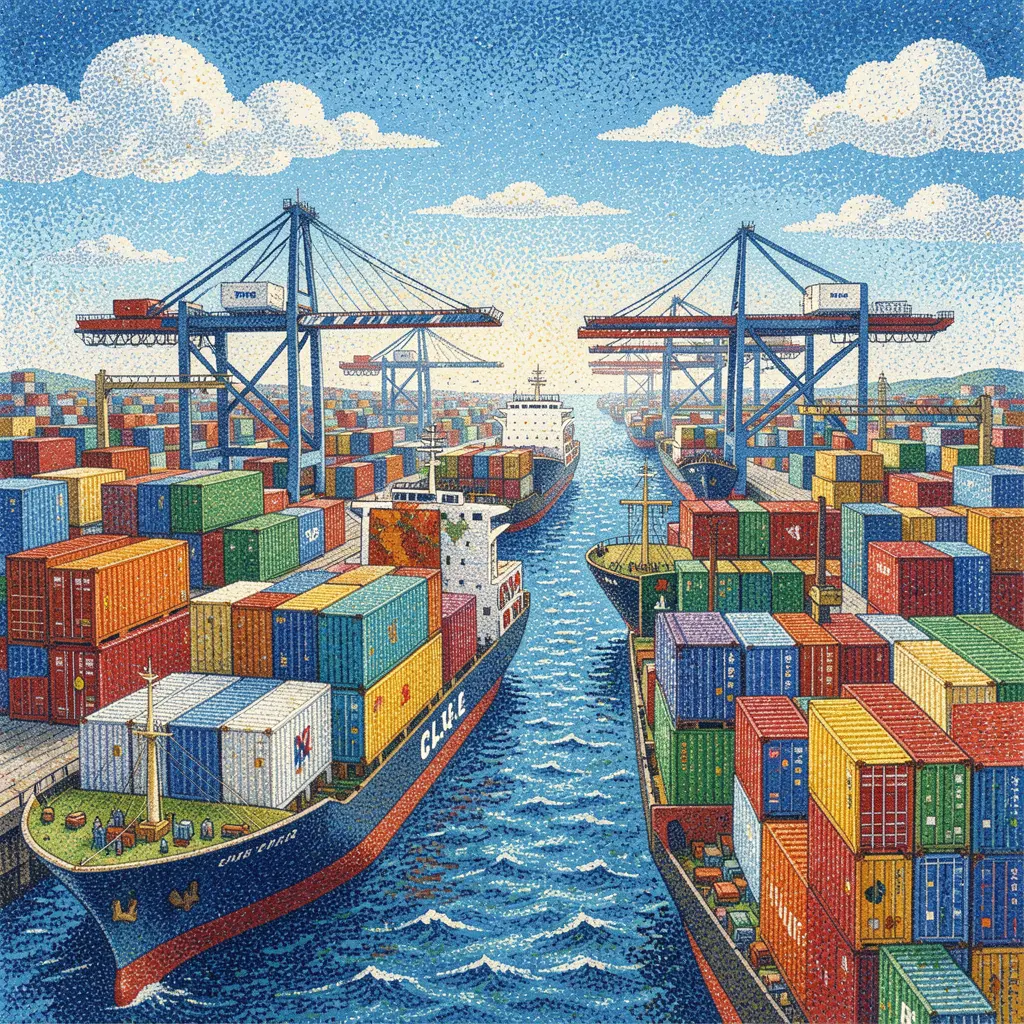
The Sudden Spike in Global Freight Rates
Recent data from the Korea Customs Service reveals a significant shift in the logistics landscape. Container shipping costs from South Korea to major global economies, specifically the United States and the Middle East, experienced a sharp increase in March compared to the previous month.
This sudden rise is particularly concerning because it interrupts a steady declining trend in freight costs that had been observed since November of last year. For businesses, this means the cost of moving goods across the ocean is becoming more expensive, which can lead to higher prices for consumers.
Detailed Breakdown of Shipping Costs
1. The North American Route
The average shipping charge for a 40-foot container (the standard large metal box used for international trade) from South Korea to the U.S. West Coast rose by 24.3 percent. The cost reached 5.61 million won (approximately US$3,807.1) in March.
This increase suggests a tightening of capacity or an increase in demand for shipments heading toward North America. When more companies want to ship goods but there aren't enough ships available, the price naturally goes up, similar to how hotel prices rise during a peak holiday season.
2. The Middle East and European Union
The most dramatic increase was seen in shipments to the Middle East, where costs jumped by a staggering 42.7 percent, reaching 5.25 million won. Meanwhile, shipping expenses to the European Union saw a more moderate increase of 5.8 percent, totaling 3.41 million won.
The sharp spike in Middle East shipping costs is often linked to geopolitical instability. When conflict occurs in key maritime corridors, ships must take longer, more expensive routes to avoid danger, which drives up the cost for everyone.
The Divergence: The China Exception
Interestingly, not all routes saw an increase. Shipping costs to China actually fell by 9.4 percent, dropping to 501,000 won. This marks the second consecutive month of decline for this specific route.
This divergence suggests that the current logistics crisis is not a global systemic failure but is instead tied to regional instability and specific trade lane demands. The short distance between Korea and China makes these routes less susceptible to the massive disruptions affecting long-haul ocean voyages.
Understanding the Components of Shipping Costs
It is important to note that the figures provided by the customs agency are not just the basic fare. These totals include:
- Freight Rates: The basic cost of transporting the container from port to port.
- Commissions: Fees paid to freight forwarders (agents who organize the shipment).
- Surcharges: Additional fees for fuel, security, or emergency situations.
For example, a Bunker Adjustment Factor (BAF) (a fee added to cover fluctuations in fuel prices) can significantly change the final bill even if the base freight rate remains the same.
Future Outlook and Economic Impact
Potential Risks to Global Trade
If these costs continue to rise, exporters may face a margin squeeze (a situation where the cost of doing business rises faster than the selling price). This could lead to a ripple effect where the cost of electronics, automobiles, and machinery exported from Korea increases for the end-user in the U.S. and Europe.
Long-term Logistics Trends
Industry experts suggest that the volatility in shipping costs will persist as long as geopolitical tensions remain high in the Middle East and the Red Sea. Companies are now looking into diversifying their logistics chains to avoid relying on a single route, a strategy known as supply chain resilience.
Summary of March Shipping Trends
- U.S. West Coast: $\uparrow$ 24.3% (Significant increase)
- Middle East: $\uparrow$ 42.7% (Sharp surge)
- European Union: $\uparrow$ 5.8% (Moderate increase)
- China: $\downarrow$ 9.4% (Continued decline)