Gwangju Metro Line 2 faces another delay
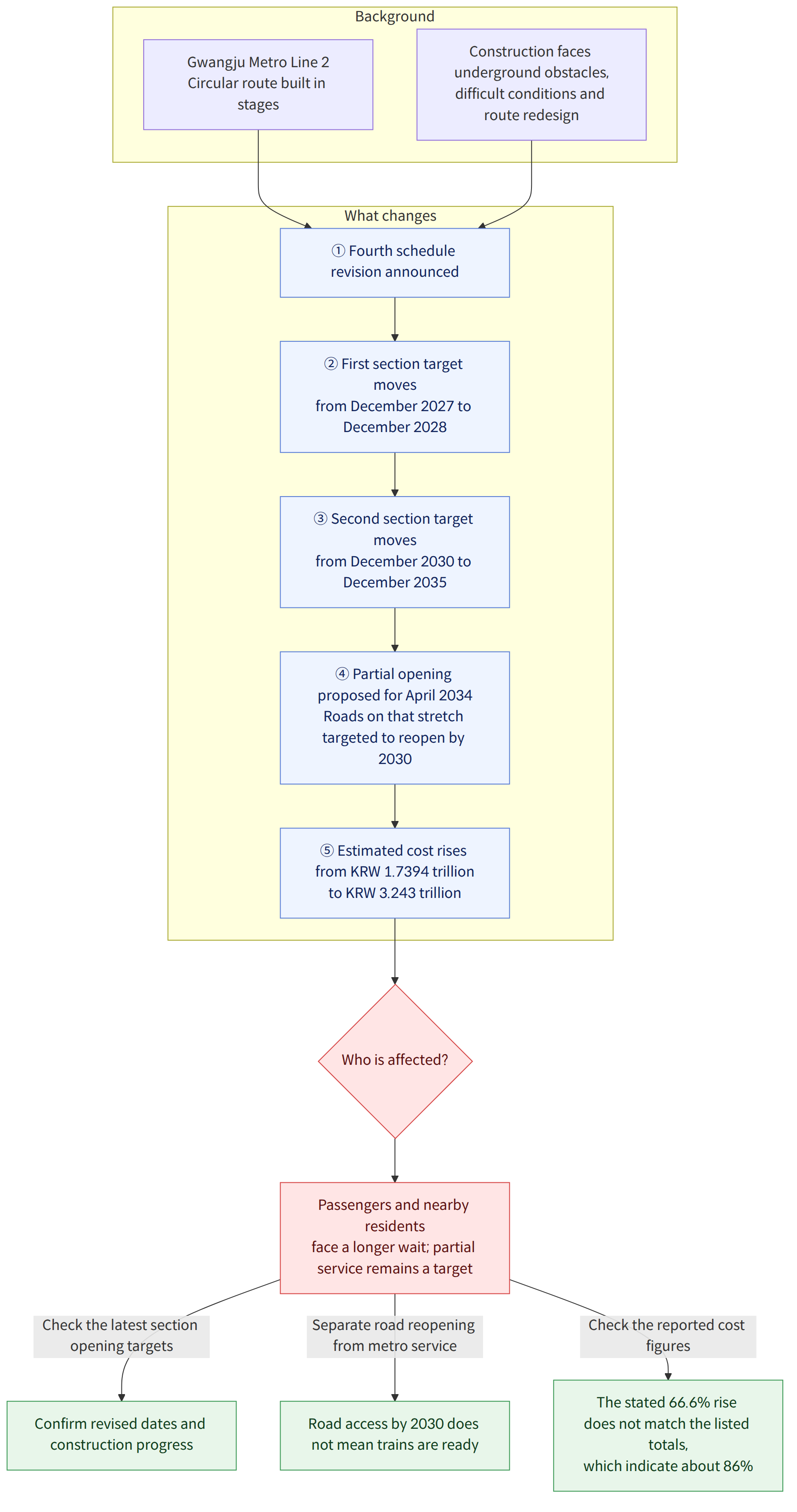
Gwangju’s circular Metro Line 2 is expected to take more than a decade to build, after officials announced another revision to its opening schedule. The first section, originally expected to begin service in December 2027, is now targeted for December 2028. The second section’s planned opening has shifted from December 2030 to December 2035.
The latest announcement marks the fourth time the city has postponed the line’s opening timetable. The project is being built in stages across southern and northern parts of Gwangju, and the schedule changes mean passengers will have to wait longer for the complete loop to become operational.
The revised targets are December 2028 for the first section and December 2035 for the second, according to the city’s latest construction review.
What the two sections will cover
The line is planned as a circular route connecting major areas across the city. Its first section runs for about 17 kilometers through southern Gwangju, from Gwangju Station via Namgwangju Station, Baegun Intersection and the World Cup Stadium area to City Hall and the vehicle depot. Construction on this section began in October 2019 and is divided into six work zones.
The second section is about 20 kilometers long and will serve northern Gwangju. From the depot, the planned route continues through the Geungnakgang Station area, Suwan and Cheomdan districts, Ilgok, and Chonnam National University before returning to Gwangju Station. Work on this stage began in January 2024 and is divided into eight work zones.
A circular line is designed to connect multiple neighborhoods without requiring every passenger to travel through a single central station. For residents, that could make trips between districts more direct; the practical benefit, however, depends on when each section and station actually begins service.
Why construction is taking longer
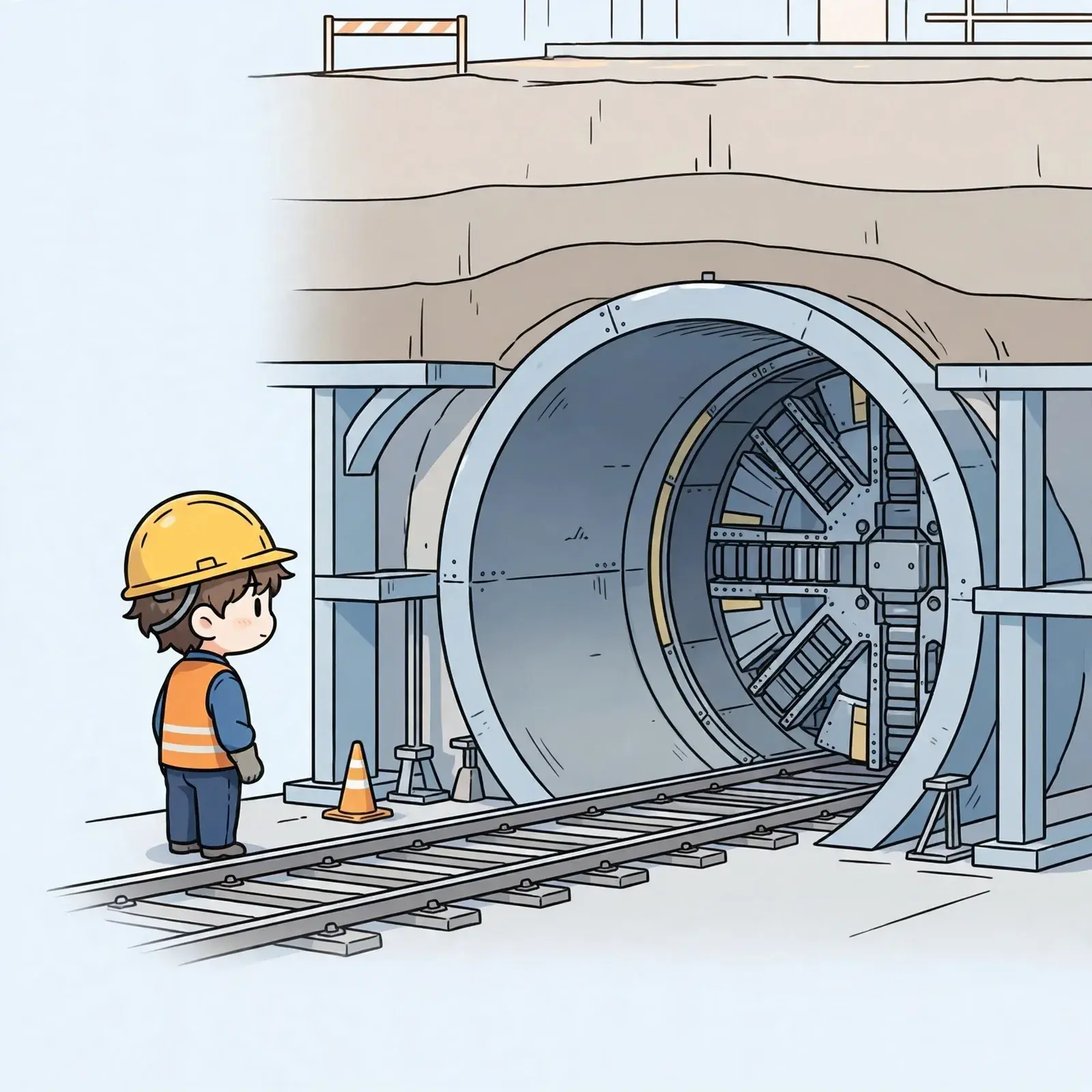
Officials said the first section’s delay reflects setbacks in civil engineering work, including unexpected bedrock and buried utilities or other underground structures that were not anticipated. When construction crews find hard rock or existing infrastructure below a road, they may need to change their methods, protect the facilities or revise the work sequence.
The city also reviewed work that must follow the main construction. A metro line cannot open as soon as tunnels and stations are built: buildings, machinery, power, communications, signaling systems and trains all need to be installed and coordinated. Test runs—trial operations used to check trains and systems before passengers board—are also required before service begins.
- First section: delays to underground and civil engineering work, followed by the need to coordinate station systems and train testing.
- Second section: difficult working conditions in narrow streets have complicated preparations for construction in work zones 7 and 10.
- Route changes: part of the alignment in work zone 13 has been revised and is being redesigned.
- Contracting: the city has not yet selected a contractor for the difficult work in zones 7 and 10.
These factors affect more than the construction crews directly involved. Work in narrow streets can make it harder to maintain traffic and access to nearby homes and businesses, while redesigning a route can require plans and construction schedules to be updated together.
A partial opening is being considered
To reduce the wait for some residents, the city plans to pursue a partial opening of part of the second stage. It says a 11.9-kilometer stretch covering work zones 11 through 14—from Yangsan-dong toward the Cheomdan, Suwan and Singa districts—could open in April 2034. The proposed stretch includes nine stations.
Before rail service begins there, the city expects to finish reopening the roads along the same section by 2030. Reopening roads is a separate milestone from operating the metro: it can reduce the disruption caused by construction, but it does not mean trains will be ready to carry passengers.
A partial opening could give some neighborhoods access to the line before the entire northern section is complete. Its timing remains a target, however, and depends on construction, station and system work being completed in sequence.
Project costs have risen
The estimated project cost has increased from KRW 1.7394 trillion at the outset to KRW 3.243 trillion, according to the figures reported by the city. The report described this as a 66.6% increase, although those two totals mathematically indicate a rise of about 86%. The stated percentage and the listed amounts therefore do not match.
Large transit projects can become more expensive when construction takes longer, designs change or difficult conditions require additional work. In this case, the city’s announcement identifies underground obstacles, constrained roads and route redesign as schedule challenges, but does not provide a breakdown explaining how much each factor has added to the total cost.
The combination of a longer timetable and a higher budget makes close oversight important. Residents and businesses along the route will also be watching for clear updates about construction zones, road access and the opening sequence.
What happens next
The city’s urban railway construction headquarters says it will manage construction schedules and costs together and focus attention on key stages of the work. That approach matters because the final opening date depends on several connected tasks—not just tunnel construction, but also station completion, electrical and communications systems, signaling, train delivery and testing.
For passengers, the main milestones to watch are the first section’s revised December 2028 target, the possible April 2034 partial opening, and the second section’s December 2035 target. Each remains dependent on construction progress and the completion of the systems needed for safe operations.
“We will manage the schedule and project costs together and closely oversee critical stages so the work can proceed without further disruption,” said Park Geum-hwa, head of the city’s urban railway construction headquarters.
The revised timeline leaves Gwangju with a long wait before the full circular route is available. Until then, the project’s progress will be measured not only by how much track is built, but also by whether the city can complete the linked infrastructure, limit disruption to neighborhoods and keep future schedule updates credible.