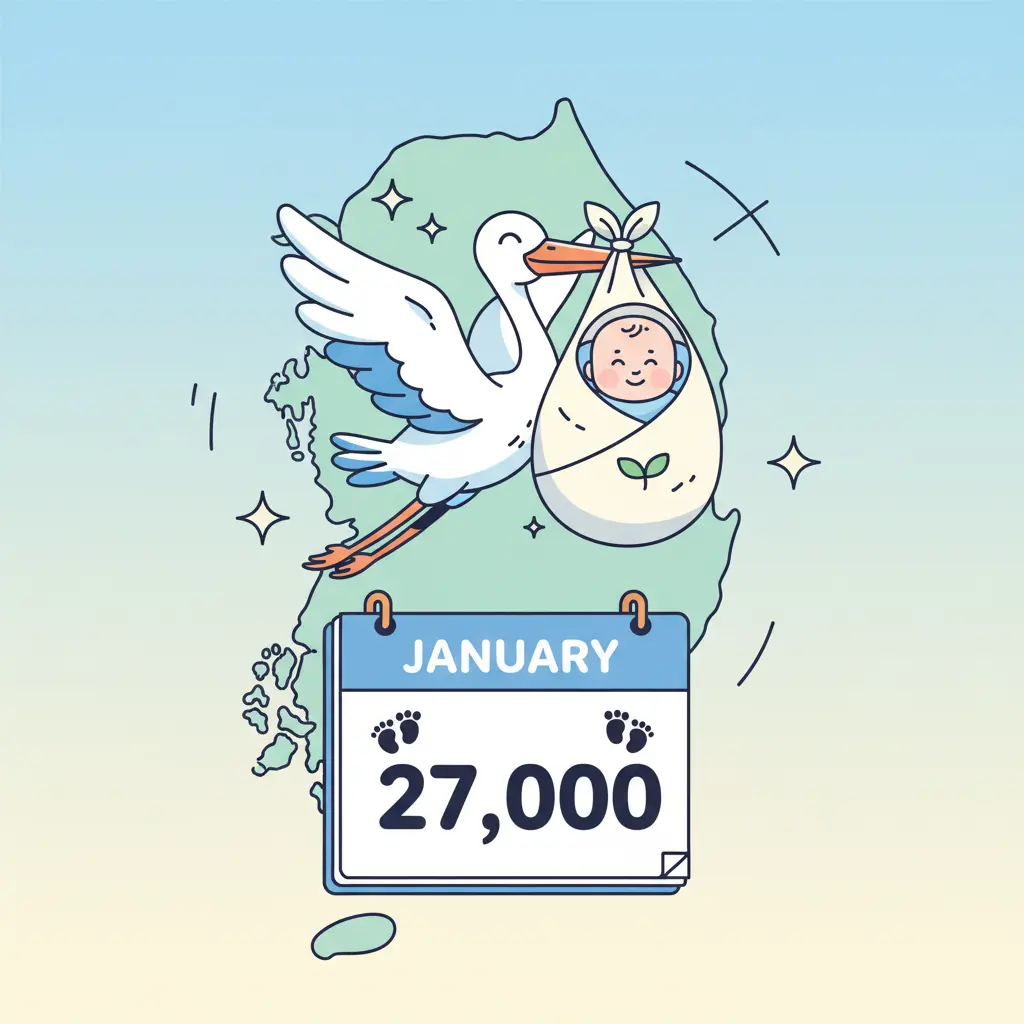
A New Start: 26,916 Newborns in January
The year began with a hopeful sound as the number of births in January reached 26,916. This figure is particularly significant given the ongoing concerns over South Korea's shrinking population.
Key Fact: The 26,916 births in January represent a monthly peak that provides a much-needed boost to national demographics.
Will the Fertility Rate Reach 1.0?
Following these statistics, there are expectations that the Total Fertility Rate (the average number of children a woman is expected to have during her lifetime) could move closer to 1.0.
To put this in perspective, imagine a group of 100 women; if they collectively have 100 children over their lifetimes, the fertility rate is 1.0. When this number drops too low, it leads to a Demographic Cliff (a rapid decline in the working-age population that threatens economic stability), a challenge South Korea has been battling for years.
Why This Number Matters for the Future
The January birth statistics carry several important implications for society:
- Parental Preference: Many parents prefer having babies at the beginning of the year so the children are older relative to their school peers.
- Economic Hope: A higher number of births ensures a future workforce and consumer base to keep the economy running.
- Stabilization Signal: This could be an early sign that the rapid decline in birth rates is beginning to stabilize.
While one month's data does not solve the entire problem, it offers a glimmer of hope that policy efforts and changing social attitudes might be making an impact.