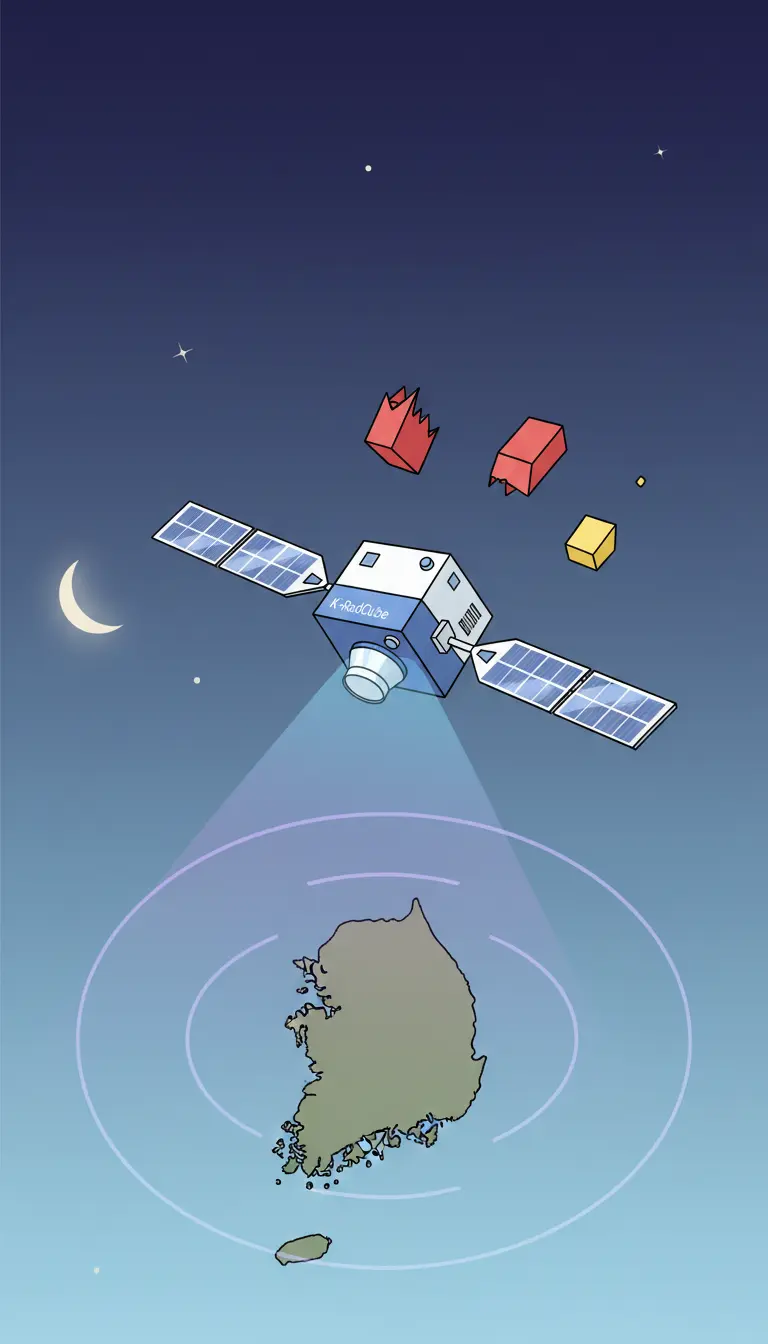
The Tiny Giant: What is K-RadCube?
The K-RadCube is a homegrown cube satellite (a type of miniaturized satellite for space research) developed by Nara Space Technology in collaboration with the Korea Astronomy and Space Science Institute. Its primary goal is to measure the impact of cosmic radiation (high-energy particles originating from outer space) on electronics and potential biological systems.
Deploying in the Dark: Solar Panels and Antennas
A full-scale mockup of the K-RadCube was recently showcased, demonstrating the successful deployment of its solar panels and antennas. In the harsh environment of space, these mechanical actions are critical because:
- Solar panels must unfold perfectly to provide electrical power.
- Antennas are the only way for the satellite to talk to Earth.
- Any mechanical failure could turn the satellite into "space junk."
"The successful deployment of these components is the first step toward a successful mission in the unpredictable environment of deep space."
Why Space Radiation Matters
Why are we measuring radiation? Unlike Earth, which is protected by an atmosphere, space is filled with invisible energy that can damage hardware. By using K-RadCube, scientists hope to:
- Improve the durability of future spacecraft.
- Protect astronauts from health risks during long-duration flights.
- Test how "off-the-shelf" components survive in orbit.