The Hybrid Revolution: Driving South Korea's Export Growth
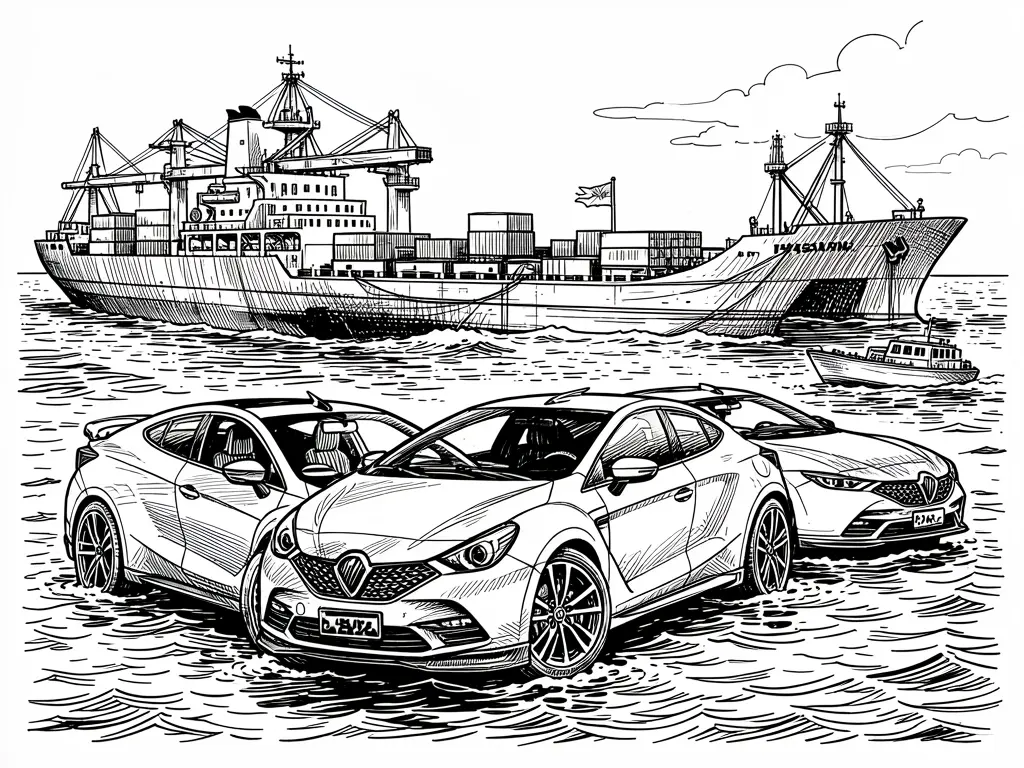
South Korea's automotive sector has demonstrated remarkable resilience and adaptability in the face of shifting global energy trends. In March, the nation's automobile exports reached a significant milestone, totaling US$6.37 billion. This represents a 2.2 percent increase compared to the same month last year, marking the second-highest March performance in the industry's history.
This growth is not merely a result of increased volume, but a strategic shift in the types of vehicles being shipped. The primary engine behind this success has been the overwhelming global appetite for hybrid vehicles (cars that combine a traditional internal combustion engine with an electric motor to improve fuel efficiency).
The export value of hybrid vehicles skyrocketed by a staggering 79 percent year-on-year, effectively offsetting declines in other segments and repositioning South Korean manufacturers as leaders in the transitional automotive market.
Regional Shifts: The EU Surge vs. Middle East Volatility
While the overall numbers are positive, the geographical distribution of these exports reveals a complex geopolitical landscape. The demand for South Korean automobiles is shifting heavily toward Western markets, specifically the European Union (EU). Shipments to the EU saw a robust increase of 33 percent.
However, this success is contrasted by significant downturns in other key regions. Exports to Asia and the Middle East experienced sharp declines of 38.4 percent and 40.8 percent, respectively.
Geopolitical Impact on Trade
Industry analysts point to regional instability as a primary cause for the slump in Middle Eastern demand. Specifically, the ongoing conflict between the United States and Iran has created significant logistical and economic headwinds.
- Logistical Disruptions: Conflict-related instability in shipping lanes can delay deliveries and increase insurance costs.
- Economic Uncertainty: Regional instability often leads to reduced consumer spending power and cautious import policies.
- Supply Chain Shifts: Geopolitical tensions can force manufacturers to reroute shipments, impacting the efficiency of traditional trade routes.
A Closer Look at the Three-Month Trend
When examining the broader quarterly performance, the picture becomes slightly more nuanced. For the three-month period ending in March, the combined value of automobile exports stood at $17.2 billion. This figure reflects a marginal 0.2 percent decrease compared to the same period in the previous year.
This slight quarterly dip highlights the volatility inherent in the current global economy. While the month of March showed strong momentum, the cumulative data suggests that the industry is still navigating the aftershocks of global supply chain adjustments and fluctuating energy prices.
Domestic Market Vitality
It is not just the international markets that are showing signs of life; the South Korean domestic market is also experiencing a notable uptick. In March, domestic vehicle sales reached 164,813 units, marking a 10.2 percent increase compared to the previous year.
This domestic strength suggests that despite inflationary pressures, South Korean consumers remain interested in upgrading their vehicles, particularly those offering better fuel economy and advanced technology. This dual strength—both in exports and domestic sales—provides a solid foundation for the automotive industry heading into the second quarter.
Future Outlook: Navigating the Transition to Electrification
Looking ahead, the South Korean automotive industry finds itself at a critical crossroads. The massive surge in hybrid demand indicates that consumers are not yet ready to move exclusively to Battery Electric Vehicles (BEVs) (vehicles powered entirely by electricity stored in rechargeable batteries), but they are rapidly moving away from traditional gasoline-only engines.
The ability of South Korean manufacturers to balance the production of high-demand hybrids with the long-term development of full electric and hydrogen-powered vehicles will determine their dominance in the coming decade.
Key Factors to Watch:
- Technological Evolution: How quickly manufacturers can integrate next-generation battery technology into both hybrid and electric models.
- Global Regulatory Environment: Changes in environmental regulations in the EU and North America that could mandate faster transitions to zero-emission vehicles.
- Geopolitical Stability: The potential for renewed stability in the Middle East or shifts in trade relations with major Asian economies.
- Raw Material Supply: The stability of the supply chain for critical minerals like lithium, cobalt, and nickel, which are essential for all modern vehicle powertrains.