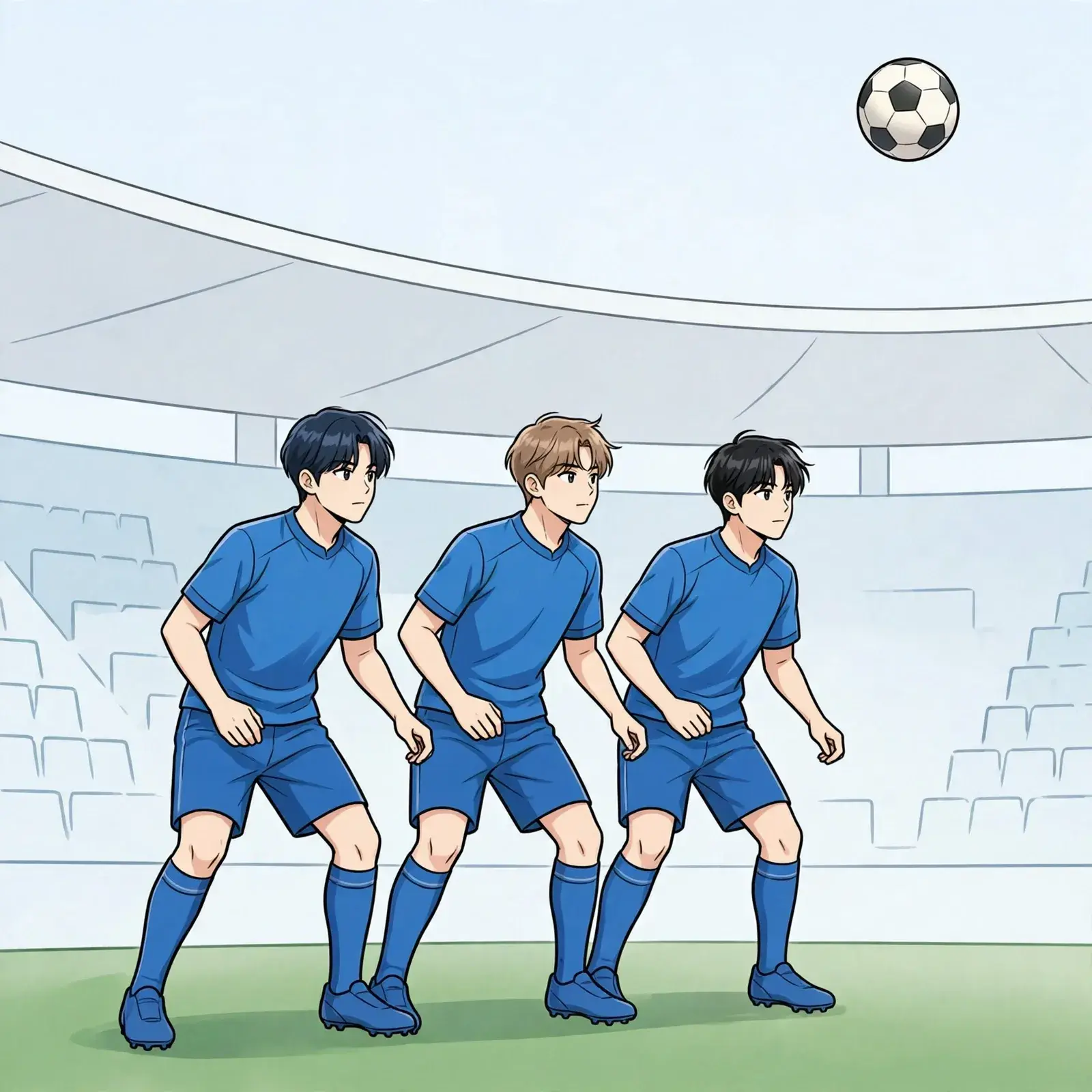
South Korea Held to a Frustrating Draw
South Korea were held to a 0-0 draw by Venezuela in a friendly at Ulsan Munsu Football Stadium on October 2. The home side struggled to turn possession into clear chances and finished the first half with just one shot and no shots on target—attempts that would have tested the opposing goalkeeper.
The result followed a 3-0 win over Ecuador on September 24 and a 4-1 defeat to Uruguay on September 28. Across his first three games as interim coach, Roberto Moreno has recorded one win, one draw and one loss. South Korea entered the match ranked 32nd in the world, with Venezuela 47th.
“Honestly, I feel sorry for the defenders. It didn’t feel like we were all fighting together today. Even if we had won, I wouldn’t have felt good about it,” Kim Min-jae said after the match.
Moreno Keeps the 4-4-2 Formation
Moreno selected the same 4-4-2 formation used in the previous two games. A formation describes how players are arranged across the field; in a 4-4-2, four defenders, four midfielders and two forwards form the team’s basic shape.
Son Heung-min started up front alongside Oh Hyeon-gyu. Son was one goal away from setting a new record for the most goals scored by a South Korean men’s national-team player in international matches. Kim Min-su and Lee Kang-in played on the wings, while Hwang In-beom and Park Jin-seop formed the central midfield partnership.
Jo Hyeon-woo, Kim Min-jae, Lee Han-beom and Seol Young-woo made up the back four. Song Bum-keun started in goal for the first time under Moreno. The lineup offered continuity, but the team’s performance did not show that the players had yet settled into a clear, shared approach.
A Midfield That Could Not Find Its Rhythm
South Korea repeatedly lost possession while trying to exchange short passes through midfield. Venezuela’s pressure—an attempt to crowd opponents and force mistakes—often disrupted those moves, and some attempts to win the ball back led to unnecessary fouls.
With the middle of the field blocked, South Korea increasingly sent long passes from the defense toward the forwards. Those balls were often inaccurate and failed to develop into attacks. Several careless passes also interrupted the team’s momentum, leaving the buildup—moving the ball from defense into attack—disjointed.
A Brief Second-Half Threat, Then More Pressure
South Korea pushed their defensive line higher after the break and tried to attack with greater urgency. Their most promising move came six minutes into the second half, when Oh Hyeon-gyu crossed from the right and Son Heung-min ran onto the ball to shoot.
The moment did not lead to a goal, and the match soon returned to the same hesitant pattern seen before halftime. Venezuela found openings on the counterattack, meaning quick attacks launched after winning the ball, and South Korea had to deal with several dangerous situations.
The defensive problems were not limited to the back line. South Korea’s midfielders struggled to slow Venezuela’s attackers, allowing opponents to reach shooting positions. One Venezuelan effort struck the goalpost, a close call that underscored how vulnerable South Korea could be when their defensive lines failed to work together.
Kim Min-jae’s Anger After His Substitution
Kim, a central figure in South Korea’s defense, was substituted in the 35th minute of the second half. Cameras showed him speaking with visible frustration toward Moreno, and he threw his boots near the bench after coming off.
In his post-match interview, Kim said the team had needed a response but had once again failed to get the result it wanted. He added that many aspects of the performance had to improve, particularly the team’s willingness to defend, contest challenges and work collectively.
“The most important thing is for the team to come together. We can get results when the whole team runs as one, rather than focusing on individuals shining,” Kim said. “We all have to work extremely hard together if we want to raise the team’s level.”
What the Draw Reveals About Moreno’s Team
The scoreline avoided another defeat, but the performance left major questions about how South Korea will create attacks and protect their defense as a unit. When midfield passes were intercepted, the defenders faced more pressure; when long balls bypassed midfield, the forwards often had little support nearby.
Those problems are connected. A team’s attack and defense depend on players moving together: midfielders need to offer passing options, forwards need to help keep possession, and defenders need support when opponents break forward. Kim’s criticism focused on that collective effort, rather than on any one player’s individual performance.
The Challenge Ahead
Moreno’s first three matches have produced different outcomes, but the latest draw showed that the team still needs greater coordination and consistency. A 4-4-2 can provide a clear structure, yet the formation alone cannot ensure effective passing or a compact defense; players must understand when to move, press and cover for one another.
South Korea’s next step will be to turn those broad concerns into improvements on the field. More reliable passing through midfield could reduce the need for hopeful long balls, while better support between the lines could help the forwards receive the ball in dangerous areas. For the defenders, the priority is equally clear: the entire team must help prevent opponents from reaching the back line with space to attack.