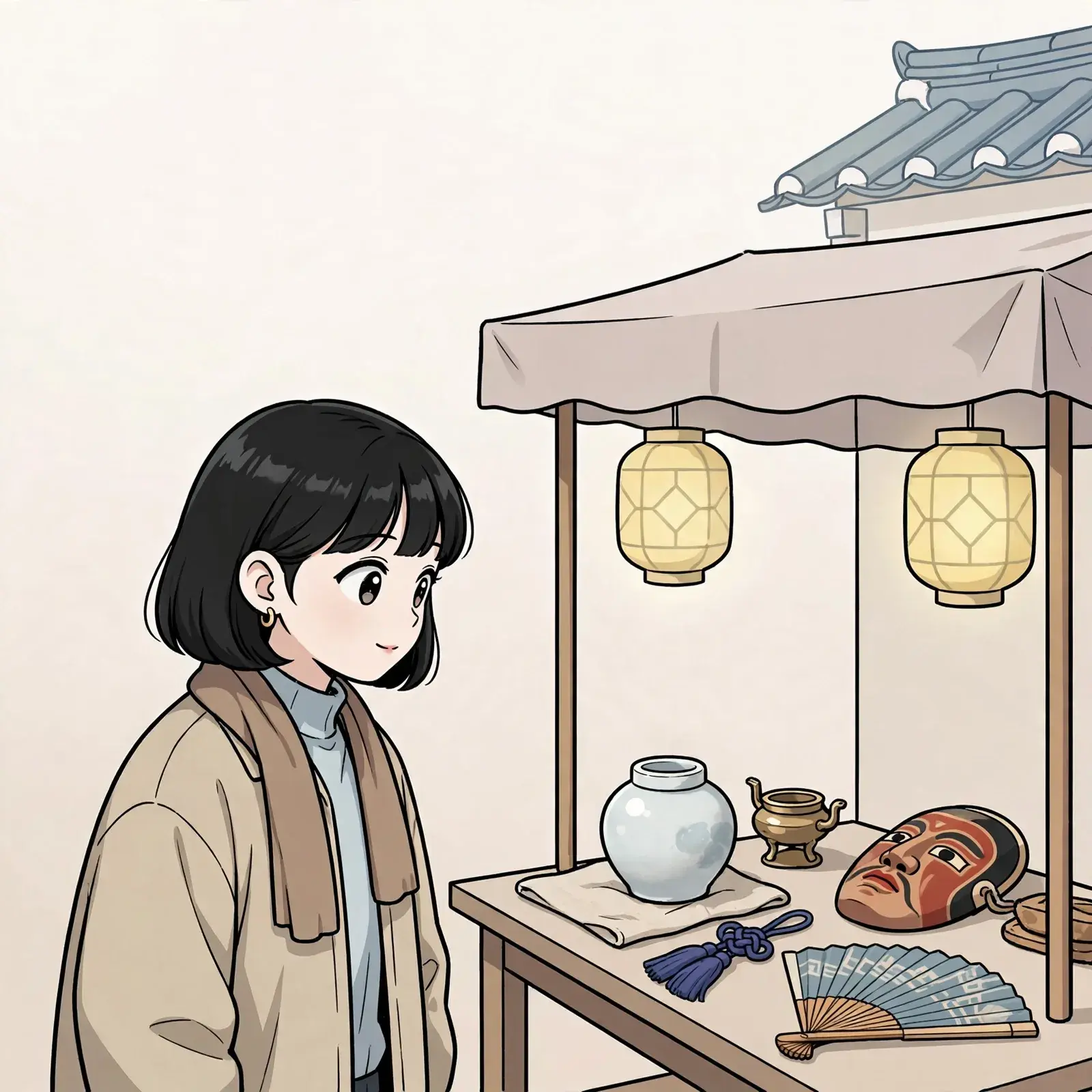
A cultural marketplace fills Insadong
Seoul’s Insadong cultural district has become a marketplace for antiques, contemporary art, traditional tea and Korean crafts. The 2026 Insadong Antique & Art Fair invites visitors not only to look at objects, but also to experience demonstrations and activities while browsing for items to buy.
The event is hosted by Jongno District and organized by the Insadong Traditional Culture Preservation Association. It runs through October 4, with activities spread across the neighborhood rather than confined to a single exhibition hall.
The fair brings together old and new: visitors can encounter historical artworks and handmade crafts alongside work by emerging artists.
Antiques at the center of the fair
The main event, the fifth Antique Fair, is being held on the basement and first floors of the Insart Plaza building in the middle of Insadong Street. Shops are displaying antiques (older objects valued for their history, craftsmanship or artistic significance) from Korea and abroad.
The selection includes ceramics, furniture and jewelry. Visitors can browse the pieces, ask questions and negotiate prices with sellers, making the experience closer to a traditional market than a display where everything is simply viewed from behind glass.
For someone considering a purchase, the appeal may be more than appearance alone. An old bowl, for example, can offer clues about how it was made and used, while a piece of furniture can show how materials and decorative styles changed over time. The article does not specify the items’ prices, ages or provenance (the documented history of an object’s ownership), so buyers would need to ask sellers for those details.
Contemporary work shares the same address
The fair also makes room for newer creative work. The building’s second floor is hosting a market featuring works by emerging artists, including contemporary minhwa (modern interpretations of traditional Korean folk paintings).
This mix gives visitors a chance to compare different approaches to art in one place. Traditional images and techniques may be reworked by today’s artists, while antique objects show how earlier makers expressed their own tastes and skills.
Tea and crafts offer a hands-on experience
The building’s third and fourth floors, along with the nearby plaza at Annyeong Insadong, are hosting a tea and crafts exhibition. Traditional tea and tea utensils (such as cups and teapots used to prepare and serve tea) are among the featured attractions.
The focus on tea adds an experiential element: visitors can encounter the tools and customs associated with serving tea, not just see them as objects on display. Craft exhibitions can also help explain the care involved in making everyday items, from shaping a vessel to finishing its surface.
- Basement and first floors: The fifth Antique Fair, with ceramics, furniture, jewelry and other older artworks.
- Second floor: A market for emerging artists, including contemporary folk painting.
- Third and fourth floors, plus the nearby plaza: Traditional tea and craft exhibitions.
Performances and demonstrations spill into the streets
The program extends beyond the exhibition spaces. Visitors can encounter gugak busking (informal live performances of traditional Korean music in public spaces), demonstrations of traditional artwork mounting (the process of backing and framing a work for display), and K-food experiences.
A ceramics exhibition by young artists is also part of the street-level program. Together, these activities create opportunities to watch artists and performers at work, and give visitors who may not be looking to buy antiques other ways to engage with the fair.
The format can make a visit feel like a neighborhood walk as much as a trip to an art exhibition. People can move between a display of historic objects, a craft demonstration and a live performance, encountering different parts of Korean cultural life along the way.
Why the setting matters
Insadong is widely associated with galleries, traditional crafts and cultural shops, making it a natural setting for a fair that connects historic objects with current creative work. Bringing exhibitions into the district’s buildings and public spaces also links the event to its surroundings, rather than separating it from the street life that draws visitors to the area.
Antique fairs can serve several audiences at once. Collectors may be interested in particular objects, while casual visitors can learn how materials and styles differ; artists and craftspeople can also encounter examples of earlier techniques. As in any antiques market, however, an object’s appearance alone does not establish its age or authenticity, so questions about its background remain important for prospective buyers.
A short window to explore
The fair is scheduled to continue through October 4. With antiques, new art, tea, crafts and performances distributed across several locations, visitors can choose a quick stop or spend more time moving through the different parts of the program.
The event’s broader appeal lies in bringing varied cultural experiences together in one neighborhood. By placing historic objects beside contemporary work and live demonstrations, the fair offers a way to see how artistic traditions can remain part of everyday public life while continuing to change.