An essay revisiting the process of Françoise, Simone de Beauvoir’s mother, moving toward death—and the desire to live that persisted throughout—through A Very Easy Death (아주 편안한 죽음) has been published. Written by writer and translator Shin Yu-jin, it appeared in the “Books and Ideas” (책과 생각) section of the culture pages of the Hankyoreh (한겨레) and was updated at 7:01 a.m. on October 10, 2026. Rather than focusing on death as a universal idea, the essay centers on the name and body of one person living through that time.
Background and context
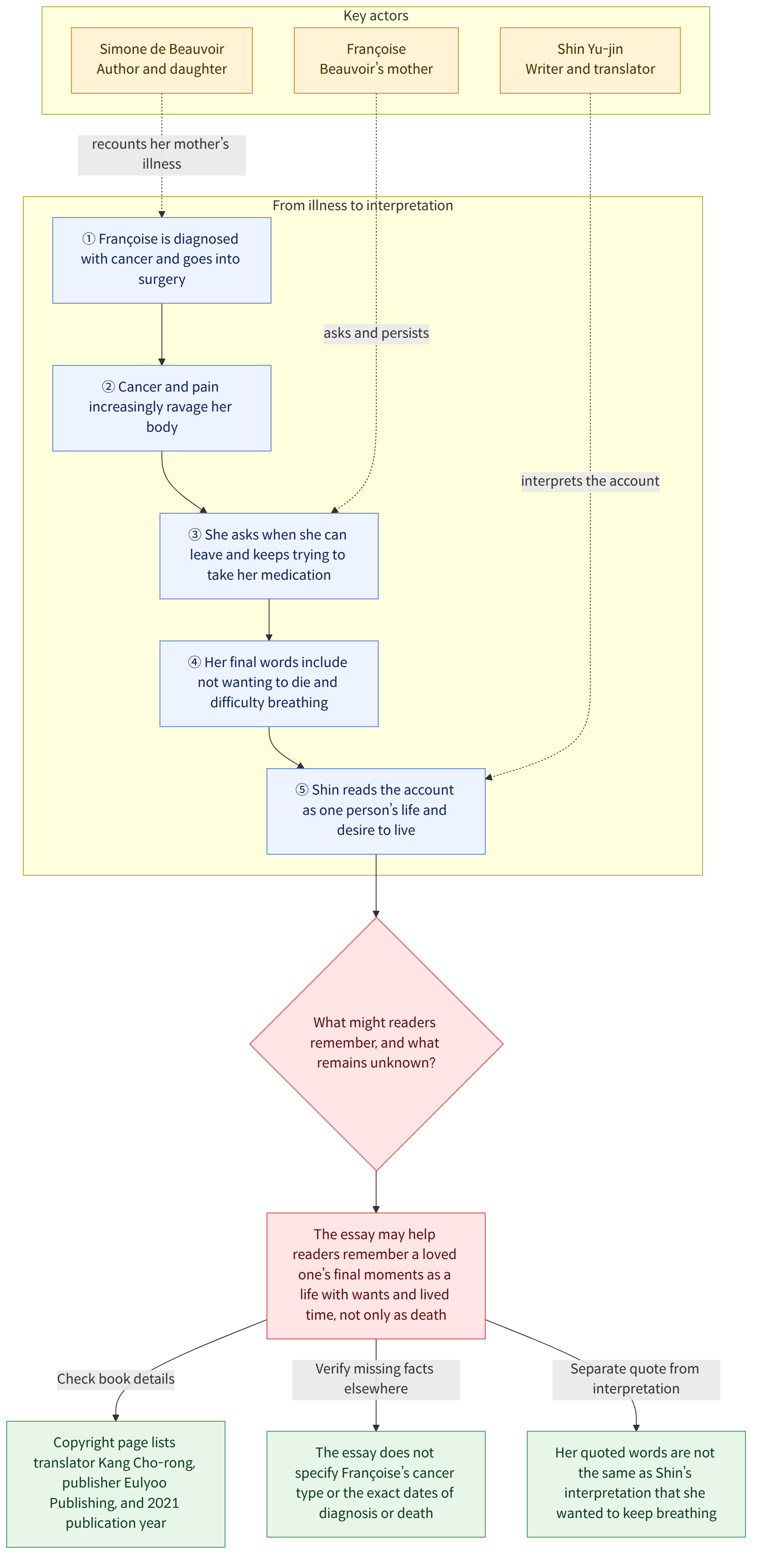
A Very Easy Death recounts how Simone de Beauvoir’s mother, Françoise, was diagnosed with cancer and went into surgery. The book information given in the article lists Simone de Beauvoir as the author, Kang Cho-rong as the translator, Eulyoo Publishing (을유문화사) as the publisher, and 2021 as the publication year. The article’s photo caption describes Beauvoir as a French writer and philosopher and gives her lifespan as 1908–1986.
The essay notes that Beauvoir’s other works also dealt with death, but interprets this book as giving voice not only to an intellectual’s thoughts but also to a daughter watching her mother approach death. Shin reads Beauvoir’s account of her mother’s loss as writing of mourning (the process of experiencing and remembering a loss). What matters here is that the book does not stop at treating loss as an abstract subject, but follows the concrete time one person lived through.
What this means
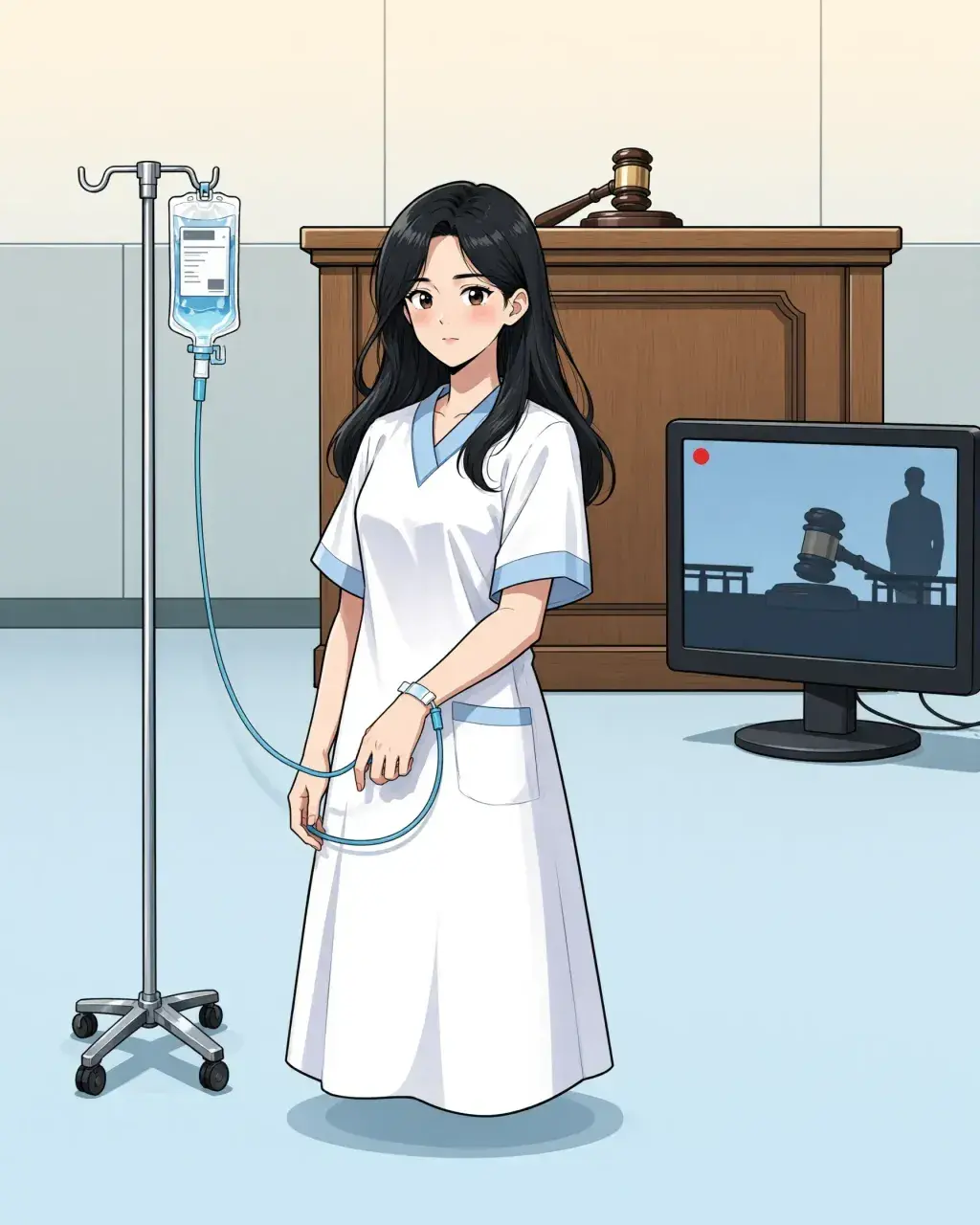
The body of Françoise depicted in the essay is increasingly ravaged by cancer and pain. The descriptions include a swollen abdomen, a tube inserted through her nose, bedsores, bluish skin, and fluid leaking from her pores. But the essay does not leave this body as merely a representation of suffering. It interprets the fact that a body experiencing pain is still a living body as something that leads readers to see death and life together.
Françoise asks her daughter when she can leave the hospital, tries to swallow her medication to the end, and says that she “must put off death.” The words presented in the essay as the last things Beauvoir heard from her mother are “I don’t want to die” and “I can’t breathe.” Shin reads these words as expressing a desire to keep breathing until the end. This is a point where it is important to distinguish the words quoted in the article from the writer’s interpretation of them.
This perspective can lead readers not to see death only as a predetermined conclusion. The writer interprets A Very Easy Death not as an explanation of the general meaning of death, but as the story of Françoise de Beauvoir, an individual, dying. For example, if someone thinks of a loved one’s final moments, the essay’s perspective may help them remember not only that moment as “death,” but also what the person wanted and what their time was like. This is not a definitive statement about the reader’s experience, but a possibility that follows from the essay’s interpretation.
Confirmed facts and what remains unknown
Confirmed facts
- The writer is writer and translator Shin Yu-jin, and the essay focuses on Simone de Beauvoir’s A Very Easy Death.
- The article says the book recounts Françoise’s cancer diagnosis and her going into surgery.
- The essay describes both the deterioration of Françoise’s body and her desire to live, expressed through her questions about leaving the hospital and her efforts to take her medication.
- The writer interprets the book as a story showing the life and dying process of Françoise as an individual, rather than the idea of death in general.
What remains unknown
- The article does not specify Françoise de Beauvoir’s type of cancer or the exact date of her diagnosis.
- The original text does not establish the date or place of Françoise’s death.
- The article does not give the original publication date or original title of A Very Easy Death.
What readers can check
- Readers can consult the book’s copyright page to verify the translator, Kang Cho-rong; the publisher, Eulyoo Publishing; and the 2021 publication year given in the article.
- The words “I don’t want to die” and “I can’t breathe” should be distinguished from the interpretation that she “wanted to breathe.” The former are quoted in the article; the latter is the meaning the writer draws from them.
- To verify Françoise’s type of cancer or the timing of her diagnosis or death, readers would need a separate source that addresses those details, not this essay. It is accurate not to add information as confirmed fact when the original text does not answer these questions.