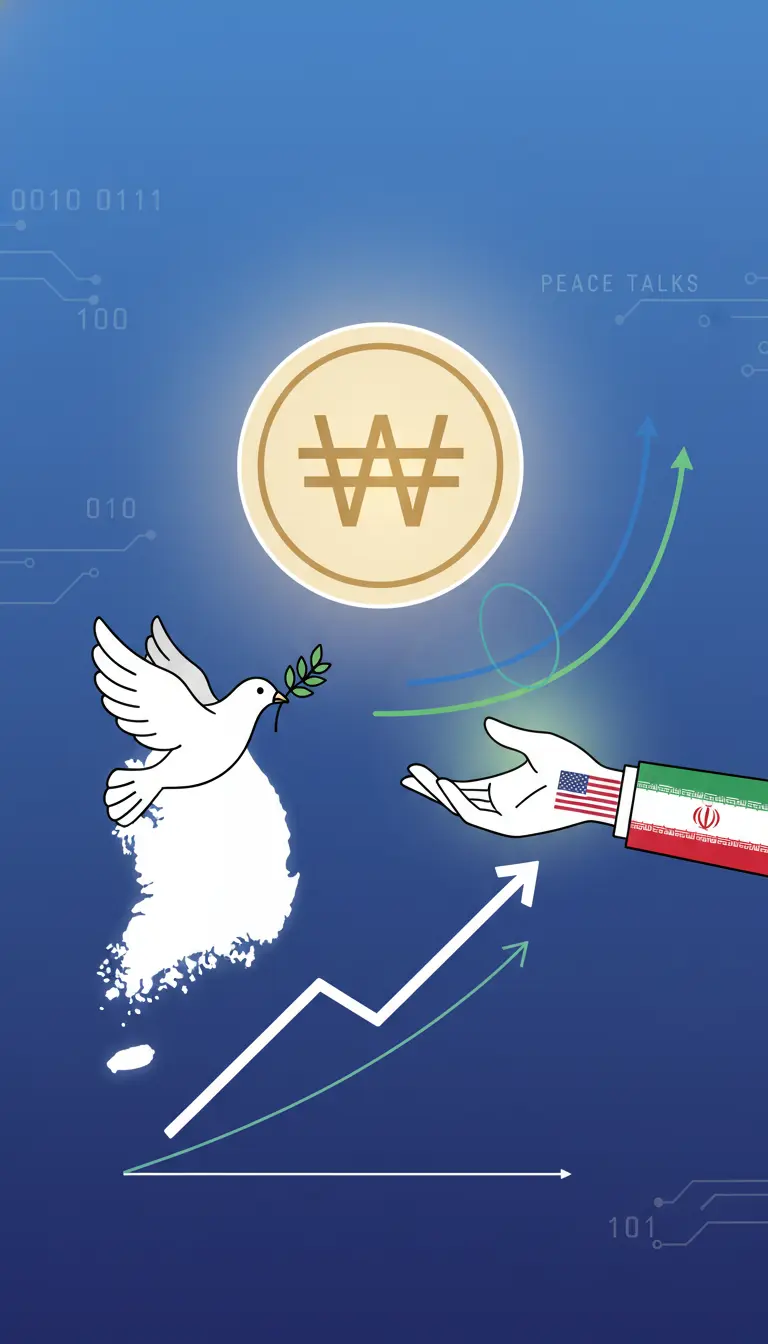
Won Gains Strength Amid Diplomatic Breakthroughs
The South Korean won has seen a significant boost against the U.S. dollar, reaching its highest level in about a month. This rally comes as financial markets react positively to news that Washington and Tehran might return to the negotiating table.
The won closed at 1,481.2 per dollar, up 8.1 won from the previous session. This marks the strongest performance for the currency since March 12, signaling a temporary relief from the high volatility (a state where prices change rapidly and unpredictably) seen in recent weeks.
A Thaw in U.S.-Iran Relations
Expectations for renewed peace talks grew after reports suggested that both nations are looking for a way forward, despite a recent round of negotiations ending without a major breakthrough. U.S. President Donald Trump indicated that Iranian representatives have expressed interest in making a deal.
"The right people in Iran have reached out to the administration and want to work a deal."
In response, Iranian President Masoud Pezeshkian stated that his country is prepared to continue discussions within the framework of international law. This shift toward diplomacy has eased fears of a wider conflict in the region.
Impact on Energy Prices and Stock Markets
The potential for peace had an immediate impact on global oil prices, which dropped below the $100 per barrel mark. For South Korea, which relies heavily on imports for its energy needs, lower oil prices mean less demand for dollars to pay for crude oil, which naturally strengthens the local currency.
Foreign investors also played a crucial role by purchasing a net 840.88 billion won worth of local shares. This buying spree helped the benchmark stock index, the KOSPI, jump by 2.74% to reach 5,967.75.
Key Factors Influencing the Market
- Lower Inflation Fears: Falling oil prices reduce concerns about inflation (the general increase in prices and fall in the purchasing value of money).
- Dollar Index: The dollar index, which measures the USD against a basket of major world currencies, fell slightly to 98.36.
- Geopolitical Risk: The won remains sensitive to developments in the Middle East, which has been a primary source of market instability since late February.
While the current trend is positive, analysts warn that the market remains sensitive to any sudden changes in the geopolitical climate of the Middle East.