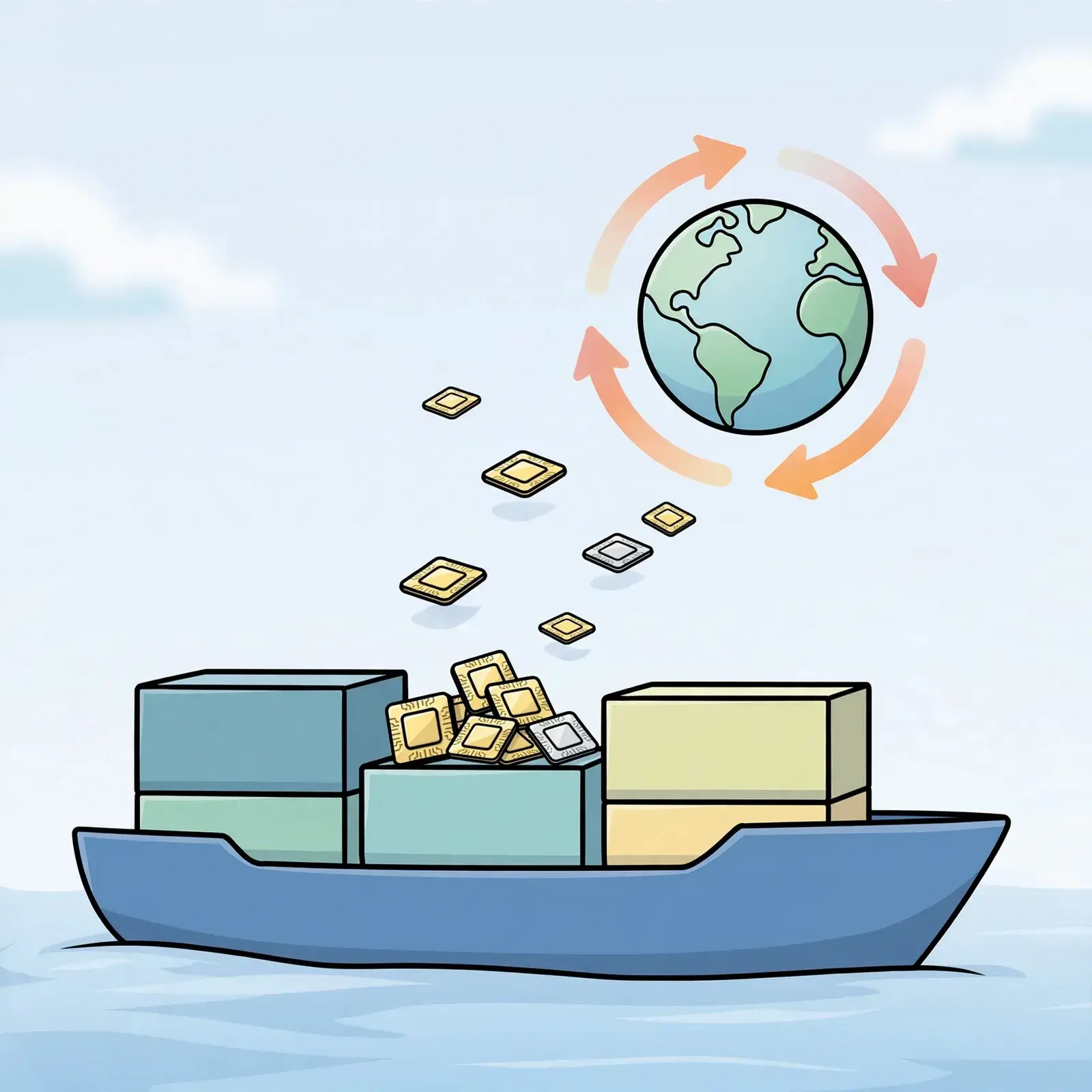
A record-setting month for Korean trade
South Korea’s exports topped $120 billion in a single month for the first time, reaching $120.94 billion in September. That was an 83.5% increase from September a year earlier and comfortably exceeded the previous monthly record of $102 billion, set in June.
The figure points to a striking acceleration in overseas sales. Exports averaged $5.63 billion per working day after adjusting for the number of business days in the month, also a new high. The daily measure helps compare months of different lengths: it is similar to looking at a shop’s average sales per open day rather than comparing totals from months when it was open for different amounts of time.
September was the first month in which South Korean exports exceeded $120 billion, and the first in which daily exports averaged more than $5 billion.
Semiconductor shipments lead the surge
The biggest driver was the semiconductor industry. Exports of chips rose 263% from a year earlier to $60.3 billion, setting a monthly record and marking the first time semiconductor exports exceeded $60 billion in one month. The total was $13.6 billion above the previous record of $46.7 billion, reached in August.
The increase was attributed in part to continued gains in average fixed prices for memory chips. Memory chips store information in products ranging from phones and computers to data-center equipment. When prices rise and overseas demand is strong, the value of shipments can climb rapidly—even if the number of chips sold does not increase at the same pace.
Exports of products other than semiconductors also grew, rising 23% year on year. That broader increase suggests the monthly result was not limited to chip sales, although the semiconductor sector accounted for the most dramatic growth.
Why chip exports matter
Semiconductors are a key component of modern electronics and industrial equipment. They are used in smartphones, cars, servers and many other products, so strong chip exports can lift national trade figures and support related businesses such as suppliers, logistics firms and equipment makers.
But heavy reliance on a fast-growing sector can also make export results more sensitive to changes in chip prices and demand. If customers reduce orders or prices fall, the value of shipments could weaken even while factories continue producing large volumes.
The $1 trillion milestone comes into view
South Korea’s cumulative exports for January through September reached a record $814.5 billion. That was more than $100 billion above the $709.3 billion recorded over the same period a year earlier, and it had already surpassed the previous full-year record before the end of September.
If the pace continues, annual exports could pass $1 trillion by mid-November. Reaching that level would place South Korea among a small group of economies to have recorded more than $1 trillion in annual exports, following Germany, the United States and China, according to the figures cited by the government.
A projection is not a guarantee. Export totals can vary from month to month as shipments are scheduled, prices change and overseas buyers adjust their orders. The mid-November estimate therefore depends on the strong pace continuing through the final quarter.
What the milestone would—and would not—mean
- It would signal a very large volume of goods sold abroad, measured in dollar value.
- It would not mean that every industry is growing equally; the chip sector was the standout contributor in September.
- It would not by itself show how much companies earned, since export value does not subtract the cost of imported materials, production or transport.
Imports rise, but the trade surplus widens
Imports increased 26% from a year earlier to $71.09 billion in September. Because exports were substantially higher, South Korea recorded a trade surplus (the amount by which exports exceed imports) of $49.85 billion. That was $40.37 billion larger than the surplus a year earlier and the first monthly surplus above $40 billion.
For January through September, the cumulative trade surplus reached $252.5 billion, an increase of $202.7 billion from the same period last year. In simple terms, the country sold considerably more goods overseas than it bought from abroad over those nine months.
A large surplus can contribute to stronger foreign-currency earnings, but it is not a complete measure of economic health. Imports also include energy, raw materials and components that domestic manufacturers need to make goods for export. The balance reflects the difference between exports and imports, not the full picture of household spending, investment or business profitability.
Risks could test the export momentum
Trade and Industry Minister Kim Jung-kwan said the record results put annual exports of $1 trillion within reach. He also cautioned that rising protectionism (government policies that make foreign goods harder or more expensive to sell) and tensions in the Middle East remain important uncertainties.
Trade barriers can take forms such as tariffs, import restrictions or rules that favor locally made products. For an exporter, these measures may raise costs or make it harder to reach customers. Conflict and instability in the Middle East can also affect shipping routes, energy prices and business confidence, potentially adding expense or delays to international trade.
The government said it would continue high-level talks with trade officials in major economies, watch for changes to export restrictions and prepare responses to unexpected external shocks. It also aims to sustain export growth through the fourth quarter.
The key question now is whether record chip demand and broader export growth can continue despite trade barriers and geopolitical uncertainty.
What to watch next
The next few months will show whether September’s record marks a durable export upswing or an unusually strong month. Several indicators will help clarify the outlook:
- Semiconductor prices and orders: Continued demand and firm memory-chip prices could support export values; weaker orders or falling prices could reverse some of the gains.
- Growth beyond chips: Stronger sales across other industries would make the export performance less dependent on one sector.
- Trade policy and global tensions: New restrictions, tariffs or disruptions to shipping could affect both costs and delivery schedules.
- The pace of fourth-quarter shipments: South Korea needs sustained exports to turn the mid-November $1 trillion projection into a confirmed annual milestone.
September’s figures show the scale of the country’s export surge, particularly in semiconductors. Whether that momentum lasts will depend not only on demand for Korean products, but also on prices, trade rules and conditions in the wider global economy.