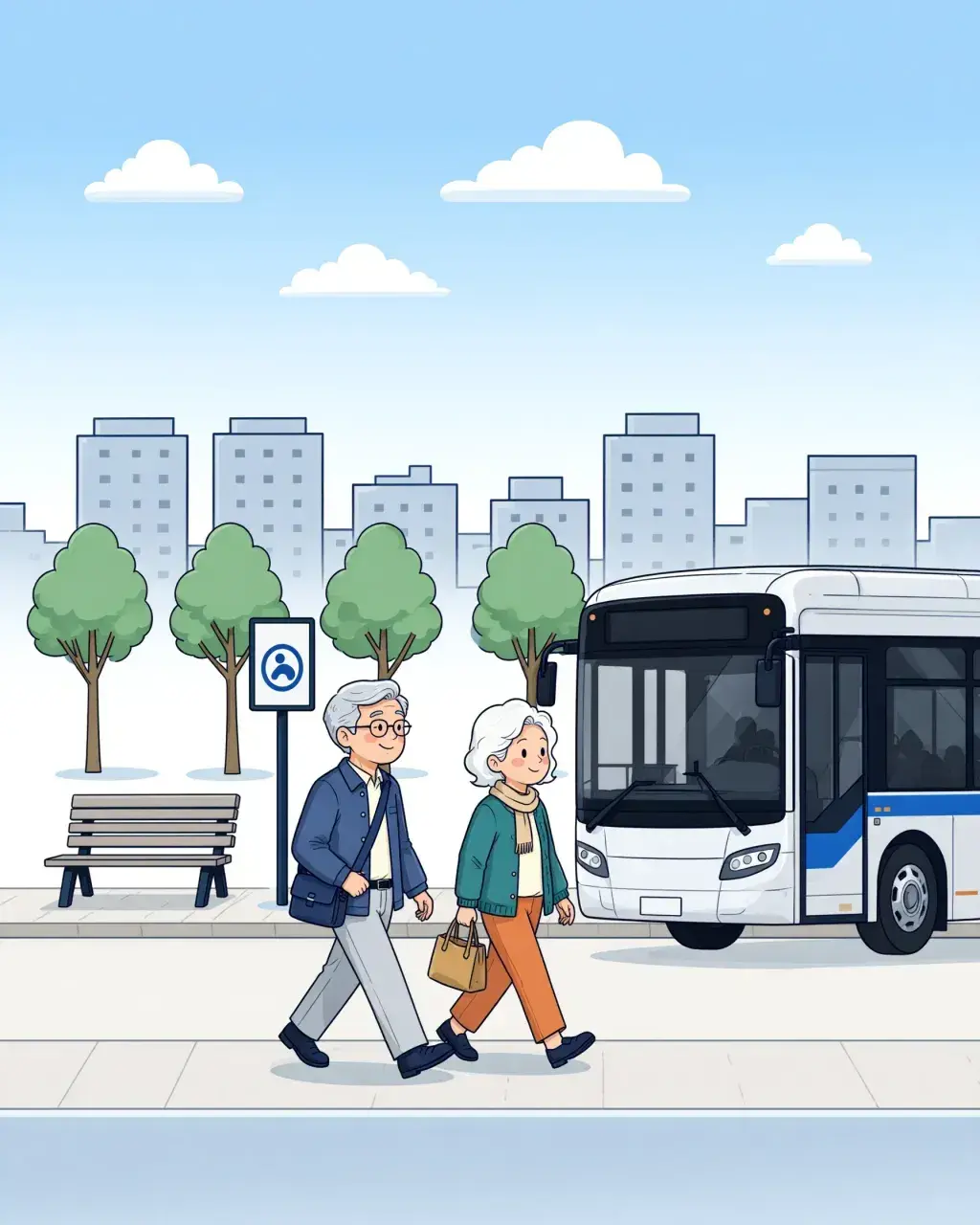
Old age is often associated with dependence on others, loss of independence, and inactivity. But Sébastien Lord, a lecturer in urban planning at the School of Urban Planning and Landscape Architecture at the University of Montreal (몬트리올대학교 도시계획·조경학부), says this simplistic view can obscure older adults’ diverse experiences and lead to inappropriate policies or interventions, or to ageism. Research in urban planning and urban studies shows that mobility does not stop in old age. It changes and adapts according to health, interests, and the surrounding environment.
Background and context
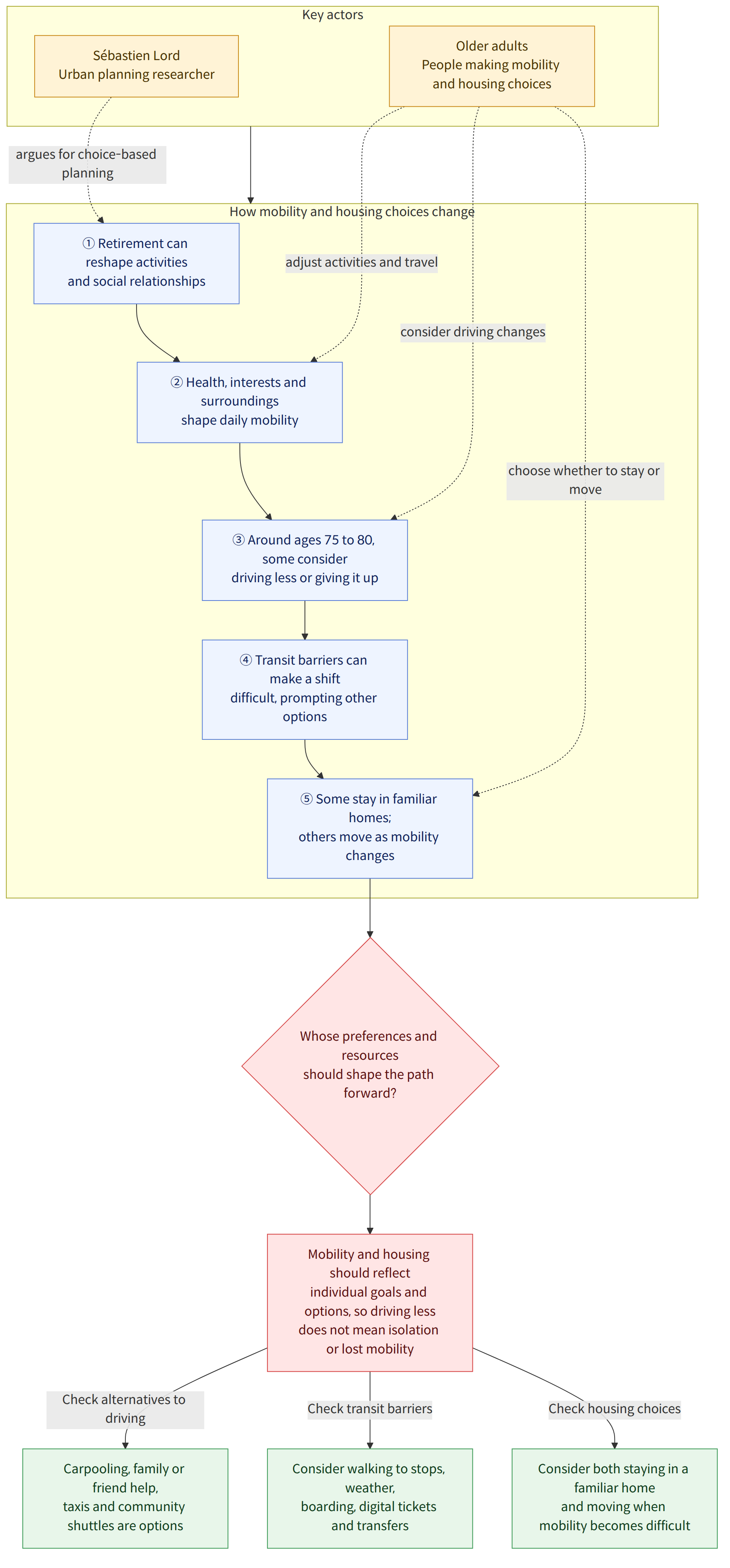
The first common assumption to reconsider is that life slows down and people withdraw socially after retirement. Leaving work may mean fewer social contacts or obligations, but retirement can also involve reorganizing priorities and activities to reflect changing interests and social relationships. Some retirees, freed from work schedules, devote more time to leisure activities, volunteering, travel, and other everyday pursuits, and may walk or cycle more often and visit public places more frequently.
People may go out less often or travel shorter distances as they age. But the amount of travel alone is not a reliable measure of how active their lives are. Proximity to shops, health services, and green spaces may become more important for maintaining everyday activities. Conversely, if shops move farther from a neighborhood or local economic conditions change, older adults may have to travel farther to get where they need to go. Mobility is not just about how far people travel; it is also a way of maintaining daily routines and social relationships.
The second common assumption is that people can switch to public transit when they stop driving. The article explains that for many older adults in Western societies, a car is more than a means of transportation: it can represent identity, lifestyle, and freedom. Around ages 75 to 80, many people consider driving less or giving it up because of health problems, slower reflexes, or pressure from family and friends. But that does not mean public transit immediately becomes easy to use.
Walking to a stop, waiting in bad weather, getting on and off a vehicle, using digital ticketing, and making complicated transfers can all be barriers. These steps can make public transit difficult or impossible to use, especially when walking becomes challenging. The article lists carpooling, hiring a driver, help from family or friends, demand-responsive transit, taxis, and community shuttles as possible options. It also mentions workshops or training on how to use public transit as ways to help people make the transition.
The third common assumption is that people should move to a more suitable home as they age. According to the article, more than 80% of older adults choose to remain in their own homes, even if those homes are not functional. A home may be more than a place to live: it can be a place steeped in memories and attachment, and one that offers a sense of security and familiarity. Moving to somewhere considered more suitable can therefore be difficult. On the other hand, moving to a new home when mobility becomes difficult between the ages of 75 and 80 can also be a coping strategy.
What this means
Taken together, these three common assumptions show why it is difficult to design mobility and housing for older adults around a single standard path. Some people become more active outside the home after retirement, while others seek to preserve familiar routines by going out less often or traveling shorter distances. The needs of people who continue driving and those who drive less may differ, as may the needs of people who want to stay in their homes and those who choose to move. The article’s central point is that, rather than reducing mobility to a matter of “meeting needs,” it is important to consider people’s individual preferences and goals alongside the resources available to them.
For example, if someone who wants to drive less has difficulty walking to a stop and finds transfers complicated, assuming that public transit is the only alternative does not adequately account for their mobility options. Other methods—such as carpooling, help from family or friends, taxis, or community shuttles—can also be considered in light of that person’s lifestyle. This does not mean that one particular mode of transportation is suitable for everyone. It means that the options should be considered so that driving less does not lead to isolation or a loss of mobility.
The same applies to housing. Respecting the choice to remain at home and enabling people to choose to move are not conflicting goals. The article argues that people can make meaningful choices only if their communities offer a range of attractive, inclusive, and affordable housing options. It also emphasizes the importance of environments that enable older adults to get around and shape their lives in line with their own goals and preferences, rather than dividing spaces according to fixed needs based solely on accessibility. The article explains that ideas such as walkable neighborhoods and the “15-minute city” are connected to social participation and quality of life, not just housing and transportation.
What is confirmed and what remains unknown
What is confirmed
- The author, Sébastien Lord, is a lecturer in urban planning at the School of Urban Planning and Landscape Architecture at the University of Montreal (몬트리올대학교 도시계획·조경학부).
- The article explains that mobility does not stop in old age, but changes and adapts according to health, preferences, and local resources.
- It reports that some people devote time after retirement to leisure activities, volunteering, and travel, and increase the frequency of walking, cycling, and visiting public places.
- The article reports that more than 80% of older adults choose to remain in their own homes, even if those homes are not functional. At the same time, it describes moving between the ages of 75 and 80 as a choice that can serve as a coping strategy.
What remains unknown
- The article does not specify which country or region was covered by the survey finding that more than 80% choose to remain in their homes.
- It also does not identify the surveys or sample sizes behind the statements that people around ages 75 to 80 consider driving less or moving.
- The article does not provide specific figures on how common each choice is among older adults or how transportation and housing conditions vary by region.
What readers can check
- When assessing their local area, readers can check whether the distances and actual routes from home to shops, health services, and green spaces work for them.
- If they are considering driving less, they can look at the entire public transit journey, including walking to a stop, waiting, boarding and getting off, ticketing, and transfers. If needed, they can also consider other options mentioned in the article, such as carpooling, help from family or friends, taxis, and community shuttles.
- They can consider which option—remaining in their current home or moving—better fits their lifestyle and preferences. If they are considering a move, they can check whether their community offers attractive, inclusive, and affordable options.