A Dramatic Rebound After 15 Years
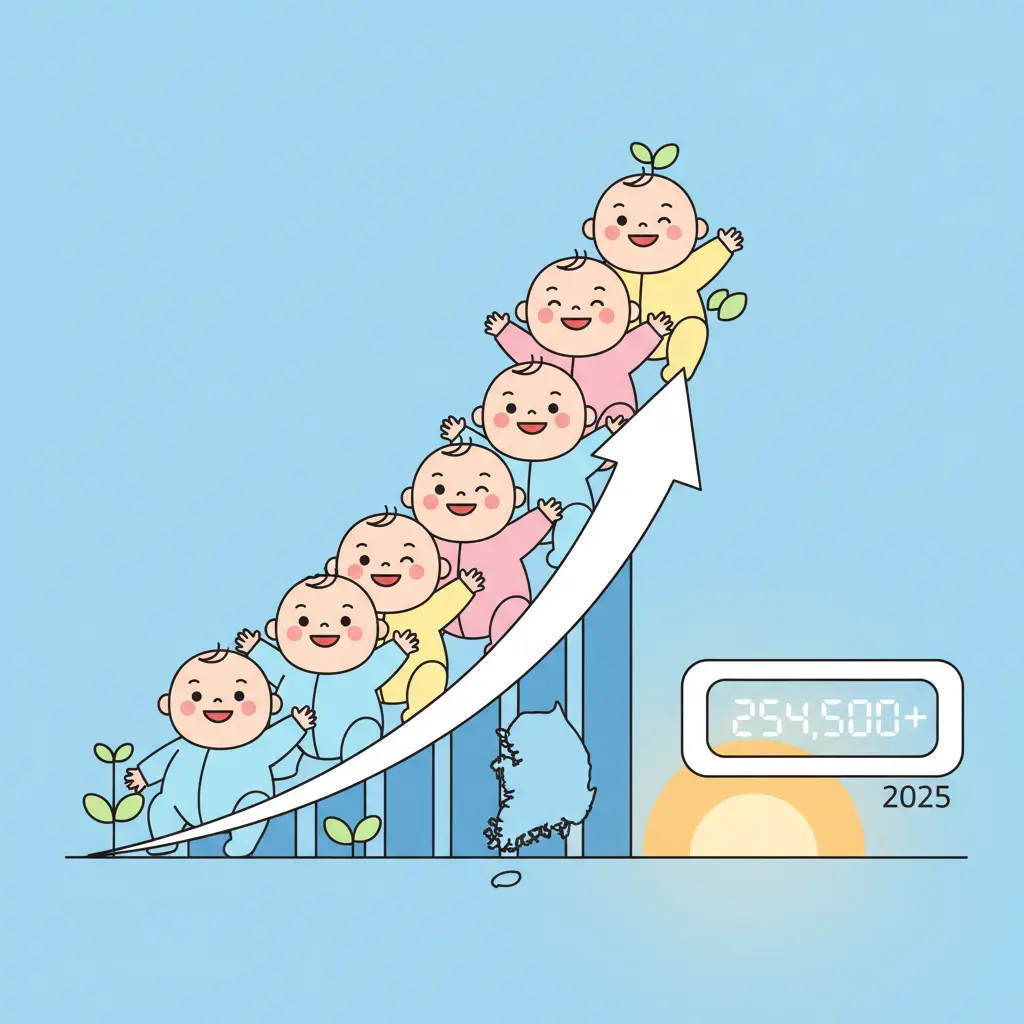
A surprising and hopeful change has occurred in South Korea's population trends. In 2025, the number of babies born reached 254,500, marking the highest level in 15 years. This increase offers a much-needed breath of fresh air for a nation that has struggled with a declining population.
Key Fact: This marks the second year in a row that birth numbers have risen, suggesting that the trend of fewer babies may finally be reversing.
The Significance of Returning to the 0.8 Rate
The total fertility rate (the average number of children a woman is expected to have in her lifetime) has successfully returned to the 0.8 level. This is the first time in four years that the rate has climbed back to this point. It is like seeing a dried-up well start to fill with water again after a long period of decline.
- Effective Support: Improved housing subsidies and expanded parental leave have encouraged more families.
- Cultural Shift: There is a growing sense of optimism among young couples regarding building a family.
- Steady Growth: Because this is the second consecutive year of growth, experts view it as more than just a temporary spike.
Building a Brighter Future Together
An increase in births is vital for maintaining the working-age population (people aged 15 to 64 who can work and support the economy). More children today mean a stronger workforce and a more vibrant economy in the future. This helps ensure that social services like pensions and healthcare remain sustainable.
While there is still much work to do to achieve a stable population, these numbers provide a strong foundation for hope. Continued efforts to create a child-friendly society will be crucial in the coming years.