The Sudden Surge in Seoul's Financial Markets
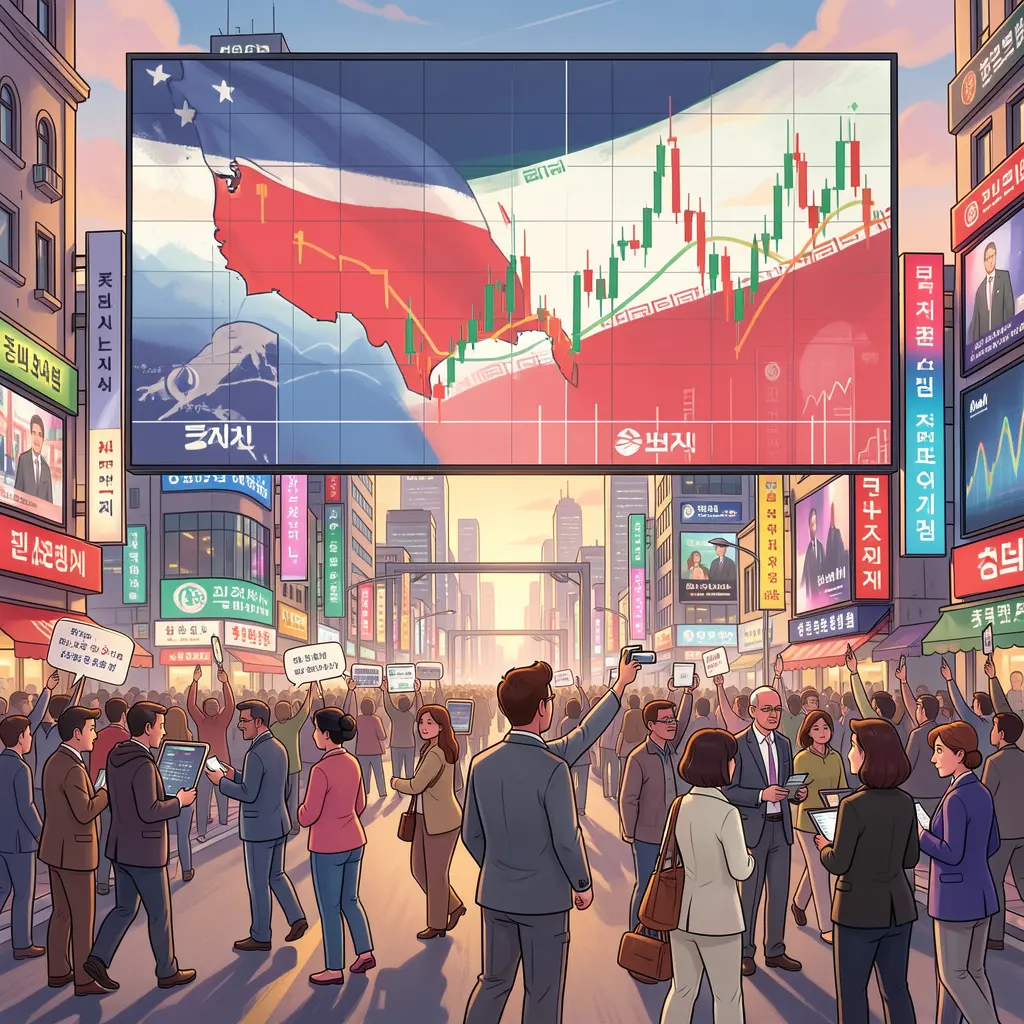
South Korean equity markets experienced a powerful upward trajectory at the opening bell, with shares jumping 2.9 percent. This sudden spike is not a random occurrence but a direct reaction to emerging signals that the United States and Iran may be moving toward peace talks.
Investors are reacting to the possibility of a diplomatic resolution to long-standing tensions. When geopolitical risks decrease, investors typically move their money from 'safe-haven assets' (assets like gold or government bonds that protect value during crises) back into 'risk assets' (assets like stocks that offer higher returns but carry more risk).
The Geopolitical Catalyst: U.S.-Iran Relations
For years, the relationship between the U.S. and Iran has been characterized by extreme volatility, primarily centered around nuclear proliferation and regional influence. The prospect of peace talks suggests a potential return to diplomatic channels, which could lead to the lifting of economic sanctions.
The anticipation of a diplomatic breakthrough acts as a psychological trigger for the market, shifting the sentiment from fear to optimism almost instantaneously.
If these talks succeed, it could lead to a de-escalation of tensions in the Middle East. This is critical because the region is the heart of global energy production, and any conflict there typically leads to immediate price spikes in crude oil.
The Direct Link Between Diplomacy and Oil Prices
To understand why a peace talk in the Middle East affects a stock market in Seoul, one must look at the Oil Price Correlation (the relationship where stock prices often move in the opposite direction of energy costs).
- Lower Energy Costs: Peace talks usually lead to a drop in oil prices because the 'risk premium' (the extra cost added to a price due to the fear of supply disruption) disappears.
- Reduced Production Costs: South Korea is a heavily import-dependent economy. Lower oil prices mean lower costs for shipping, manufacturing, and electricity.
- Corporate Profitability: When energy costs drop, the profit margins for major Korean conglomerates, especially in the automotive and electronics sectors, tend to increase.
For example, imagine a shipping company that spends millions on fuel. If oil prices drop by 10% due to peace talks, that company suddenly has millions of dollars in extra profit, making its stock more attractive to investors.
Broader Market Implications and Investor Psychology
This rally is part of a larger trend known as Risk-On Sentiment. This occurs when investors feel confident enough to buy volatile assets in hopes of high growth, rather than hiding their capital in secure but low-yield accounts.
Key Factors Driving the Current Rally:
- Global Liquidity: The availability of cash in the market allows investors to jump on positive news quickly.
- Sector-Specific Gains: Industries such as airlines and logistics are seeing the most significant gains because they are most sensitive to fuel price fluctuations.
- Psychological Momentum: Once a market starts to climb, 'FOMO' (Fear Of Missing Out) often drives more buyers into the market, further accelerating the price increase.
Future Outlook: Caution Amidst Optimism
While the initial reaction is overwhelmingly positive, analysts warn that the market remains fragile. The success of peace talks is rarely linear and often involves setbacks and failed negotiations.
Potential Risks to Watch:
- Diplomatic Deadlocks: If the talks fail or collapse unexpectedly, the market could experience a 'sharp correction' (a rapid price drop following a peak).
- External Economic Pressures: Inflation rates and central bank interest rate decisions may still override the positive news from the Middle East.
- Implementation Gaps: There is a significant difference between starting talks and reaching a signed agreement.
In conclusion, while the 2.9 percent jump reflects a hopeful outlook for global peace and economic stability, investors are advised to monitor the actual progress of the U.S.-Iran negotiations closely. The intersection of diplomacy and finance ensures that a single headline in Washington or Tehran can reshape the financial landscape in Seoul within minutes.