Song Da-bin wins Korea’s first sparring gold
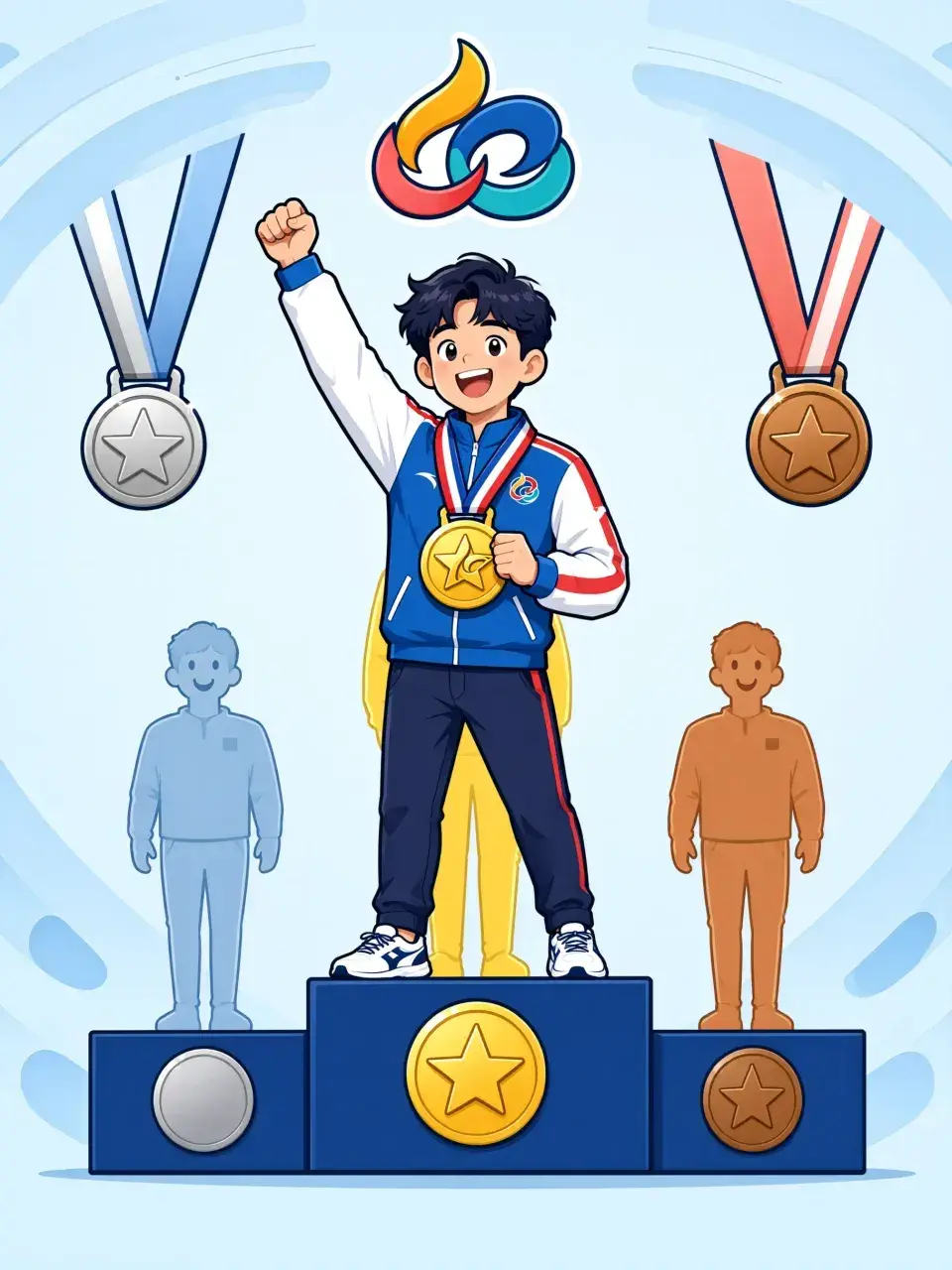
Song Da-bin claimed gold in the women’s over-67kg taekwondo final at the 2026 Aichi-Nagoya Asian Games, defeating China’s Wu Wenze 2–1 at the Toyohashi Gymnasium in Aichi, Japan. The victory marked Korea’s first gold medal in sparring at this Games and its third taekwondo gold overall.
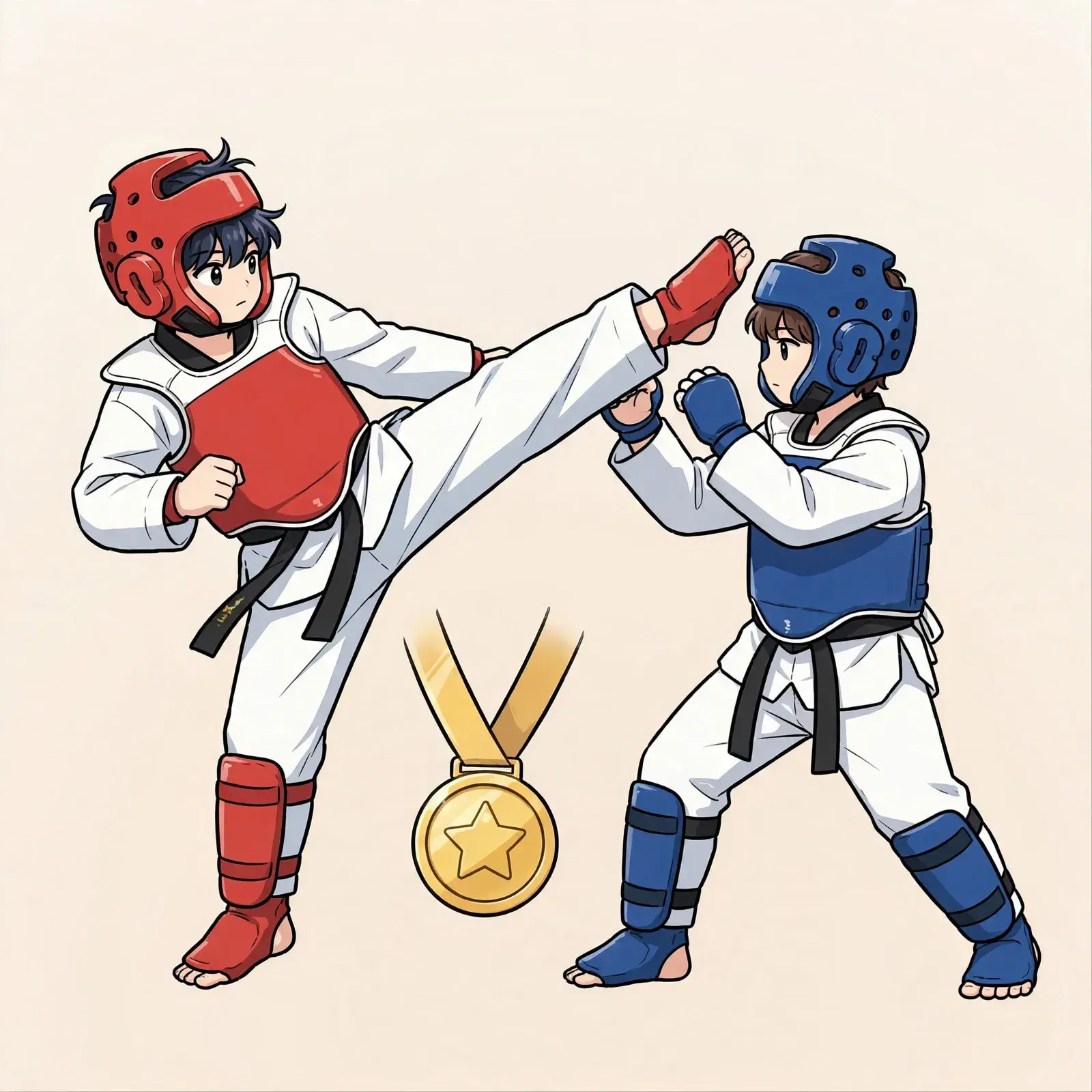
The final was decided across three rounds. Song won the first 4–2, lost the second 4–10, then secured the deciding round 8–5. In taekwondo, athletes score by landing permitted kicks and punches on an opponent’s protective equipment; the match result is determined by the rounds won, not simply by adding every point from the entire contest.
Song’s gold was Korea’s first sparring title of the Games and its first in the women’s over-67kg division in eight years.
A milestone in a challenging tournament
The gold was a significant result for a Korean team that had set a pre-Games target of two or three sparring golds. Several other medal hopefuls finished with bronze: Ahn Hyang-sik in the men’s 58kg class, Moon Jin-ho in the men’s 68kg class, Kwak Min-ju in the women’s 67kg class, and Kang Sang-hyun in the men’s over-80kg class.
Korea’s taekwondo team ended the competition with three gold medals and four bronze medals. Two golds came in individual poomsae, a discipline in which athletes perform a set sequence of defensive and attacking techniques, judged for qualities such as precision and control. Song’s win supplied the team’s only gold in sparring, the contest format in which competitors face one another directly.
Taekwondo is closely associated with Korea, where the modern sport developed and became a major part of the country’s sporting identity. That history gives international results a particular resonance at a major event: a strong performance can be seen not only as a medal achievement but also as a statement about the country’s continued standing in a sport it helped bring to the world stage.
An eight-year wait ends in the heavyweight division
Song’s victory restored Korea’s gold-medal record in the women’s over-67kg category for the first time since the 2018 Jakarta-Palembang Asian Games. Korea took silver in the division at the 2022 Hangzhou Games, held in 2023 after a postponement. Both of those earlier medals were won by senior athlete Lee Da-bin.
The category’s history added another layer to Song’s achievement. Winning a title in a division where a teammate had previously carried the national hopes meant that the gold continued a legacy while also marking the arrival of a new champion. For Song, it came at her first Asian Games.
What makes sparring different
- Sparring is a live contest between two athletes, with points awarded for legal strikes to approved target areas.
- Round scoring means competitors must win more rounds than their opponent; a strong score in one round does not automatically decide the whole match.
- In the final, Song recovered after losing the second round by winning the third 8–5.
From a broken nose to the national team
Song first became interested in taekwondo after following her older brother to a training hall. She began training seriously as an athlete in sixth grade, and watching the 2016 Rio de Janeiro Olympics helped inspire her dream of representing Korea. Oh Hye-ri, who won Olympic gold in the women’s 67kg category in Rio, later became Song’s instructor at Korea National Sport University.
One of Song’s most difficult setbacks came during her fourth year of university. With less than two weeks remaining before the national-team selection event, she broke her nose during training and was unable to train normally while recovering from surgery. The selection was also her first attempt after moving up from the 67kg division, adding uncertainty to an already demanding period.
Song later described the hardest part as feeling anxious and rushed, as though she were falling behind on her own. She focused on rehabilitation and individual training, eventually earning a place on the national team despite the injury and limited preparation.
Her route to the Asian Games title included a serious training injury, a change of weight division, and a return to competition through rehabilitation and focused preparation.
Building momentum on the international circuit
After moving up a weight category, Song began establishing herself in international competition. She won silver at the Asian Championships in both 2024 and 2025, demonstrating that she could contend with leading athletes in the heavier division.
Her selection for the Asian Games followed a strong domestic campaign. Song finished first at the initial selection event, giving her priority in the process, and no athlete in the same category entered the final selection event. That secured her place on the team.
Just before the Games, she also won her first Grand Prix title at the Muju Grand Prix. In the quarterfinals, she defeated Hungary’s Luana Márton, a two-time world champion, and then came from behind to win the final. The result provided a notable confidence boost ahead of her Asian Games debut.
What the result means for Korea
Song’s gold gave Korea a bright finish to a sparring campaign that fell short of its medal target. The other Korean athletes named among the leading contenders earned bronze rather than gold, while the two individual poomsae titles helped bring the overall taekwondo count to three golds.
The result also offers a clear measure of Song’s progress: she moved from a difficult recovery and a new weight category to a continental silver medal, a Grand Prix title, and finally an Asian Games championship. At the same time, the team’s overall medal tally shows the challenge of maintaining dominance across different divisions and formats.
For Song, the final came down to responding after a lopsided second round. She did that by taking the deciding round 8–5, turning a close three-round match into the performance that delivered Korea’s first sparring gold of the Games.