South Korea's Employment Landscape: A Surface-Level Recovery
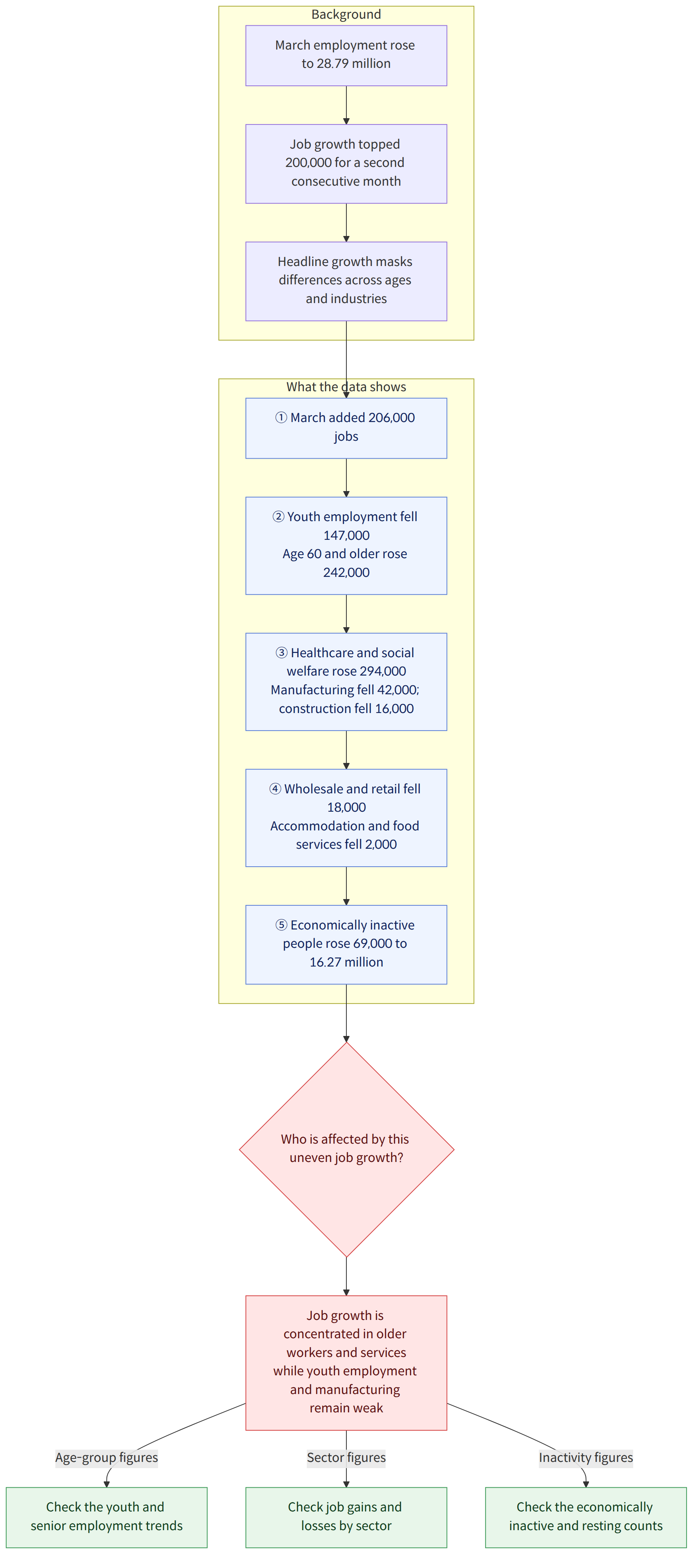
South Korea's labor market has shown a surprising resilience in the short term. According to the latest data from the Ministry of Data and Statistics, the nation added 206,000 jobs in March. This marks the second consecutive month that job growth has surpassed the 200,000 threshold, suggesting a rebound after a period of stagnation.
The total number of employed individuals rose to 28.79 million, representing a 0.7 percent increase compared to the same period last year. While these figures appear positive on the surface, a deeper analysis reveals a stark disparity in which demographics and industries are actually driving this growth.
The Generational Gap: Youth Crisis vs. Senior Surge
One of the most concerning trends in the current data is the widening gap between the youngest and oldest workers in the economy. The employment figures for the youth population (aged 15 to 29) have plummeted by 147,000 in March.
This marks the 41st consecutive month of year-on-year decline for youth employment, signaling a systemic failure to integrate new graduates and young workers into the professional workforce.
In contrast, the employment of those aged 60 and older surged by 242,000. This shift suggests that the current job growth is not driven by new industrial expansion, but rather by an aging population remaining in the workforce longer, often in low-wage or service-oriented roles to support their retirement.
Sectoral Analysis: Where the Jobs Are and Where They Are Vanishing
The Growth Engines: Healthcare and Services
The primary driver of the recent job increase is the health care and social welfare sector, which added 294,000 positions, a growth of 9.4 percent. This is largely attributed to the rapid aging of the Korean population, which increases the demand for nursing, caregiving, and medical services.
Other sectors showing growth include:
- Transportation and Warehousing: Added 75,000 jobs, likely driven by the continued expansion of e-commerce and logistics networks.
- Arts, Sports, and Leisure: Added 44,000 jobs, reflecting a slow recovery in cultural consumption and leisure activities.
The Warning Signs: Manufacturing and Construction
While service sectors are growing, the traditional pillars of the South Korean economy are crumbling. Manufacturing, often described as the backbone of the economy (the primary industry that produces physical goods for export), shed 42,000 jobs.
This decline has persisted for 21 consecutive months, indicating a long-term structural downturn in industrial production. Similarly, the construction sector lost 16,000 jobs, marking a 23-month streak of losses. This is often a result of high interest rates and a cooling real estate market, which discourages new building projects.
Domestic Demand and Economic Health Indicators
Economists closely monitor four specific sectors—manufacturing, construction, wholesale/retail, and accommodation/food services—as they serve as key indicators of domestic demand (measures that show how much people and businesses are spending within the country).
- Wholesale and Retail: Fell by 18,000 jobs, the first decline since April of last year.
- Accommodation and Food Services: Lost 2,000 jobs, remaining in negative territory for five straight months.
When these four sectors decline simultaneously, it suggests that consumers are tightening their belts and businesses are reducing investment, which can lead to a broader economic slowdown.
The Rise of the 'Economically Inactive'
Beyond those who are unemployed and actively seeking work, there is a growing group of economically inactive people (individuals who are neither employed nor actively looking for a job). This group increased by 69,000, totaling 16.27 million people.
Notably, the number of people who reported they were not working simply to rest increased by 31,000, reaching 2.55 million. This trend may reflect a shift in social values among the younger generation, known as the 'quiet quitting' or 'resting' phenomenon, where individuals opt out of the high-pressure competitive job market due to burnout or a lack of quality opportunities.
Future Outlook: Structural Reform Needed
While the headline number of 206,000 new jobs provides a temporary sense of relief, the underlying data suggests a structural imbalance. The economy is shifting from a production-led growth model (manufacturing) to a service-led model (healthcare and logistics).
To ensure long-term stability, experts suggest that the government must address the youth employment crisis and revitalize the manufacturing sector through technological innovation. Without these interventions, the growth in senior employment may only mask a deeper erosion of the nation's future productive capacity.