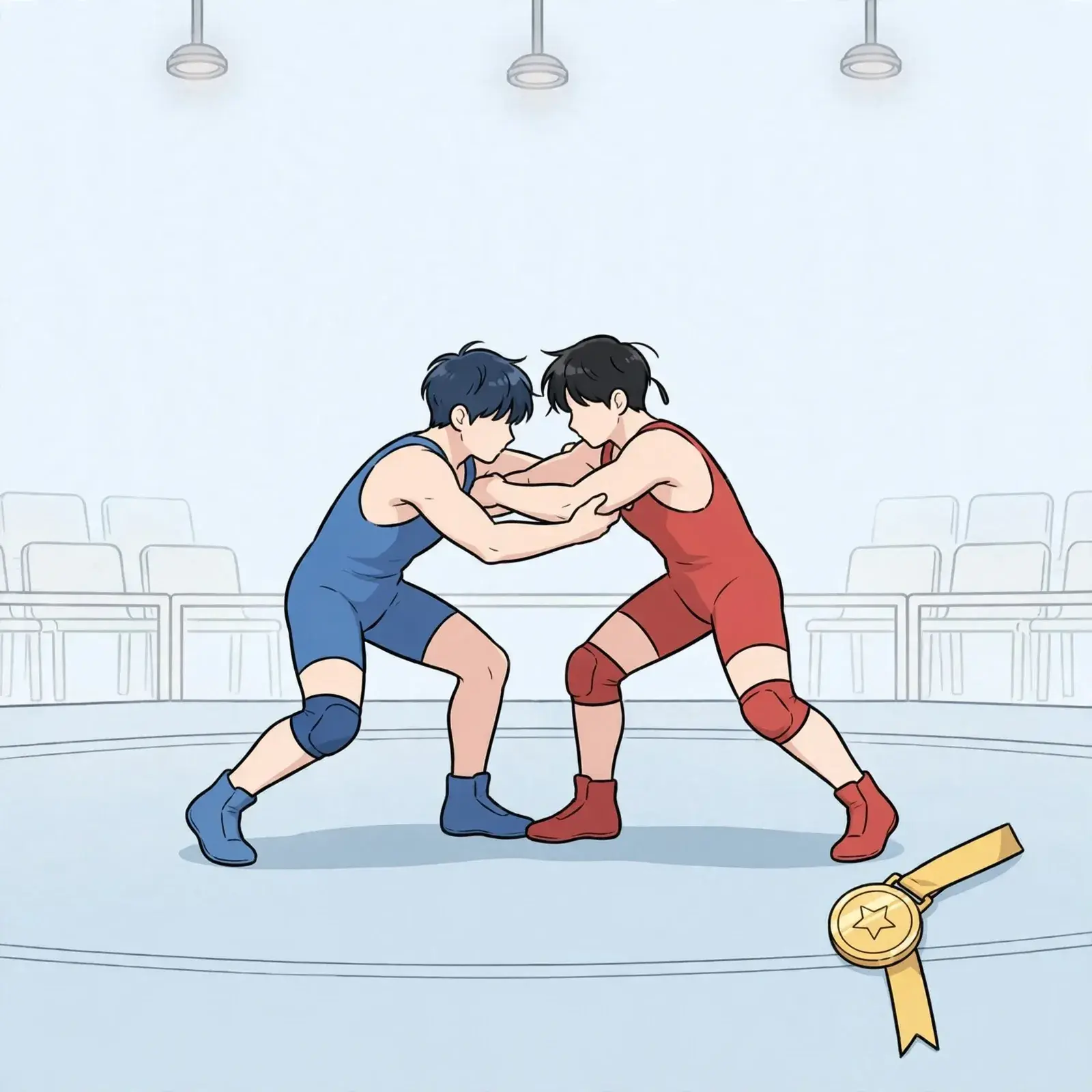
A campaign that ended with one medal
South Korea’s wrestling team arrived at the 2026 Aichi-Nagoya Asian Games hoping to reverse a run of disappointing results on the international stage. Instead, the team finished the competition with one bronze medal—a result well short of its stated goal of one gold, one silver and six bronzes.
The final Korean competitor, Park Seo-young, lost her women’s freestyle 53-kilogram bronze-medal match to Mongolia’s Otgontuya Bayanmunkh 7-0 on October 3 at Inae Sports Center in Nagoya. Her defeat brought South Korea’s wrestling schedule at the Games to a close.
South Korea’s only wrestling medal in Nagoya was Kim Min-seok’s bronze in the men’s Greco-Roman 130-kilogram division.
Kim Min-seok provides the team’s lone podium finish
Kim won his bronze on September 30 in the men’s Greco-Roman 130-kilogram event. The medal extended a notable personal run: he has now earned bronze at three consecutive Asian Games, following the 2018 Jakarta-Palembang Games and the Hangzhou Games, which took place in 2023 after being postponed from 2022.
A medal at a major continental competition is a significant achievement for an individual athlete. But for a national team that had targeted eight medals, relying on a single podium finish also highlighted how far the overall result fell short of expectations.
South Korea had managed only two bronze medals in wrestling at the previous Asian Games in Hangzhou. The country’s most recent Asian Games wrestling gold medals came in 2018, when Cho Hyo-cheol and Ryu Han-su won their events. The latest result therefore continues a period in which the team has struggled to return to the top of the podium.
A leading contender exits in the quarterfinals
One of the biggest disappointments came in the men’s Greco-Roman 67-kilogram division. Jung Han-jae, a silver medalist in the 63-kilogram category at the previous year’s world championships, had been considered a strong medal prospect. He competed at 67 kilograms, an Olympic weight class (a division included in the Olympic wrestling program).
Jung’s tournament ended in the quarterfinals, the stage before the semifinals. He led Kazakhstan’s Meirzhan Shermakhanbet but lost 5-4, a narrow reversal that left him outside the medal rounds. In wrestling, a single scoring sequence can change the outcome of a close bout, making the late stages especially unforgiving.
The two wrestling styles featured in the competition also differ in what athletes may use to attack. In Greco-Roman wrestling (a style that prohibits attacks using an opponent’s legs), competitors focus on upper-body holds and throws. Freestyle wrestling (a style that permits attacks on the legs) offers a wider range of ways to take an opponent down.
Four more medal opportunities end in defeat
South Korea reached the bronze-medal match in four other events, but none of those athletes could secure another podium finish. Alongside Park Seo-young, the unsuccessful challengers were:
- Park Hyun-young in women’s freestyle 68 kilograms
- Kim Da-hyun in men’s Greco-Roman 60 kilograms
- Lee Gyeong-yeon in men’s freestyle 86 kilograms
A bronze-medal bout is a direct chance to turn a tournament run into a medal. Losing at that point can be particularly costly: an athlete may have progressed through earlier rounds and still leave without a place on the podium. For South Korea, the repeated defeats meant that several near-misses did not add to Kim’s lone bronze.
What the result means for South Korean wrestling
The team’s medal total does not, by itself, explain why individual bouts were lost. But the gap between the target and the final tally, together with the bronze-match defeats and Jung’s quarterfinal exit, gives South Korean wrestling a clear set of results to assess as it looks ahead.
That assessment may include how athletes prepare for close matches, how the team develops competitors across weight classes, and how it builds on the experience gained at major events. These are areas for future review, rather than conclusions that can be drawn from the medal count alone.
Kim’s third consecutive bronze offers a measure of individual consistency. At the same time, the broader challenge remains: South Korea will need more athletes to convert strong tournament runs into medals if it is to move beyond the modest returns of recent Asian Games and re-establish itself as a contender for gold.