A costly response to a marketing controversy
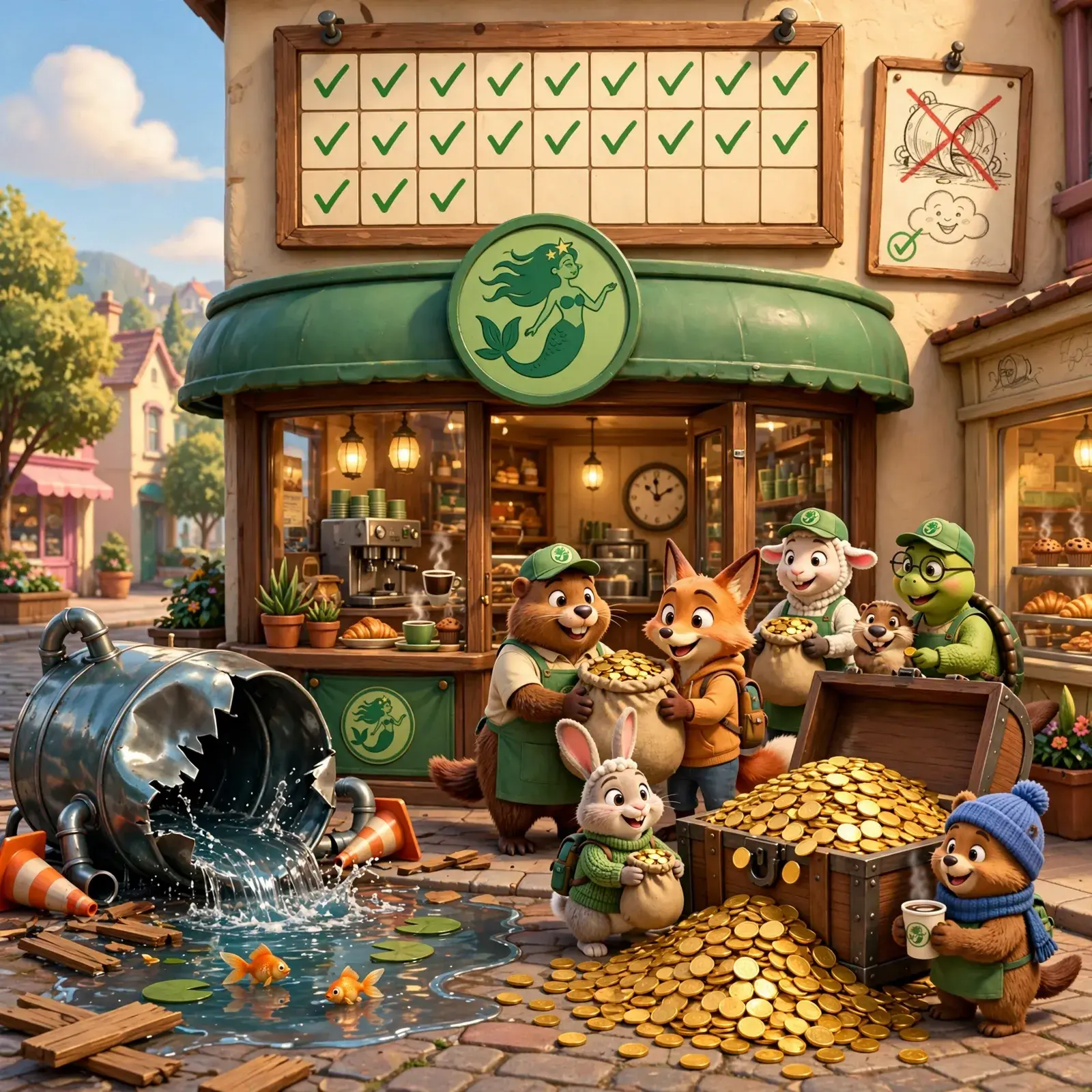
Starbucks Korea refunded approximately 76 billion won (about $56 million) in prepaid-card balances over two weeks beginning June 1, according to figures submitted by the company. The amount represents money customers had previously loaded onto Starbucks cards to pay for drinks and other purchases. The refunds came after a major backlash over the company’s marketing campaign and its references to politically sensitive language.
The total is substantial compared with the company’s recent business performance. Starbucks Korea reported second-quarter net sales of 747.3 billion won, down 6.1%, or 48.5 billion won, from the same period a year earlier. The refunds alone were roughly one-tenth of those quarterly sales, although refunds of prepaid balances and sales revenue are different financial measures.
The 76 billion won returned in just two weeks shows how strongly many customers reacted to the controversy, lawmaker Kim Hyung-yeon said.
What sparked the “Tank Day” backlash
In May, Starbucks Korea launched a series of tumblers called the “Tank Series.” Promotional wording included “5/18,” “Tank Day,” and a phrase translated as “Tap on the desk.” Critics said the combination could evoke the military’s use of tanks during the May 18 Gwangju Democratization Movement and the torture death of student activist Park Jong-cheol.
The May 18 movement began in Gwangju in 1980, when citizens protested military rule and faced a violent crackdown. Tanks and troops became part of the painful public memory of that repression. Park Jong-cheol died in police custody in 1987 after being tortured, and his death helped intensify the pro-democracy movement that year.
The company’s wording was criticized as disrespectful to these events and to the people affected by them. Public criticism spread, and some customers called for a boycott. The controversy therefore moved beyond a dispute about product names: it became a test of how a large consumer brand handles history, public sensitivity, and accountability.
Why the wording mattered
Historical references can carry meanings that go far beyond a marketing team’s apparent intent. In South Korea, references to May 18 and to state violence remain closely connected to family memories, democratic activism, and ongoing debates about how the past should be remembered. A product campaign that draws on such language can consequently be judged not only as advertising, but also as a statement about public history.
Why customers asked for their money back
Before the controversy, Starbucks’ terms generally required customers to use at least 60% of the most recently loaded amount before they could request a refund of the remaining balance. In practical terms, a customer who had just added money to a card could not normally take the full unused amount back immediately; they first had to spend most of it at Starbucks.
After the backlash, customers argued that this rule could pressure people to keep buying from a brand they no longer wanted to support. Starbucks responded by temporarily easing the policy, allowing customers to seek refunds regardless of how much of the balance they had used. The two-week refund period resulted in the reported 76 billion won payout.
- Before the temporary change: Customers generally had to spend at least 60% of the latest top-up to claim the remaining balance.
- During the two-week response: Starbucks allowed refunds without applying that spending threshold.
- Reported total: About 76 billion won was returned to customers.
Prepaid balances are money received by a business before a customer uses its products or services. For a shopper, it is like putting money into a store account in advance; for the company, it creates an obligation to provide goods later or return the money under applicable terms.
The refund rules Starbucks plans to introduce
Starbucks Korea plans to revise its standard policy, with completion targeted by the end of the year. Under the planned terms, customers who have used at least 60% of the latest top-up would continue to be able to request the unused balance under the existing approach. Customers who have spent less than 60% would have to wait until one year after their most recent top-up before applying for a refund.
The amount returned would also depend on the balance. The plan calls for a refund of 95% when the balance exceeds 50,000 won, and 90% when it is 50,000 won or less. The company has not described these provisions as a response to any particular case in the material available; the reported explanation is that the waiting period and deductions appear designed to discourage “card-cashing,” a practice in which stored value is turned into cash rather than used to buy products.
How the proposed policy could work
- A customer who has spent at least 60% of the latest top-up could request the remaining balance under the existing threshold-based rule.
- A customer who has spent less than 60% would need to wait one year from the date of the last top-up before applying.
- After becoming eligible, the customer would receive 95% of a balance above 50,000 won, or 90% of a balance of 50,000 won or less.
The proposed rules would make refunds less immediate and, in some cases, less than the full balance. Customers will therefore need to check the final terms once the revision is completed, particularly if they hold a card with a small remaining amount or have recently added money.
Financial pressure and the limits of the figures
The refund episode unfolded during a difficult quarter for Starbucks Korea, operated by SCK Company. The company recorded its first quarterly operating loss in 27 years since entering the Korean market, while second-quarter net sales fell to 747.3 billion won. The figures show that the company faced both a direct financial setback and a wider challenge to customer confidence.
However, the refund figure should not be read as a complete measure of the boycott’s economic impact. Some customers may have stopped visiting without requesting a refund, while others may have continued using their cards or returned later. Sales, operating profit, and prepaid-card refunds each measure different parts of a company’s finances, so none alone captures the full effect of a reputational crisis.
The refund total is a clear sign of customer anger, but it does not by itself establish how many people permanently left the brand or how long the impact will last.
What the episode means for Starbucks and customers
For Starbucks, the immediate task is not only to restore sales but also to demonstrate that it understands why the campaign caused offense. In controversies involving historical trauma, a quick policy change may help customers recover their money, but rebuilding trust can require clearer accountability and sustained communication. The company’s response will be judged over time, including how it reviews future campaigns and handles public concerns.
For customers, the policy revision raises a practical question: how easily can prepaid money be recovered if someone changes their mind? Store cards are convenient because they make repeat purchases simple, but they also leave money with a company before a customer has received anything in return. Clear refund terms matter most when customers no longer want to use the service or when a company faces a sudden loss of public confidence.
A broader lesson for consumer brands
The case highlights how marketing decisions can affect more than a product’s popularity. A slogan or design that seems harmless in an internal review may carry a very different meaning for people who connect it with real events and personal loss. As brands increasingly rely on themed products and viral campaigns, careful historical review and accessible refund policies can become important parts of risk management.
The central question is whether Starbucks can turn the immediate financial response into a longer-term effort to regain trust. The refund of 76 billion won shows the scale of the reaction in a measurable way, but the company’s recovery will depend on whether customers believe its future actions match its stated response.