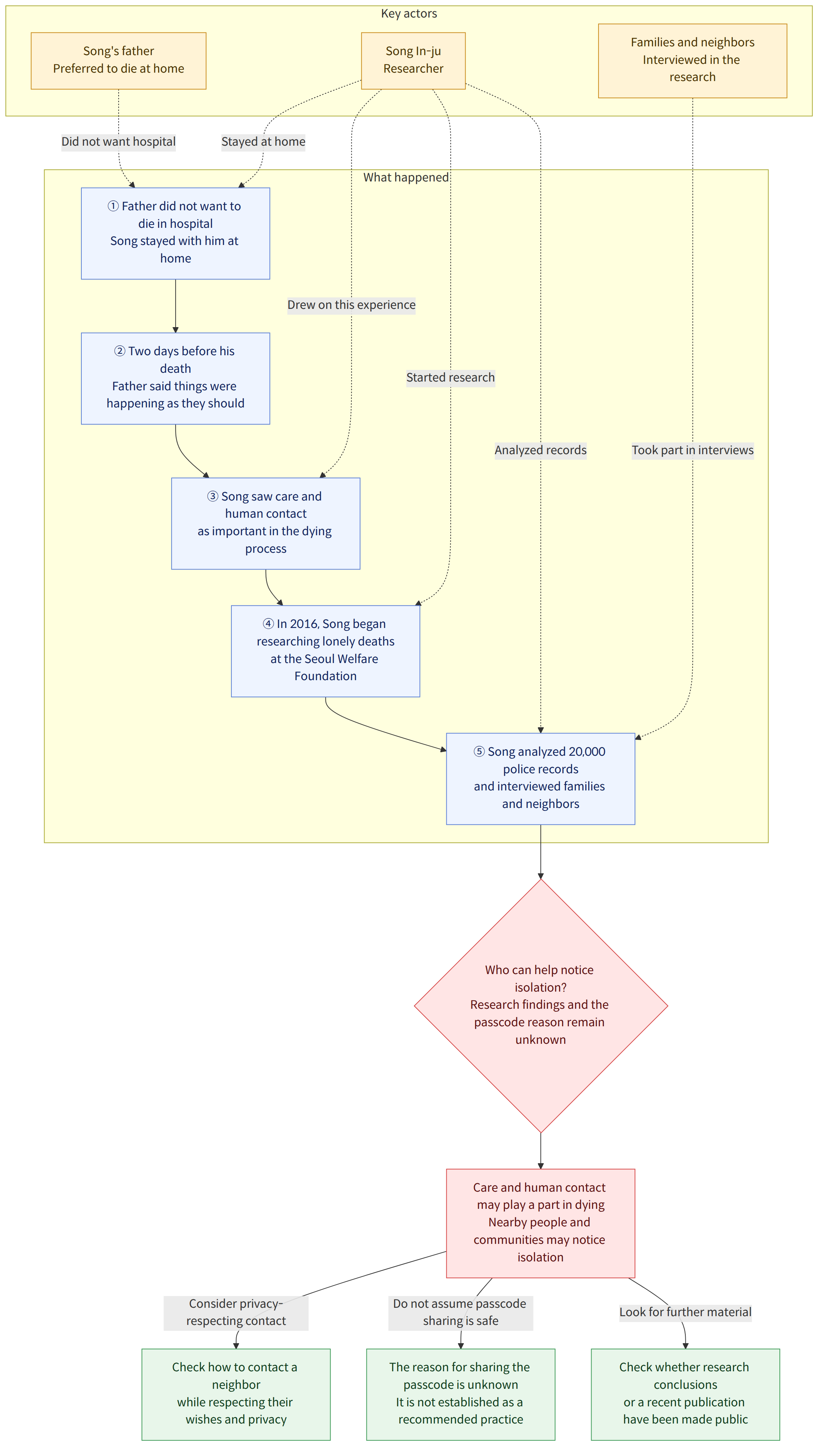
When Song In-ju’s father insisted that he did not want to die in a hospital, Song stayed with him at home during his final days. Two days before his father died, he said, “Everything is happening as it should.” Song believes that care and human contact helped his father die peacefully, and said that dying inevitably requires help from other people.
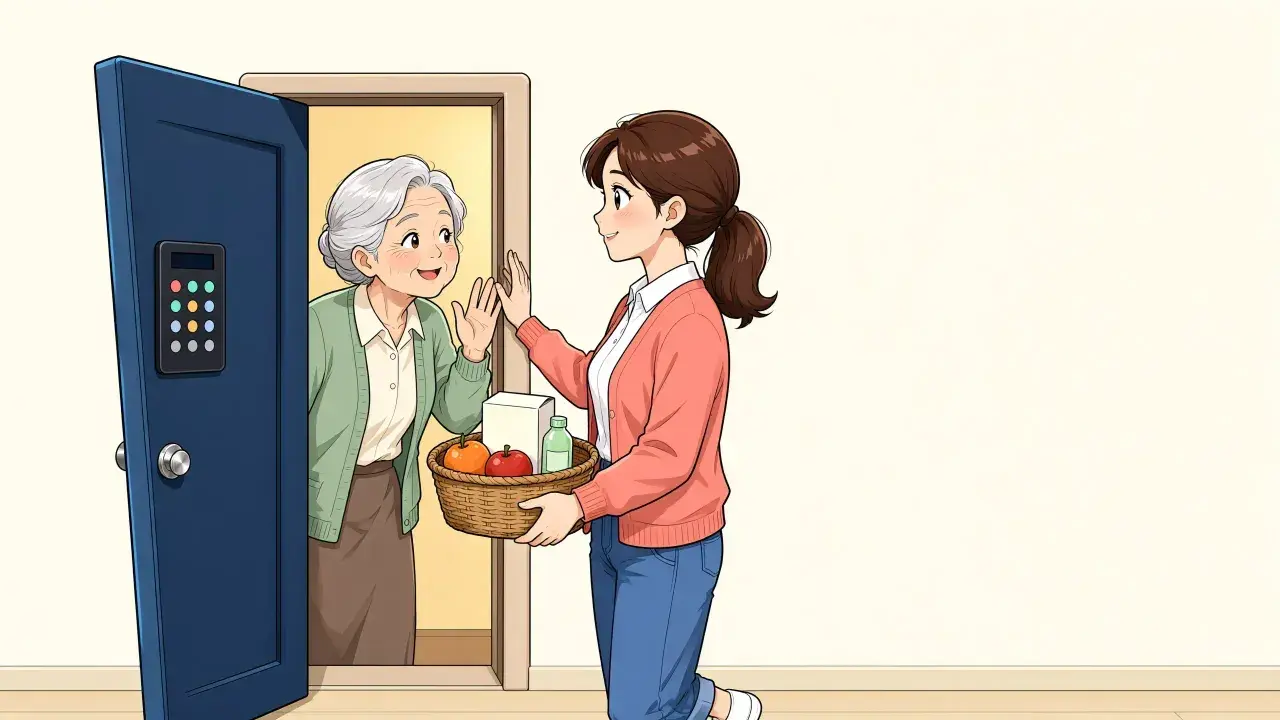
He also shared his front-door passcode with a neighbor. However, the original text does not explain why or give specific details about the circumstances. This fact alone does not establish that he did so as a form of care, or that everyone should share their passcode.
Background and context
Song said that death is not a momentary event but a long and painful process. His words—“Dying means going through a difficult process”—reflect his personal experience of the importance of care and human contact surrounding death. That experience is connected to the background behind his later research into lonely deaths.
In 2016, he was a senior research fellow at the Seoul Welfare Foundation (서울복지재단), and that year he began researching lonely deaths to prevent people from dying without care or human contact. He is now the head of Ssro Lab (쓰로랩). In his research on lonely deaths, he sought to examine who dies in isolation, why they become isolated, and how they spent their final days.
Because it was impossible to ask the deceased directly, Song analyzed 20,000 police records of deaths that had gone undiscovered and interviewed family members and neighbors. He called this process a “social autopsy.” The approach seeks to look not only at the deceased person’s final circumstances but also at how they became isolated and the relationships around them.
What this means
The key point illustrated by this researcher’s experience is that other people’s care and contact can play a part in the process of dying. Attention from those nearby may be important in preventing lonely deaths, and neighbors and communities can play a role in noticing whether someone has become socially disconnected. However, the original text does not provide specific prevention methods or research findings, so it cannot be concluded that neighbors alone can prevent lonely deaths.
For example, if a neighbor notices that someone has not been seen for a long time, they could consider ways to check in while respecting that person’s privacy. This is a hypothetical example derived from the idea that it is important to look out for isolation, not a research finding presented in the article. Since the reason and circumstances behind sharing the front-door passcode have not been confirmed, this should not be treated as a general safe-care practice.
What is confirmed and what remains unknown
Confirmed facts
- Song In-ju spent his father’s final days with him at home because his father did not want to die in a hospital.
- Two days before his father died, he said, “Everything is happening as it should.”
- Song believes that care and human contact helped his father die peacefully, and said that dying requires help from other people.
- He has researched lonely deaths since 2016, analyzing 20,000 police records and interviewing family members and neighbors.
- Song shared his front-door passcode with a neighbor. The reason was not given.
What remains unknown
- The original text does not say what Song recently published or what it contains.
- The specific reason and circumstances for sharing his passcode with a neighbor have not been confirmed.
- The original text does not present the findings from the police-record analysis and interviews.
What readers can check
- If you want to check on a neighbor, you could first consider whether there is a way to get in touch that respects their wishes and privacy.
- The article does not establish the reason or circumstances for sharing a front-door passcode. There is no basis for interpreting it as a recommended form of care or following it without considering safety.
- If you want to know the specific conclusions of this research or the contents of any recent publication, you should check whether additional material has been made public. That information cannot be determined from the evidence currently available.