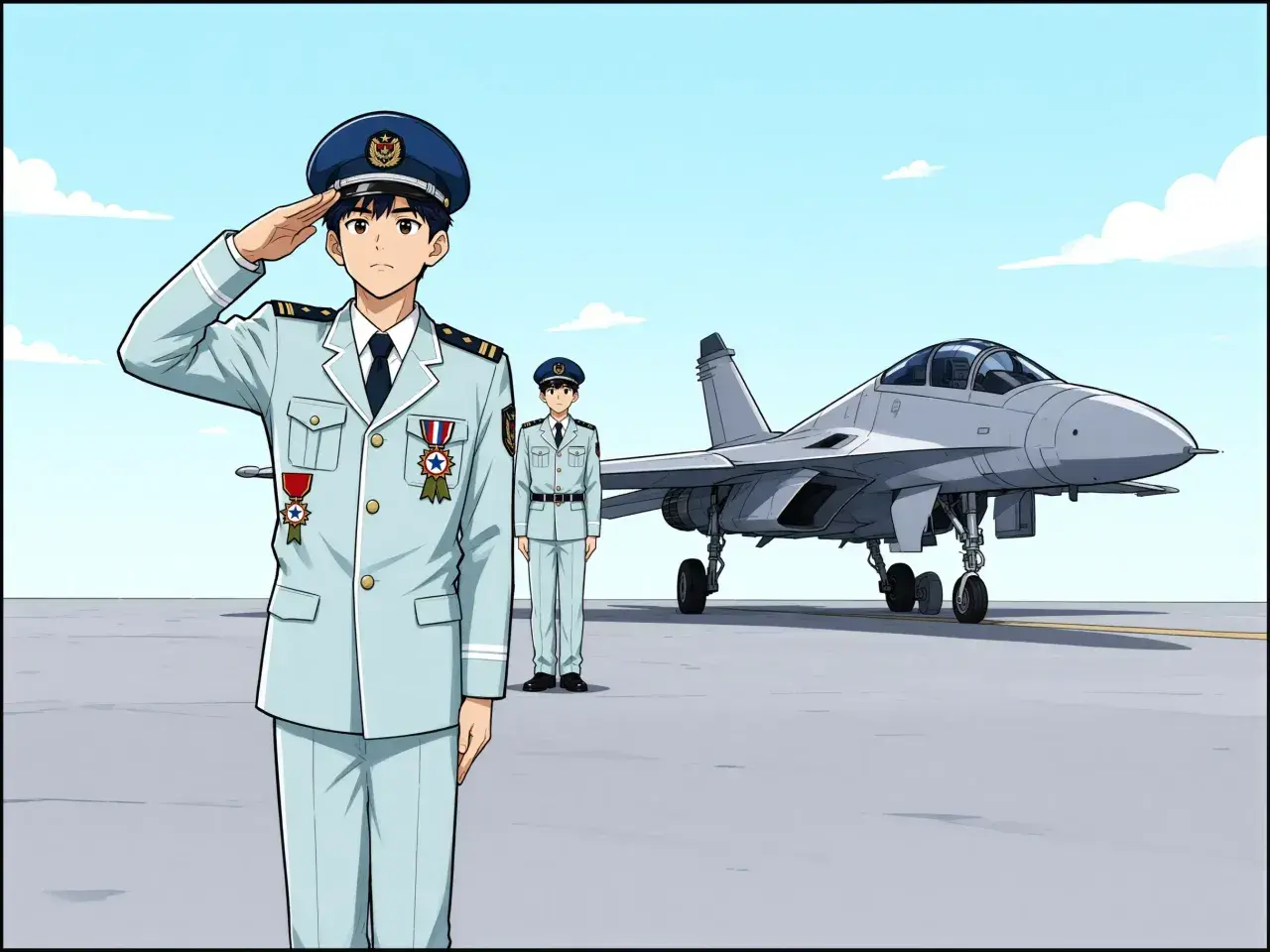
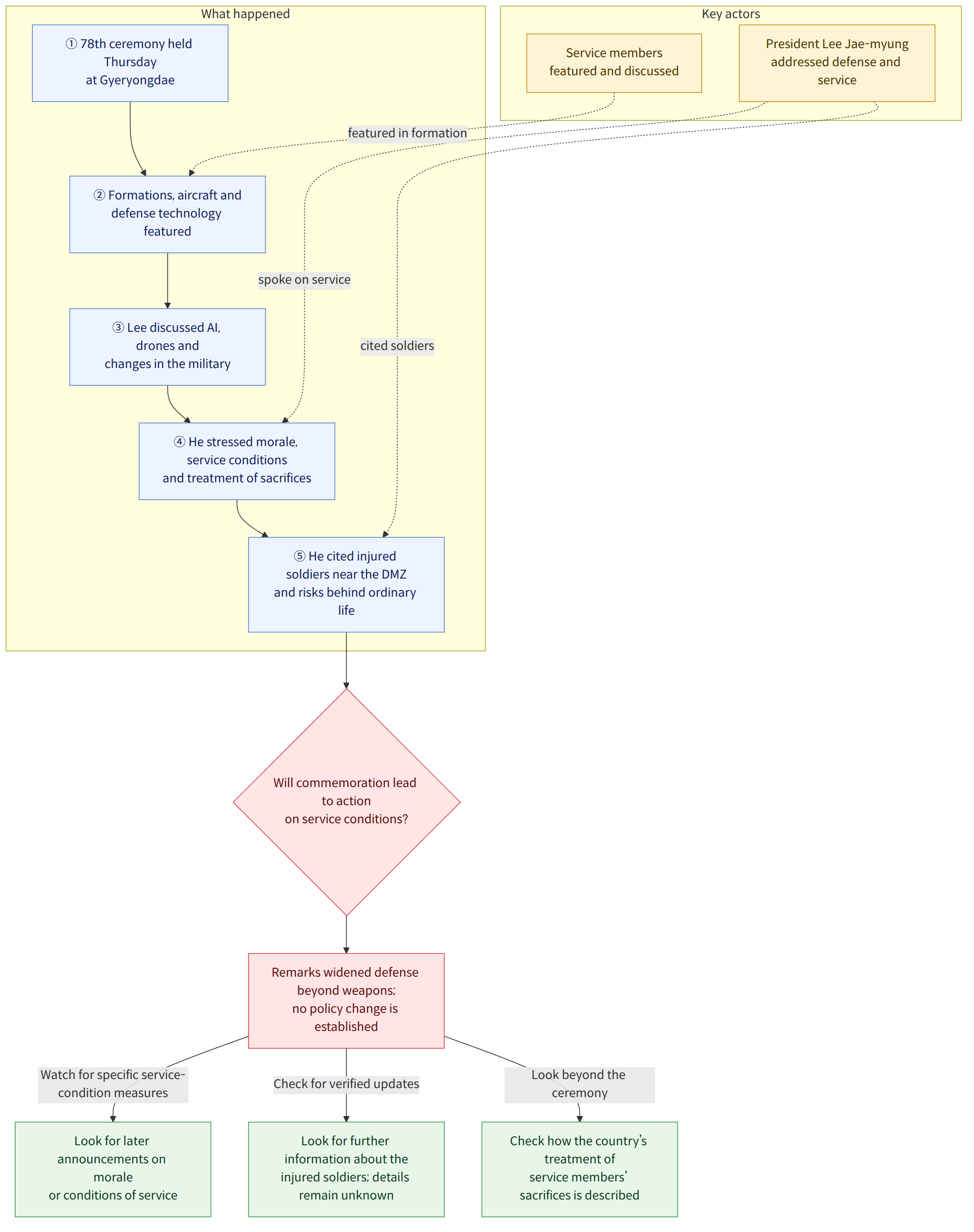
South Korea’s 78th Armed Forces Day ceremony was held on Thursday at Gyeryongdae. The event featured military personnel in formation, aircraft flying overhead, and a display of increasingly sophisticated technology to be used in South Korea’s defense. After speaking about artificial intelligence (AI), drones, and changes in the South Korean military, President Lee Jae-myung stressed that service members’ morale and conditions of service, as well as the way the country treats their sacrifices, are also important elements of national defense.
Background and context
The most visible features of the ceremony were the formations, aircraft, and defense technology. But what the writer paid particular attention to was the president’s remarks about those serving in the military, which came after his discussion of technology and weapons. President Lee argued that a strong national defense is not built on weapons alone.
Referring to soldiers recently injured near the Demilitarized Zone (비무장지대), President Lee said that the ordinary lives enjoyed by others sometimes depend on risks taken by someone else. The original article, however, does not say how the soldiers were injured or describe their condition.
The writer said they had previously believed that South Korea did not sufficiently recognize its military, but that the ceremony led them to reconsider that view. The writer’s assessment is that South Korea knows how to commemorate its military. The focus of the article is not so much an argument that the ceremony itself was inadequate, but whether the meaning of commemoration can be extended to reflection on service members’ sacrifices and conditions of service.
What this news means
Commemorating the military and considering service members’ morale and conditions of service are different kinds of tasks. A ceremony can provide an occasion to remember and thank the military, but it does not by itself show that conditions of service have changed. President Lee’s remarks are notable because they did not limit national defense to weapons and technology, but also addressed the people serving in the military and the country’s responsibilities toward them.
This raises the question of what to consider when assessing the meaning of commemoration. Whether the words used to remember service members’ sacrifices lead to particular attitudes or actions must be examined separately. The original article does not include specific proposals to improve morale or conditions of service, so the remarks alone should not be interpreted as presenting a policy change.
For example, if an announcement about service members’ conditions of service is made later, it would be possible to examine how the message of commemoration is linked to specific measures for improvement.
Commemorating service members’ sacrifices need not end with a ceremony; it can also be connected to reflecting on the conditions in which they serve and how the country treats their sacrifices.
What is confirmed and what remains unknown
Confirmed facts
- The 78th Armed Forces Day ceremony was held on Thursday at Gyeryongdae.
- The event featured service members in formation, aircraft flying overhead, and a display of increasingly sophisticated defense technology.
- Following his remarks on AI, drones, and changes in the South Korean military, President Lee referred to service members’ morale and conditions of service, as well as how their sacrifices are treated.
- Referring to soldiers recently injured near the Demilitarized Zone, President Lee linked ordinary daily life to risks taken by others.
- The writer said they had reconsidered their previous view, and assessed that South Korea knows how to commemorate its military.
What remains unknown
- The original article does not say how the soldiers injured near the Demilitarized Zone were injured or describe their current condition.
- The original article does not say what specific measures, if any, were proposed to improve service members’ morale and conditions of service.
What readers should look for
- Readers can look for specific measures related to service members’ morale and conditions of service in subsequent announcements or reports.
- Readers can check whether further information about the soldiers injured near the Demilitarized Zone is released, while avoiding presenting details about how they were injured or their condition as facts when these are not in the original article.
- Separately from the scale of the commemorative event, readers can look at how the treatment of service members’ sacrifices is described in concrete terms.