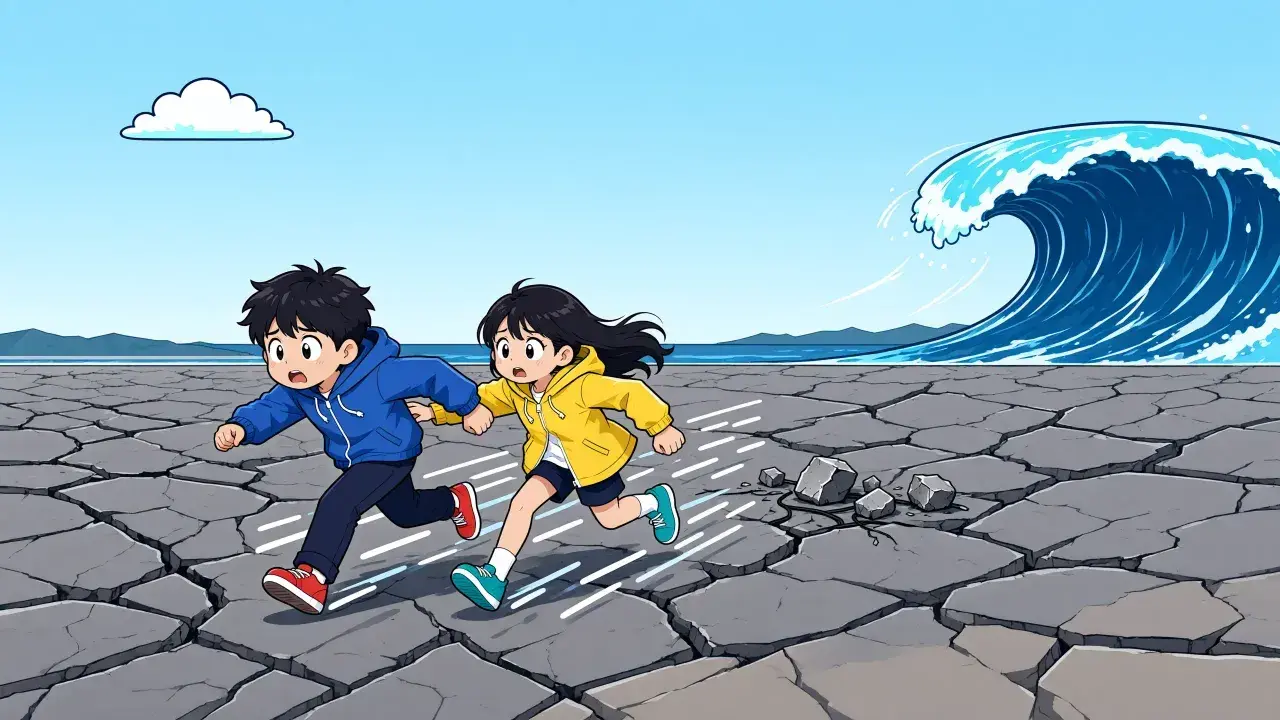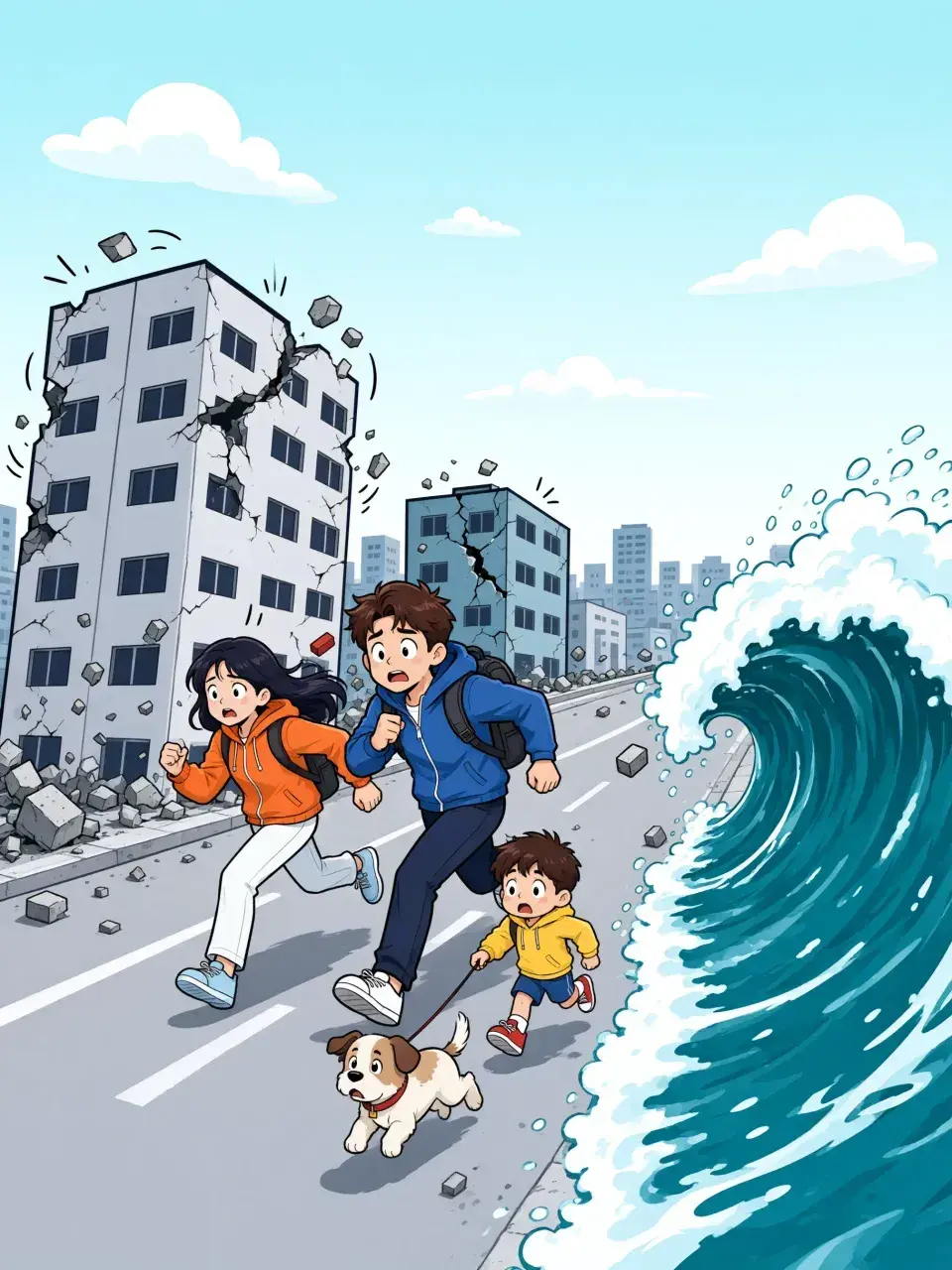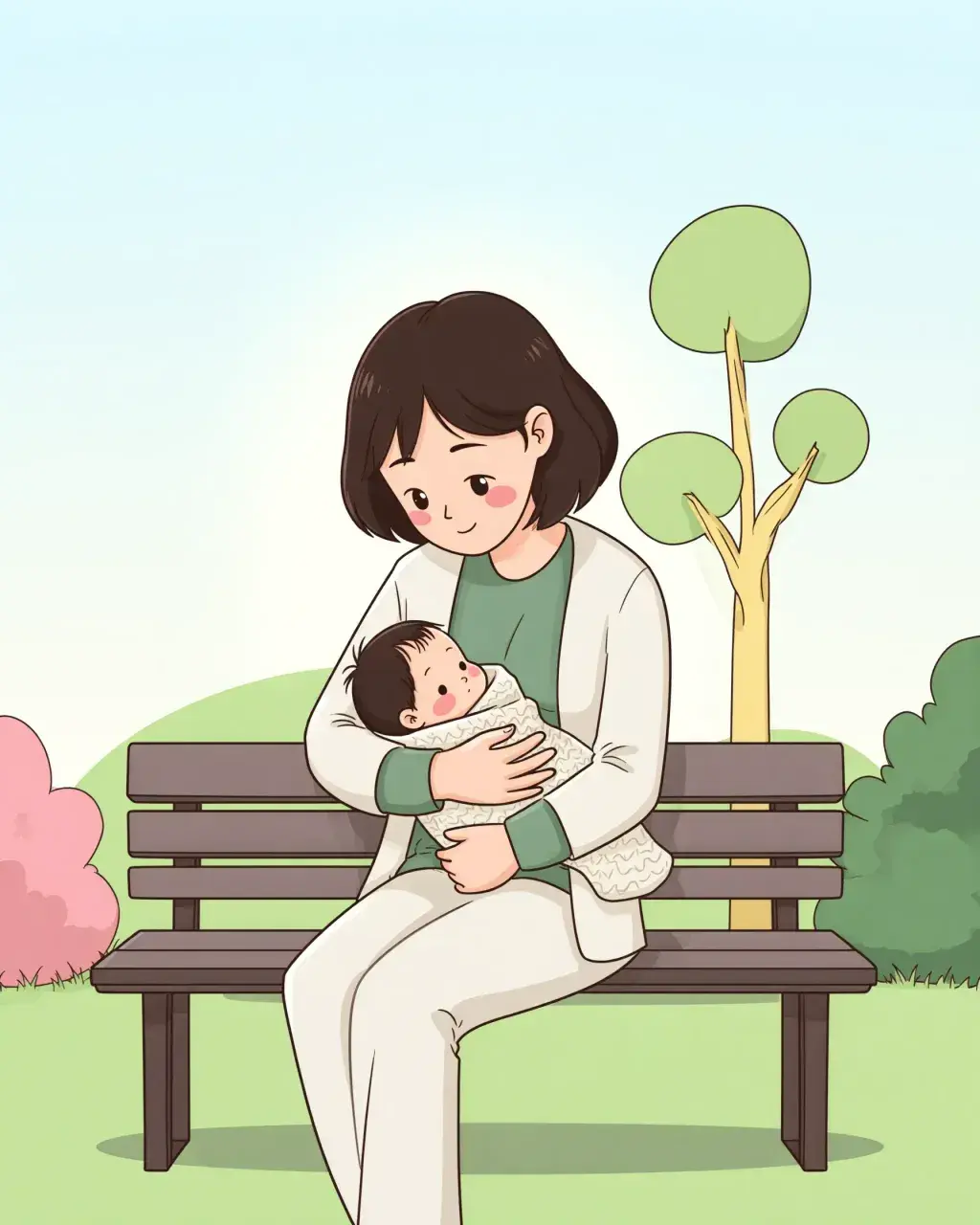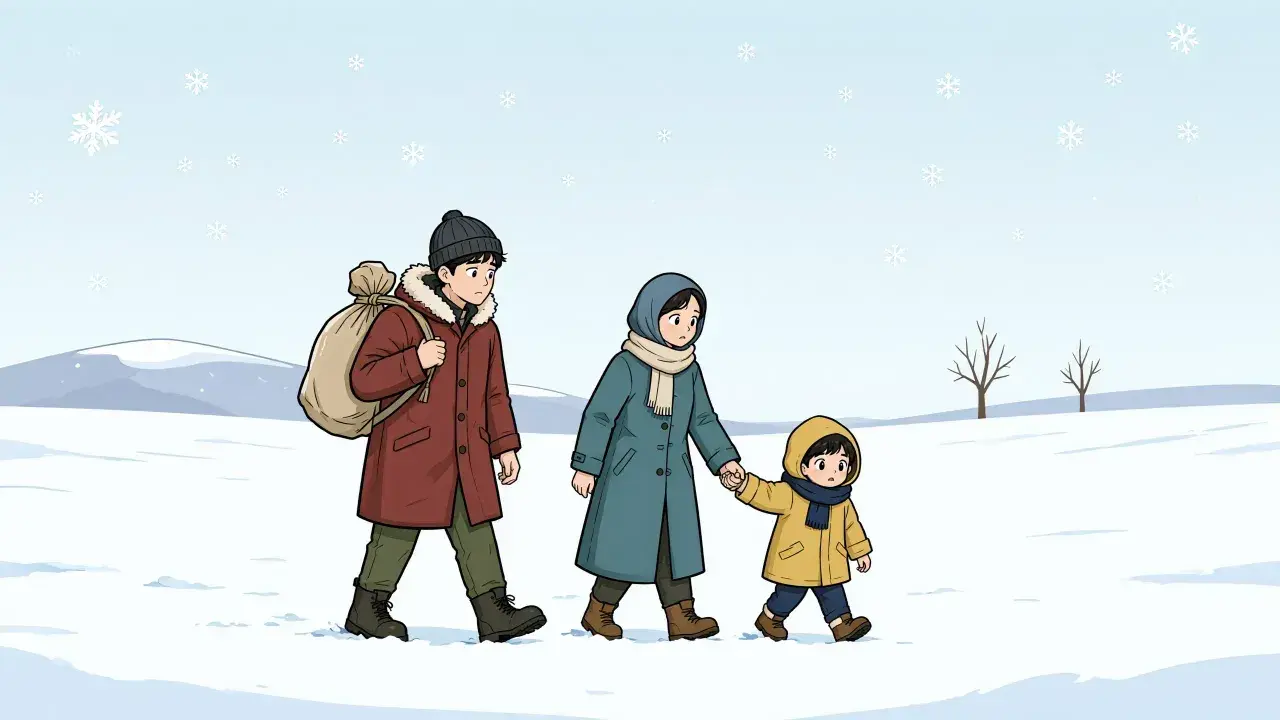
Twelve-year-old Geum-ja was fleeing south with her two-year-old brother Ho-gi on her back and her eight-year-old brother Ho-gak by the hand when, at Cheonan Samgeori, she turned toward Seoul. She thought her six-year-old brother Ho-wan, whom they had been separated from at Anyang Station, might have gone there. According to the article, Geum-ja and Ho-gak discussed whether to continue on to relatives’ home in Busan or return to Seoul to look for their brother, and chose the latter.
Background and context
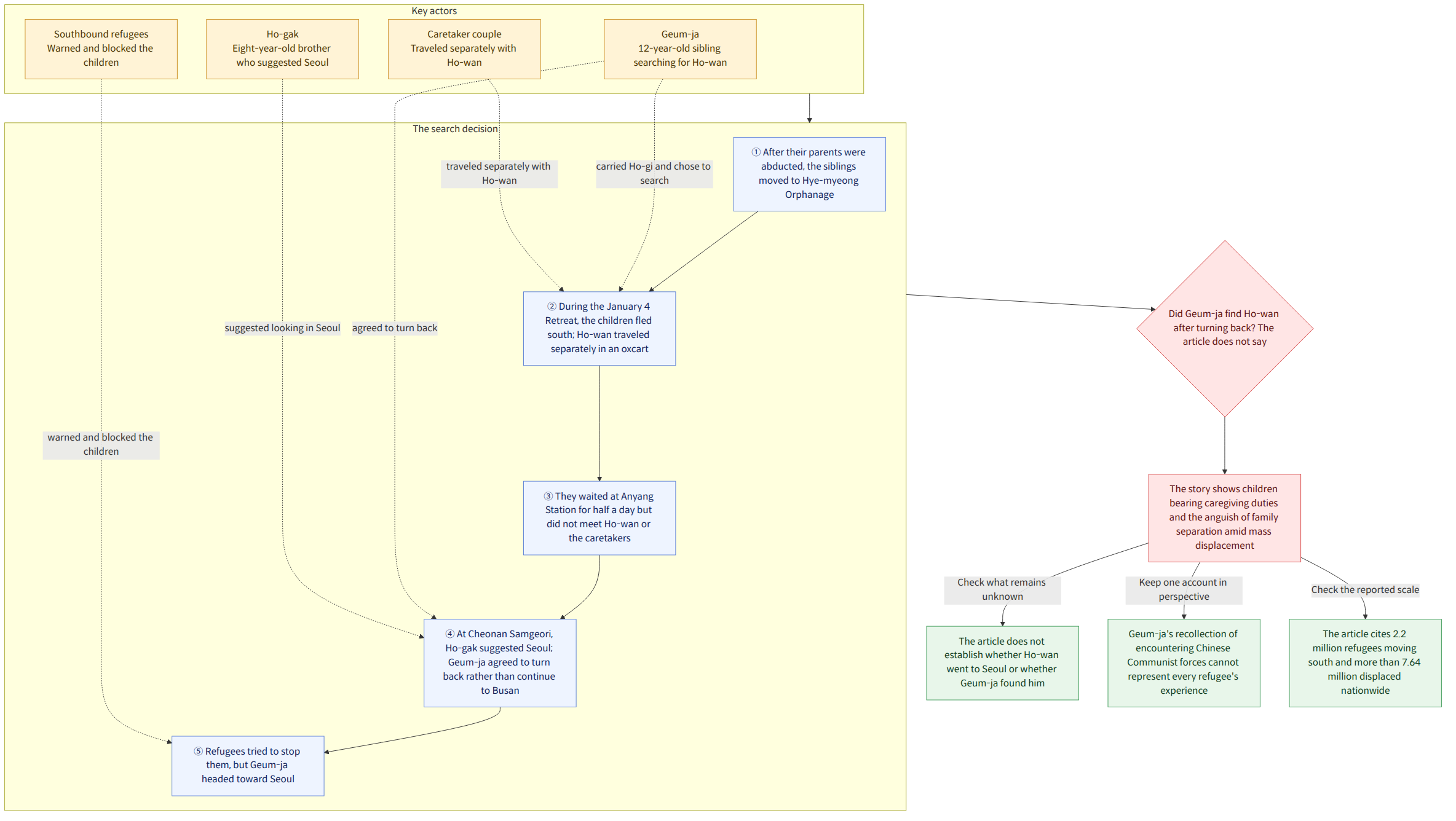
After their parents were abducted, Geum-ja and her siblings were moved to the Hye-myeong Orphanage (혜명보육원) in Myeongnyun-dong. But the January 4 Retreat forced them to flee again. Geum-ja carried Ho-gi on her back and held Ho-gak’s hand, while six-year-old Ho-wan traveled separately in an oxcart with the orphanage’s caretaker couple. They agreed to meet again at Anyang Station, but Ho-wan and the couple did not appear, even after Geum-ja and her siblings had waited for half a day.
The article says that when they arrived at Anyang Station, the station building had collapsed shortly after an explosion, and large craters had been left in the square. The group first continued south, but their anxiety grew that if they went on without Ho-wan, they might lose their chance to reunite. At Cheonan Samgeori, Ho-gak said Ho-wan was more likely to have gone to nearby Seoul, and Geum-ja agreed.
Refugees heading south tried to stop the young siblings from returning to Seoul. The article says that when they said they were going to look for their brother, refugees warned them it was dangerous, blocked them, and even pushed Geum-ja and her siblings back toward the south. Still, Geum-ja ultimately headed for Seoul. In an interview, she recalled that at the time she could think of nothing except that she had to find her brother.
This story shows that wartime movement did not proceed in only one direction. People fled in search of safety, but for those separated from their families, turning back could feel like the only choice. For Geum-ja, the road to Busan and the road back to Seoul were not just a fork on a map, but a choice between letting go of the possibility of finding her missing brother and pursuing it.
What this story means
Statistics on refugees tell us the scale of displacement, but the numbers alone do not reveal the responsibilities children had to take on. Geum-ja carried one young sibling and held another by the hand, while also caring for them and deciding where to go next. The story is notable because it shows that civilians suffered during the war not only from bombings and cold, but also from separation from family and decisions they had to make at a young age.
Geum-ja said in an interview that on her way to Seoul she encountered Chinese Communist forces wearing thick fur coats, who played around and gestured for her to go south. Her memory shows that danger along the refugee route did not take only one form. However, one person’s recollection cannot be generalized to the experiences of all refugees during the war.
For example, if a child became separated from siblings while fleeing, as in Geum-ja’s case, they might try to turn back by guessing where the rest of their family had gone. But the article does not say whether Ho-wan actually went to Seoul or whether Geum-ja found him after turning back. That is why it is important to distinguish the desperate choice made at the time from what happened afterward.
What is known and what remains unknown
What is known
- After their parents were abducted, Geum-ja and her siblings were moved to the Hye-myeong Orphanage in Myeongnyun-dong and fled during the January 4 Retreat.
- During the flight, Geum-ja carried two-year-old Ho-gi on her back and held eight-year-old Ho-gak’s hand, while six-year-old Ho-wan traveled separately in an oxcart with the caretaker couple.
- Geum-ja and her siblings waited for Ho-wan and the couple at Anyang Station but did not meet them, and at Cheonan Samgeori they decided to turn back toward Seoul.
- The article cites figures from the Ministry of National Defense’s History of the Korean War showing that during the January 4 Retreat, 2.2 million refugees moved south from Seoul and other areas, while more than 7.64 million people were displaced nationwide.
- The article records that the reporter met Kang Geum-ja five times, conducting the first interview in April and seeing her in person for the last time in late July.
What remains unknown
- The article does not say whether Geum-ja found Ho-wan after returning to Seoul.
- It is not known where Ho-wan went after being separated from them at Anyang Station.
- The article does not specify the route Geum-ja and her siblings took to Seoul or how long the journey actually took.
What readers should verify
- When quoting or retelling this story, readers should distinguish between the interview recollections in the article and the refugee statistics cited from the Ministry of National Defense’s History of the Korean War.
- The article alone is not enough to determine what happened to Ho-wan or whether the siblings reunited. Separate sources are needed to establish whether information about what happened afterward has been verified.
- When describing the scale of displacement, readers should distinguish between the 2.2 million people who moved south from Seoul and other areas and the more than 7.64 million people who fled nationwide.