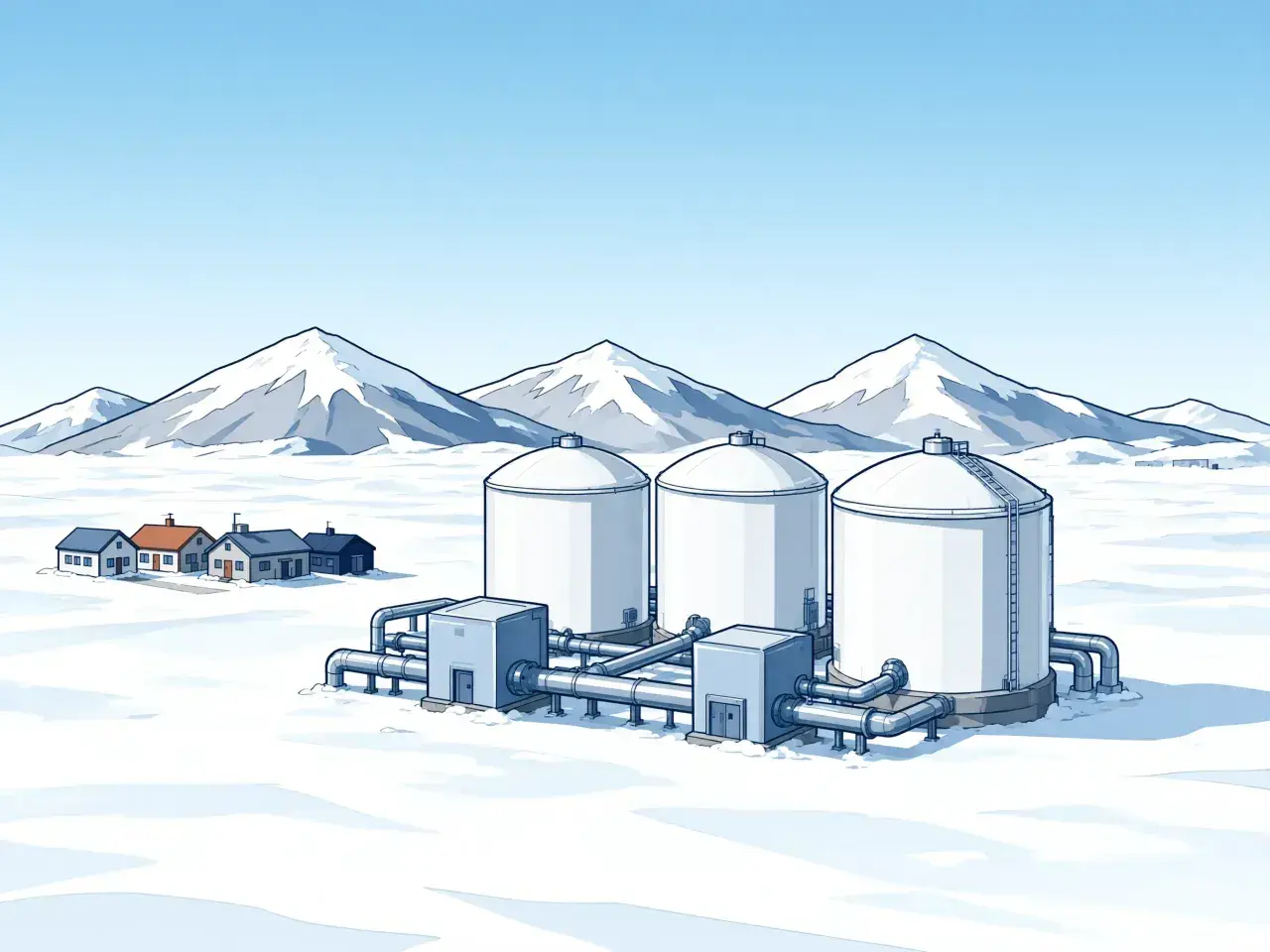
Trump highlights an $8.4 billion oil project
President Donald Trump said Friday that a U.S. trade deal with South Korea includes $8.4 billion for an enhanced oil recovery project. The project would inject gases into an aging oilfield to force out crude that conventional drilling has left behind. Trump presented the plan as a way to increase energy production and strengthen U.S. influence in global energy markets.
“The Republic of Korea Deal keeps getting BETTER!” Trump wrote, describing the project as a source of greater oil and gas production, energy dominance, and future security.
The announcement adds a specific energy project to a broader package of economic and investment commitments that Trump has been promoting. However, the public statement did not provide detailed information about the project’s location, timeline, or how the $8.4 billion would be spent. Those details will matter in determining whether the proposal becomes an operating project or remains a headline-level commitment.
How enhanced oil recovery works
Enhanced oil recovery, or EOR, is a technique for extracting oil that remains in a field after standard drilling becomes less effective. In some projects, operators inject carbon dioxide or another gas underground to push trapped oil toward production wells. A simple comparison is squeezing the last liquid from a nearly empty bottle: the method aims to recover resources that would otherwise be difficult to reach.
EOR is used in mature oilfields, where production has declined after years of drilling. The injected gas can help move crude through rock formations, but the process requires equipment, investment, and careful management of underground pressure. The announcement did not specify which gas would be used in the South Korea-linked project; Trump’s statement referred broadly to pumping gases into the field.
Why the technology is contested
Oil companies have supported EOR because it can extend the productive life of existing fields and make more crude available without opening an entirely new field. Supporters argue that using established infrastructure can help meet energy demand and support energy security. They also point to the possibility of capturing and injecting carbon dioxide rather than releasing all of it into the atmosphere.
Environmental groups, however, argue that EOR is not automatically a climate solution. When additional oil is extracted and later burned, it produces emissions, and critics warn that extending the life of oilfields can prolong dependence on petroleum. The climate impact depends on factors such as where the injected gas comes from, how much remains underground, and how much additional oil the project produces.
- Potential benefit: More oil can be recovered from fields that are already in operation.
- Potential concern: Extra production may add to long-term fossil-fuel use and emissions.
- Key unanswered questions: The project’s design, gas source, schedule, and environmental safeguards have not been detailed in the announcement.
Part of a much larger investment announcement
The oil recovery project follows Trump’s announcement on Wednesday that South Korea would invest $200 billion in U.S. projects. That headline figure is substantially larger than the $8.4 billion described for oil recovery, but the two numbers refer to different parts of the broader deal and should not be treated as interchangeable. The public account did not explain how the investment would be divided among projects or when the funds would be committed.
South Korean officials quickly raised questions about a key element of Trump’s earlier announcement. That response highlights an important distinction in international economic deals: a leader’s public description may not settle how the other government interprets a commitment or how it will be carried out. Negotiations, financing arrangements, and approvals can all shape what ultimately happens.
What remains unclear
The available announcement leaves several practical issues unanswered. It does not identify the companies or public agencies responsible for the EOR project, explain the source of its funding, or set out a construction timetable. Nor does it provide details about the terms of the wider investment package or the specific point South Korean officials questioned.
These gaps do not establish that the project will fail, but they mean the headline figure alone cannot show how much activity will take place or when. Investors, workers, and local communities typically need concrete information about contracts, permits, and construction plans before they can assess the effects of a major project.
Energy security meets climate concerns
Trump framed increased oil and gas output as a contribution to American energy dominance and global energy security. The argument is that producing more fuel at home can reduce exposure to supply disruptions and help meet demand from households and businesses. For consumers, energy security can affect everyday costs, including the price of gasoline, heating, and goods transported by truck.
The same approach can conflict with efforts to reduce emissions. More oil supply may ease concerns about shortages in the near term, while new or extended production can make it harder to move away from fossil fuels over time. EOR sits at the center of that debate because it can combine the use of carbon dioxide with the extraction of more petroleum.
The central question is not only how much oil a project can recover, but also where its injected gas comes from, what happens to that gas underground, and how much additional fuel is eventually burned.
The political backdrop: fuel prices and the midterms
Trump’s announcement comes as he promotes economic and investment deals ahead of November’s midterm elections. He is seeking to reinforce his record on the economy while voters express concern about the Iran war and high gasoline prices. Energy projects can therefore carry both economic and political significance, particularly when fuel costs are prominent in household budgets.
A promised investment can signal confidence and create expectations of future jobs and production. But the effects on consumers are not immediate or guaranteed, and a project’s contribution to national supply does not automatically translate into lower prices at the pump. Oil prices are influenced by global supply and demand, geopolitical events, production decisions, and the cost of moving and refining crude.
What to watch next
The next important test will be whether the broad commitments are translated into specific, verifiable plans. Details about funding, participating companies, the project site, and the timeline would help clarify the scale of the proposed oil recovery work. Further explanation from both governments will also be needed to show how the $200 billion investment announcement relates to the individual projects it is meant to support.
The project’s environmental design will be another key point to follow. Information about the gas used, carbon management, expected oil output, and monitoring could help assess both its energy benefits and its climate risks. Until those details emerge, Trump’s announcement establishes the project’s claimed value but leaves important questions about implementation and impact open.