A Coffee Shop Dream Turned into a Nightmare
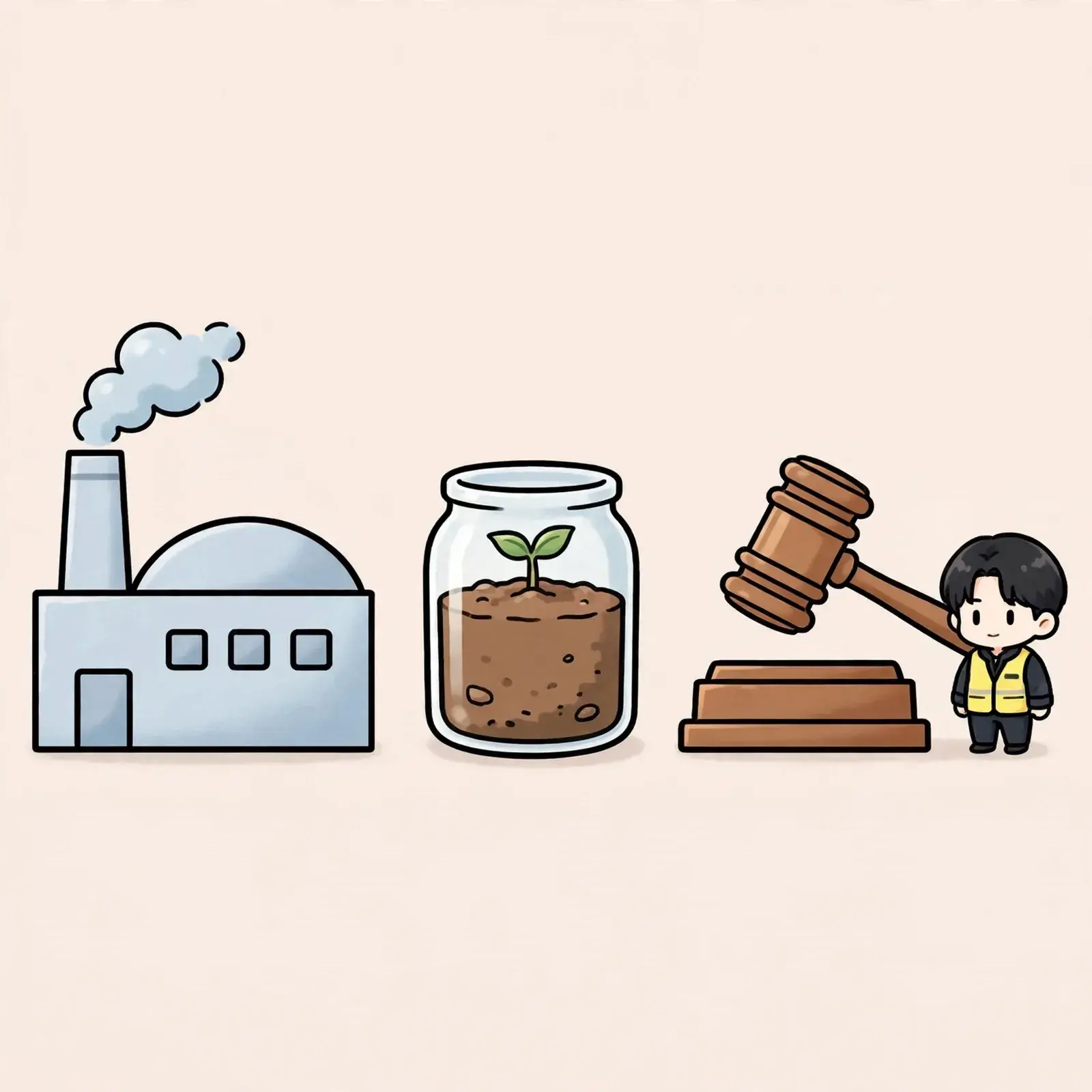
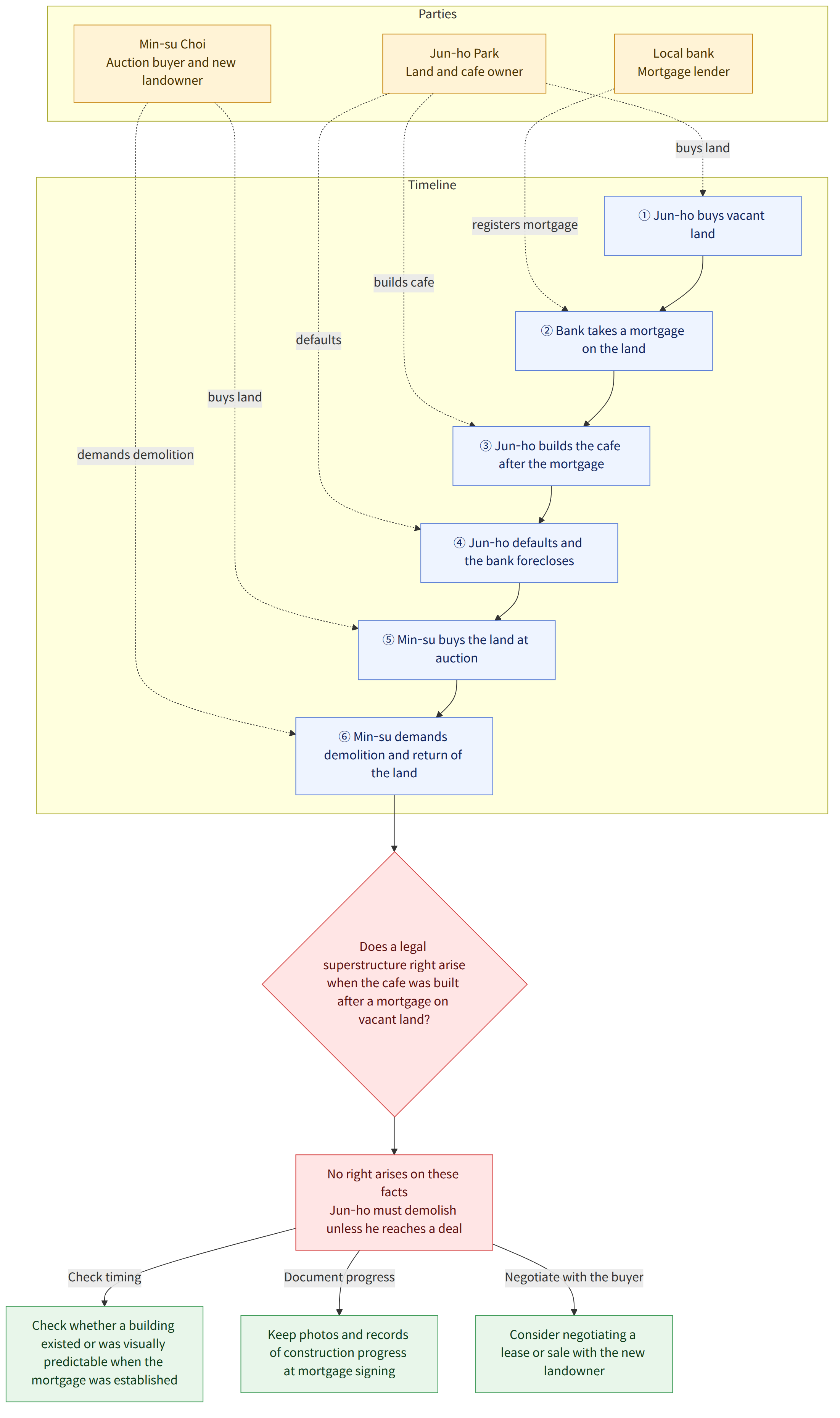
Jun-ho Park had spent years dreaming of opening a designer cafe in the outskirts of Seoul. To make this a reality, he purchased a prime plot of vacant land (known in Korean law as nadaeji). Having spent most of his capital on the land itself, Jun-ho took out a loan from a local bank to fund the construction, using the land as collateral for a mortgage.
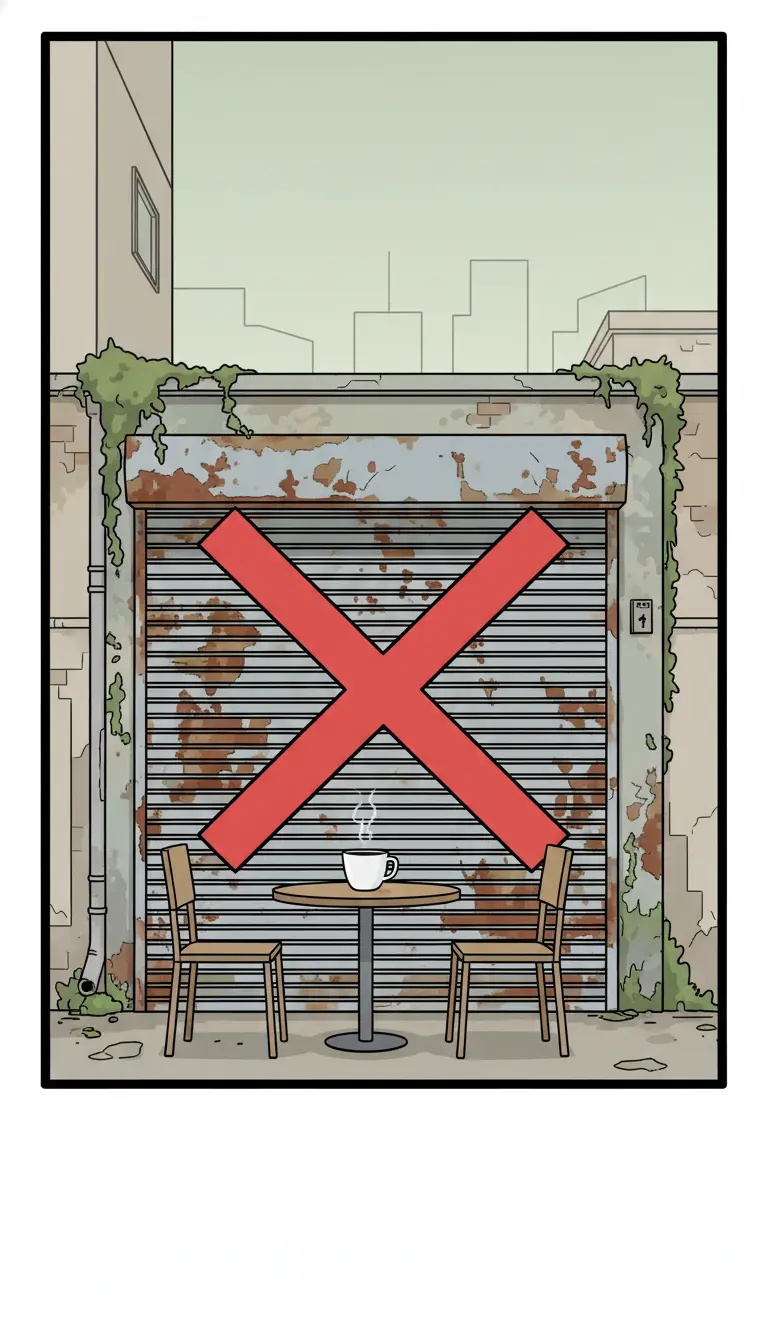
The bank manager was enthusiastic, noting that the building would significantly increase the property's value. With the loan secured, Jun-ho built a stylish two-story cafe that soon became a local landmark. However, a sudden economic downturn left Jun-ho unable to keep up with his mortgage payments. The bank foreclosed, and the land was sold at auction to a new owner, Min-su Choi.
Min-su, now the legal owner of the land, dropped a bombshell: "I own this land now, and you have no legal right to keep that building here. You must demolish the cafe and return the land to its original state immediately."
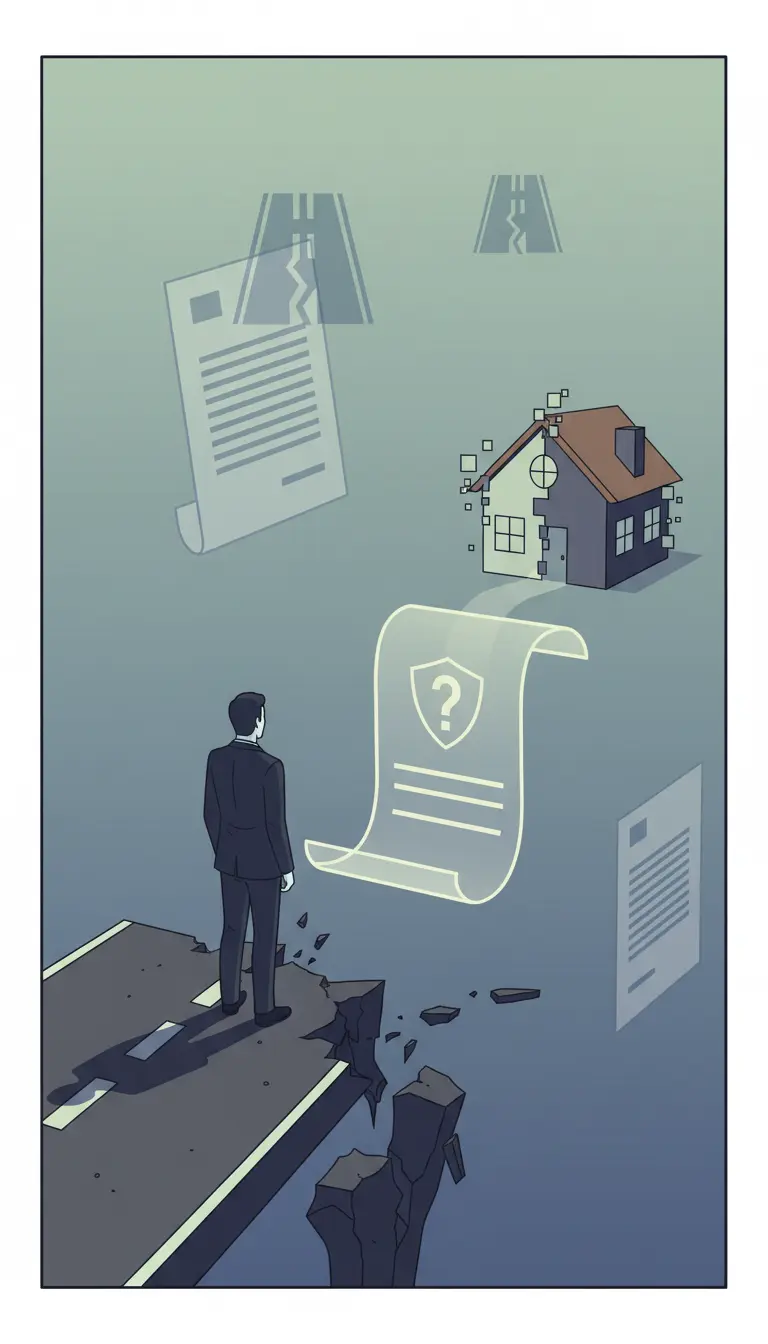
Can Jun-ho Save His Cafe?
The central legal question is whether Jun-ho possesses a "Legal Superstructure Right" (Beopjeong Jisang-gwon). In Korea, this is a special legal right that allows a building owner to continue using land they do not own, preventing the economically wasteful demolition of buildings when land and building ownership are separated. But does it apply to Jun-ho?
What Korean Law Says About Legal Superstructure Rights
Korean law treats land and buildings as two entirely separate pieces of real estate. To protect building owners, Article 366 of the Civil Act states:
Article 366 (Legal Superstructure Right): If the land and the building thereon belong to different owners due to the auction of the mortgaged property, the owner of the land is deemed to have granted a superstructure right to the owner of the building.
However, the Supreme Court of Korea has established very strict criteria for this right to arise:
- The building must exist at the time the mortgage was established.
- The land and the building must belong to the same person at the time of the mortgage.
- The ownership must become separated due to the execution of the mortgage (auction).
The Judiciary's Approach: Protecting the Third-Party Buyer
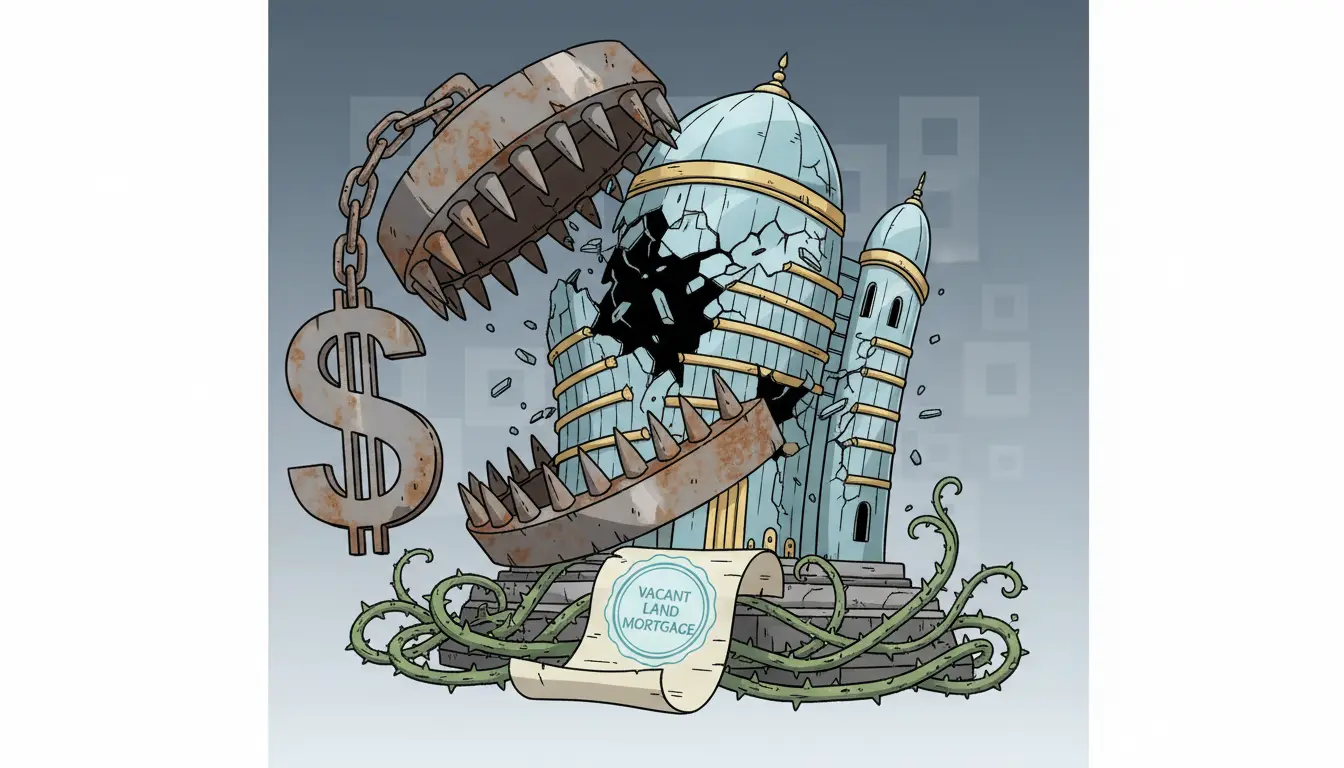
The Supreme Court is firm: If a mortgage is placed on vacant land (nadaeji) and a building is constructed afterward, no legal superstructure right is granted.
Why such a strict rule? It's about legal predictability. When a third party like Min-su Choi bids on land at an auction, he checks the registry. If the land was vacant when the mortgage was set, he assumes he is buying a "clean" plot of land that he can use freely. If a hidden legal right suddenly appeared to protect a building he didn't account for, it would undermine the entire auction system and the stability of property rights.
Even if the bank (the mortgagee) had agreed to the construction, the court views this as a private matter that a third-party buyer cannot know. Therefore, such consent does not create a legal right against the new landowner.
Applying the Law to Jun-ho's Case
In Jun-ho's story, his land was completely vacant when the bank registered the mortgage. Although he built the cafe with the loan money and the bank's knowledge, the critical timing—the moment of the mortgage—shows no building existed.
Consequently, Jun-ho does not qualify for a Legal Superstructure Right. Min-su Choi, as the new owner, has the legal upper hand. Unless Jun-ho can negotiate a new lease or purchase the land back, he is legally obligated to demolish his dream cafe at his own expense.
There is one narrow exception: If construction had already progressed to the point where the "scale and type of building could be visually predicted" (e.g., pillars and a roof were up) at the time of the mortgage, the court might have ruled differently. Unfortunately for Jun-ho, he only began digging after the paperwork was signed.
Conclusion: What Should You Do?
Jun-ho’s case serves as a cautionary tale for anyone looking to develop property using debt. To avoid the risk of demolition, keep these practical tips in mind:
- Timing is Everything: If you are taking out a mortgage on a development site, be aware that any building started after the mortgage is unprotected if the land goes to auction.
- Document Construction Progress: If you are already building when the mortgage is set, keep photographic and documentary evidence showing that the structure was already visible and predictable.
- Negotiate with the Winner: If you find yourself in Jun-ho's shoes, your best bet is often a commercial settlement—leasing the land from the new owner or offering to sell the building to them at a discount to avoid total loss through demolition.
Property development is a high-stakes game. Understanding that land and buildings have separate legal destinies in Korea is the first step toward protecting your investment.