Why KAIST’s satellites launched far from home
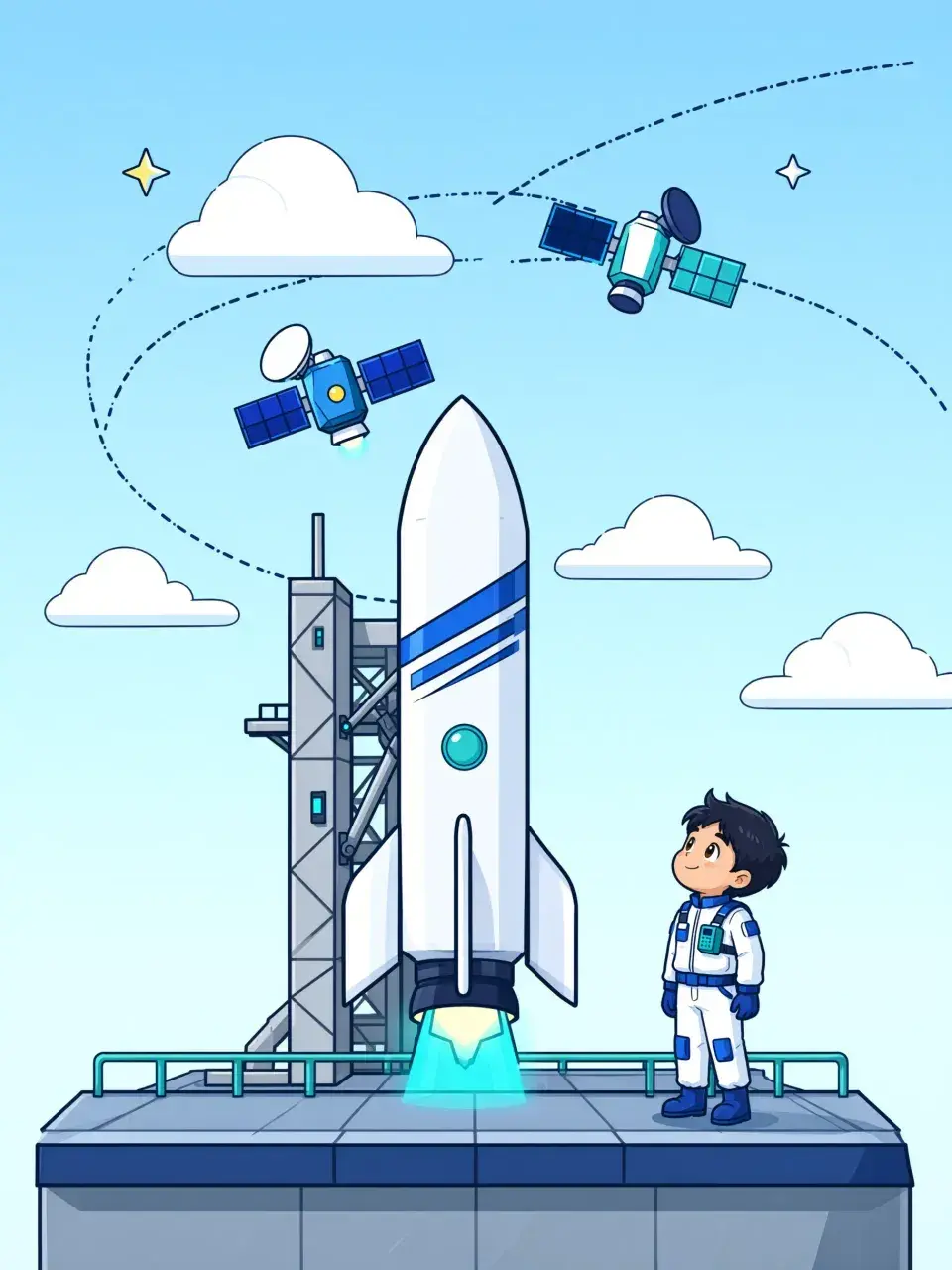
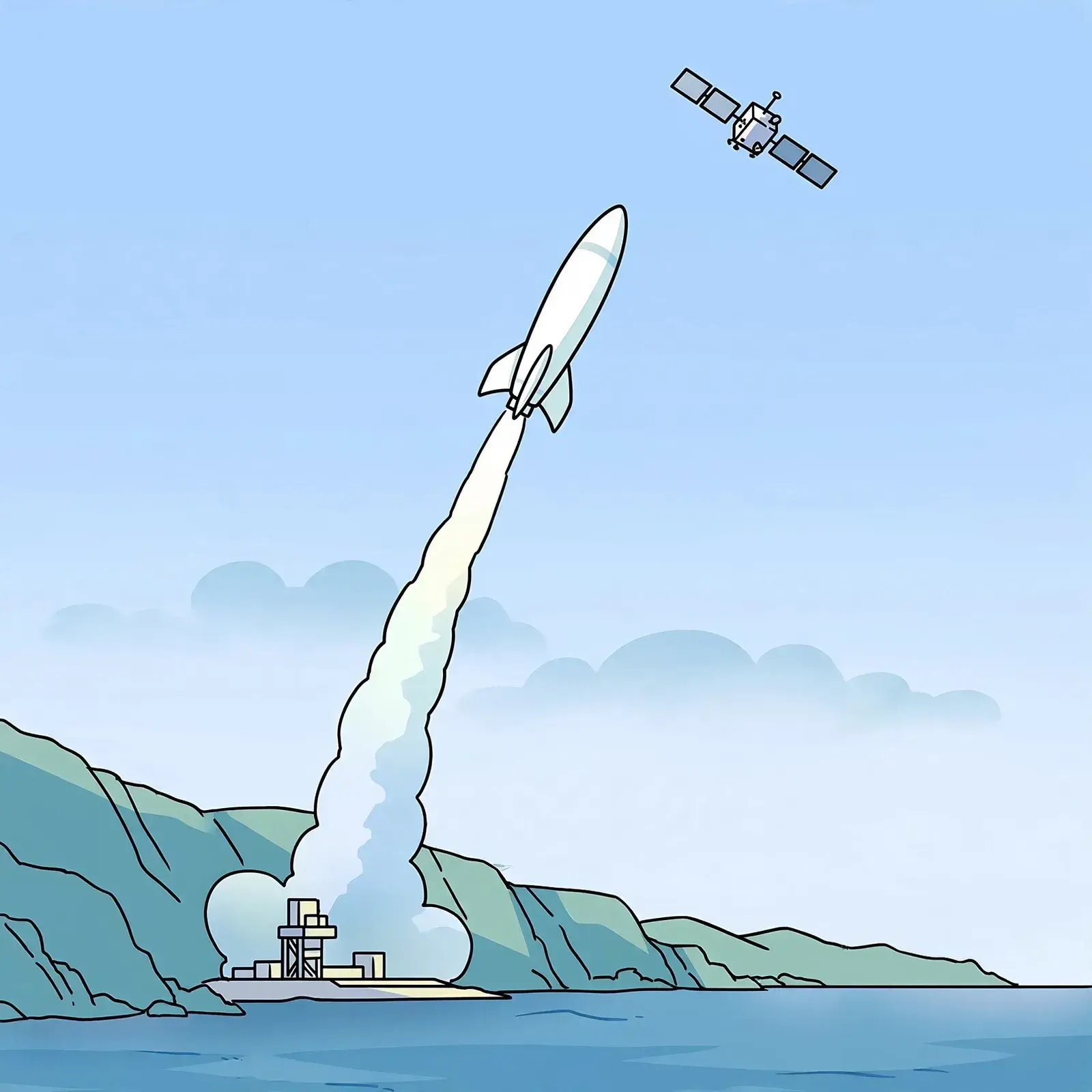
On January 30, 2026, NEONSAT-1A, an Earth-observation satellite developed under the leadership of the Korea Advanced Institute of Science and Technology (KAIST), headed into space from New Zealand. Its launch site was not the Naro Space Center in South Korea’s southern coastal region, but the Mahia Peninsula on New Zealand’s North Island. The rocket was Electron, a small launch vehicle built by Rocket Lab, a company founded by New Zealand entrepreneur Peter Beck.
The launch was not an isolated arrangement. The first satellite in the same program, NEONSAT-1, also departed from Mahia in April 2024. In other words, South Korea supplied the satellites while a New Zealand-based launch operation provided access to orbit—a practical example of how space missions increasingly depend on international partnerships.
The choice of New Zealand was about matching the mission to a launch service: Rocket Lab offered a dedicated small-satellite rocket, a flexible launch site, and an established commercial operation.
A satellite does not necessarily have to launch from its home country. Space agencies and companies weigh factors such as rocket availability, launch timing, destination orbit, cost, and safety. For a customer seeking a launch slot suited to a particular spacecraft, an overseas provider may be a better fit than waiting for a domestic rocket or facility to meet the same schedule.
New Zealand’s rise as a launch nation
New Zealand is widely associated with dairy farming, livestock, and tourism, but it has also become one of the world’s most active countries for orbital rocket launches. The government describes it as the third most active launch nation. Rocket Lab’s Electron completed its 94th mission on September 3, 2026, according to the figures reported in the article.
The company’s customers have included major public and private space organizations. These include the US National Aeronautics and Space Administration, the US Space Force, Japan’s space agency, the European Space Agency, KAIST, and commercial satellite operators. This range of clients shows how a relatively small country can become an important part of a global industry without building every kind of spacecraft or rocket itself.
New Zealand’s space industry has also grown beyond launches. A government study put industry revenue at about NZ$2.68 billion in the 2023–24 financial year, up 53% from NZ$1.75 billion in 2019. The sector contributed an estimated NZ$2.47 billion in value to the domestic economy, equivalent to 0.58% of gross domestic product (GDP, the total value of goods and services produced in a country).
- The industry directly employed about 7,000 people.
- Including indirect effects, it supported roughly 17,000 jobs.
- Its activities include launch services, satellite systems, manufacturing, and related technical work.
These figures matter because the economic effect of a space company extends well beyond the rocket that appears on launch day. Engineers, component makers, software specialists, communications providers, and local services can all become part of the business. A successful launch company can therefore help build a wider industrial network, much as a major carmaker supports suppliers that produce everything from sensors to wiring.
A specialist strategy for smaller satellites
Rocket Lab entered a market that was changing quickly. As large launch companies expanded commercial services, demand grew for smaller satellites that could perform tasks such as observing Earth, monitoring weather, or providing communications. Many of these spacecraft do not need the lifting capacity of a very large rocket, and their operators may value a launch date and orbit tailored to their needs.
Electron is about 18 metres tall and can carry around 300 kilograms to low Earth orbit. Low Earth orbit is a region relatively close to Earth where many imaging and communications satellites operate. A simple comparison is the difference between booking a full-size bus and arranging a smaller vehicle for a specific group: a small rocket may be a better match when a customer does not need to share a much larger launch.
This approach is often described as dedicated or responsive launch service. Instead of placing a satellite on a large rocket alongside many other customers, an operator may pay for greater control over the mission’s timing and destination orbit. That flexibility can be especially useful for small spacecraft with specialized jobs, though the overall choice still depends on price, reliability, and availability.
Rocket Lab’s strategy was therefore not simply to build a smaller version of a large rocket. It focused on serving customers whose needs were different: smaller payloads, more tailored schedules, and access to particular orbits. That commercial focus helped the company stand apart in an industry where launch capacity, timing, and mission requirements do not always align neatly.
Why the Mahia Peninsula is useful for launches
Geography that can make a country feel remote in ordinary trade can become an advantage for rocket launches. Mahia lies beside the broad Pacific Ocean, with relatively low population and air-traffic density around the launch area. Launching toward open ocean can provide room to send rockets along different paths while reducing the number of people and aircraft in the immediate area.
The surrounding geography is important because a rocket needs a safe corridor as it climbs and travels toward orbit. The destination orbit affects the route it must take, so a launch site with access to open space in multiple directions can offer useful flexibility. In this context, New Zealand’s distance from major population centers is not only a logistical challenge; it can also be a scarce operational asset.
Rocket Lab’s Mahia facility is designed to support as many as 120 launch opportunities a year. Operating its own launch site can make it easier for the company to plan around customer demand, rather than coordinating every mission with a facility shared by numerous launch providers. The figure describes potential launch opportunities, not a promise that 120 rockets will fly every year; actual activity depends on customer needs, technical readiness, and regulatory approvals.
For satellite operators, a responsive schedule can make a practical difference. If a spacecraft is ready but must wait a long time for a suitable shared launch, the delay can affect the wider mission plan. A dedicated small-rocket service can offer another option, although no launch system removes the need for careful testing and safety procedures.
One entrepreneur, followed by a regulatory framework
Rocket Lab’s origin story began with Peter Beck, who grew up in Invercargill, a city in New Zealand’s South Island. His career did not follow the conventional path of a university-trained aerospace engineer. He left school at 17 and began an apprenticeship in precision toolmaking at household-appliance manufacturer Fisher & Paykel in 1993.
Beck later gained practical experience in composite materials and advanced technology at the government research organization Industrial Research Limited. He founded Rocket Lab in Auckland in 2006. In 2024, he received a New Zealand honor recognizing contributions to aerospace, business, and education.
His background reflects a feature of the company’s early development: hands-on engineering and manufacturing skills mattered alongside the ability to identify a market. Rocket Lab combined technical work with a clear commercial focus on small satellites. Rather than attempting to outbuild larger competitors across every part of the launch business, it concentrated on a growing customer segment.
But a capable company and a useful launch site are not enough to establish an industry. Governments must also define who can launch, what safety standards apply, and how payloads and facilities are authorized. New Zealand’s experience stands out because regulatory development followed a concrete commercial opportunity.
The government established a space agency in 2016 and signed a technology-safeguards agreement with the United States. In 2017, it passed the Outer Space and High-altitude Activities Act, creating a licensing framework for launch vehicles, launch facilities, and payloads. The policy was developed as commercial launch plans became more specific, helping establish rules for an activity that had previously been unfamiliar to the country’s regulators.
The lesson is not that regulation should be removed. It is that rules need to be designed for the new activity: clear licensing and safety requirements can give companies a framework in which to operate.
This distinction matters for emerging industries. A government that reacts too slowly can leave companies uncertain about whether and how they may operate. At the same time, space launches involve public safety and international responsibilities, so predictable rules are essential rather than optional.
A New Zealand base with global reach
Rocket Lab has expanded beyond its original launch service. It established a US presence in 2013 and listed on the Nasdaq stock exchange in 2021. It has since added satellite and space-systems businesses, moving toward a broader role that includes launch, spacecraft-related technology, and supporting infrastructure.
That expansion reflects a wider change in the space economy. A company can earn business not only by carrying a satellite into orbit, but also by building systems that help operate or support it. In 2026, Rocket Lab was pursuing the acquisition of satellite-communications company Iridium, according to the article. Any proposed transaction should be understood as a business plan in progress, not as evidence that an acquisition has been completed.
Even as the company has become international, New Zealand remains central to its operations. Its Auckland production site makes key Electron components and carries out final integration of the rocket. These include composite tanks and a fairing—the protective cover that shields a payload during the flight through the atmosphere—as well as high-voltage batteries, electrical harnesses, and a kick stage.
A kick stage is a small propulsion unit that helps place a payload into its intended orbit after the main rocket has completed most of its journey. An electrical harness is a bundled set of wires that connects systems inside a vehicle. Such components may be less visible than a launch, but they are essential to making the rocket function as a complete system.
Rocket Lab has also added manufacturing capacity by acquiring a precision-parts supplier in Auckland and opened a satellite operations control center. Along with the Mahia launch site, these facilities keep important production and operational capabilities in New Zealand. The country is not merely the location where rockets take off; it is part of the company’s manufacturing and engineering base.
A growing ecosystem—and possible Korean partnerships
The wider New Zealand space sector is developing beyond Rocket Lab. Dawn Aerospace, which has a major base in Christchurch, is among the newer companies working across space and aerospace. The government has set a goal of doubling the scale of its space and advanced aviation industries by 2030.
The growth of one large company can help others by building a pool of experienced engineers, suppliers, and technical knowledge. A new business may find it easier to hire people who have already worked on aerospace materials, precision manufacturing, or satellite systems. In this way, practical experience accumulated for one company can become a foundation for a wider industry.
South Korea and New Zealand have complementary strengths. South Korea has a broad industrial base in areas such as electronics, materials, precision manufacturing, and communications. New Zealand has developed expertise in commercial launches and space systems, along with a launch site and regulatory experience suited to the sector.
The NEONSAT missions show that this cooperation is already taking place in practice. Future collaboration could extend beyond booking a launch to include suppliers, components, equipment, joint research, and technical development. For example, South Korean firms that make specialized electronics or precision parts could explore whether their products meet the needs of New Zealand space companies, while New Zealand firms could bring launch and mission experience to joint projects.
- Potential areas for cooperation: satellite components, advanced materials, electronics, communications, software, and specialized equipment.
- A practical first step: connect capable Korean suppliers with the needs of Rocket Lab and other New Zealand space companies.
- A longer-term opportunity: build joint research and commercial projects that link manufacturing expertise with launch and space-system experience.
Space is often imagined as a contest between countries, but much of the industry works through international supply chains. A satellite may be designed in one country, include parts made in several others, and launch from a site thousands of kilometers away. This makes cooperation valuable for smaller and larger economies alike, provided that partners can meet demanding technical and safety requirements.
What New Zealand’s example suggests
New Zealand did not begin its space industry with a giant government-built space center. The story described here began with an entrepreneur who developed practical engineering experience, a company that chose a focused market, and a government that built a legal framework around an emerging commercial activity. Geography, skilled workers, manufacturing capacity, and international customers then reinforced one another.
The result is a reminder that a country does not need to dominate every part of the space economy to become important within it. A strong position in launch services, components, satellite operations, or engineering can create value when it connects to global demand. New Zealand’s progress also illustrates how an isolated location can become an advantage when the industry depends on safe access to open ocean and flexible launch routes.
For South Korea, the question is not only where its satellites launch. It is how domestic strengths in manufacturing and technology can connect to international space businesses, and how those partnerships can create opportunities for Korean firms. The NEONSAT launches from Mahia provide a concrete starting point for considering that broader relationship.
The next stage will depend on whether companies and institutions can turn individual missions into continuing collaboration. Rocket launches attract attention, but durable industrial growth is built through repeat customers, reliable suppliers, skilled workers, clear rules, and technical partnerships. In that sense, New Zealand’s most important space asset may be not a single rocket or launch pad, but its ability to turn a new opportunity into a functioning commercial ecosystem.