
A shark becomes the center of attention at North Port
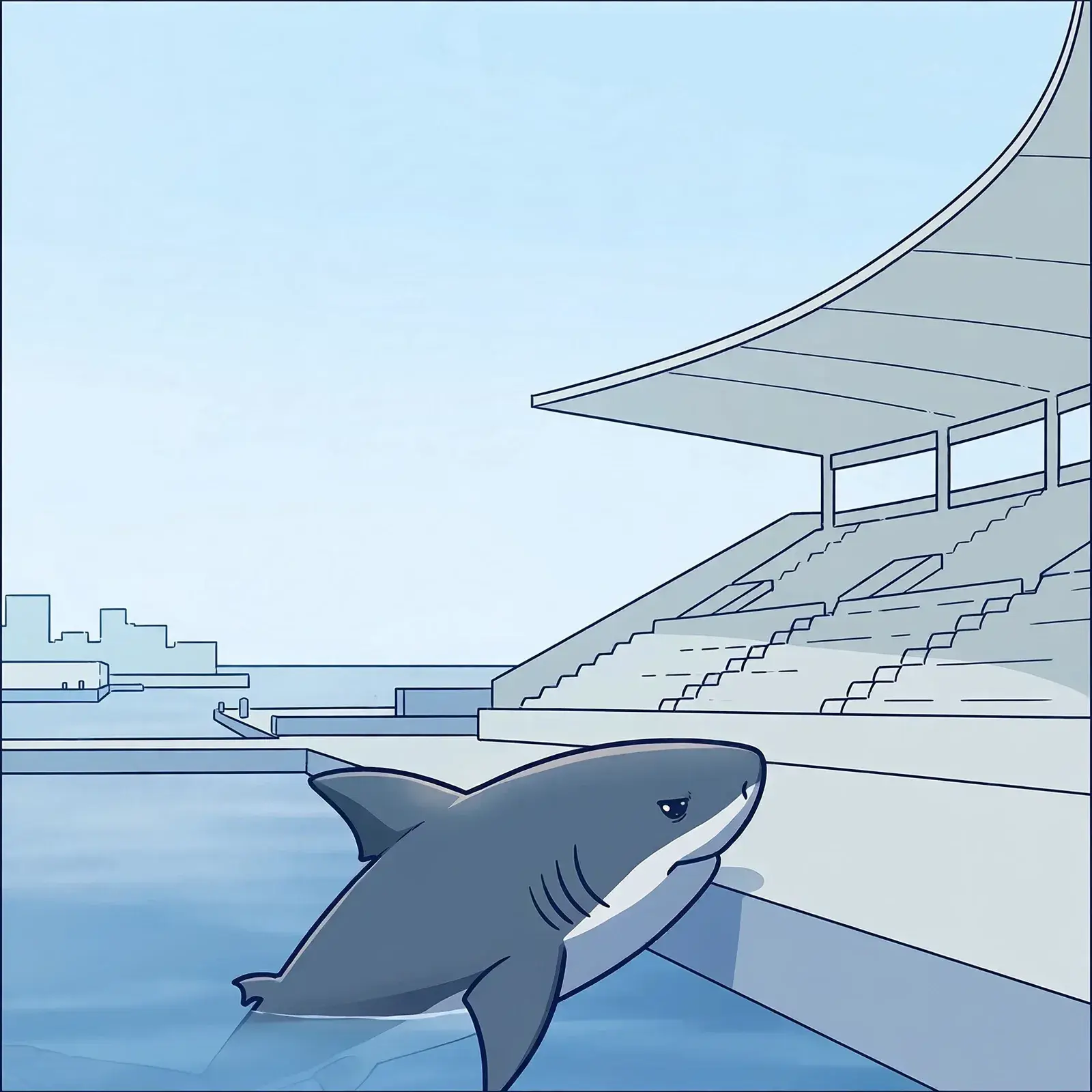
A shark nicknamed Bukangi has drawn widespread attention after appearing in an artificial channel at North Port Waterfront Park in Busan. The animal, estimated to be about 3 meters long, was first spotted on the morning of September 18.
Experts believe it may be a dusky shark or a black shark, although its exact identification has not been confirmed. One possibility is that it followed prey into the channel and then could not find its way back to the open sea through the narrow waterway.
The nickname “Bukangi” combines a reference to Bukhang, the Korean name for North Port, with a playful-sounding name for the shark. As the animal remained in the channel, visitors came to watch, turning a wildlife concern into a major local talking point.
The shark’s appearance has brought unusual attention to North Port, but officials are still weighing how to protect its health and return it to the sea.
Kim Min-seok links the moment to a dome arena plan
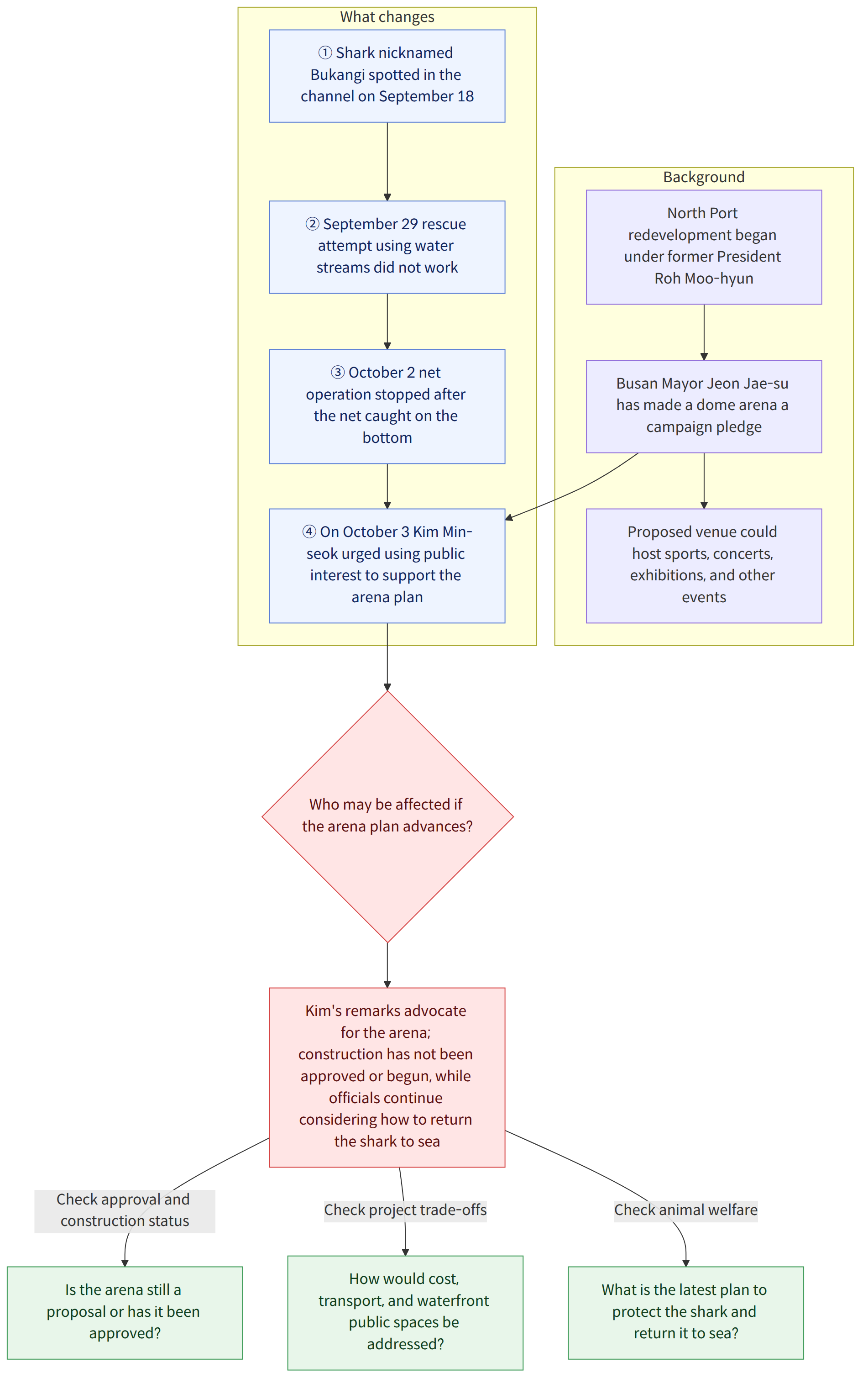
On October 3, Democratic Party leader Kim Min-seok posted a message titled “Drum, drum, drum! Bukangi!” on Facebook. He argued that the shark had “saved many things” by drawing attention to the waterfront and suggested using that public interest to build support for a dome arena at North Port.
Kim said the attention surrounding Bukangi had helped people notice both the harbor area and the value of the waterfront park. His proposal is to turn that interest into discussion of a larger redevelopment project, rather than allowing attention to fade once the shark story ends.
He described the arena as an idea supported by Busan Mayor Jeon Jae-su, who has made it a campaign pledge, and said it has also been part of his own proposals since the previous general election. Kim further linked the project to the long-term redevelopment of North Port, saying it could be the final major chapter of a plan begun under former President Roh Moo-hyun.
What the proposed arena could offer
Jeon’s plan is for a multi-purpose venue—a building designed to host different kinds of events, not only sports. The proposal envisions baseball games during the season and concerts, exhibitions, shopping, and other activities at other times of the year.
- During baseball season: the venue could host games, giving fans a place to attend events in a covered setting.
- Outside the season: organizers could use the space for concerts, exhibitions, and other public events.
- For the surrounding district: supporters hope a steady calendar of activities could bring more visitors to North Port throughout the year.
A dome can make a venue less dependent on weather than an open-air stadium. But a project of this scale would also require decisions about cost, transport, construction, and how the facility would fit with the waterfront and existing public spaces. Those questions are part of the broader debate that would need to follow the campaign pledge.
Why North Port’s redevelopment matters
North Port is a former port area that has been the focus of a major redevelopment effort. Kim’s reference to Roh Moo-hyun reflects the project’s political and historical background: Roh’s government initiated the North Port redevelopment plan, and Kim presented the proposed arena as a possible culmination of that longer effort.
Waterfront redevelopment can involve more than building a single attraction. It may reshape how people use an area by combining public access to the water with transport links, recreation, businesses, and places to gather. A large arena could become one part of that picture, though its actual impact would depend on how it is planned and connected to the rest of the district.
Kim’s remarks therefore tied together three separate issues: the shark’s unexpected arrival, the public’s new interest in the park, and the future of the North Port redevelopment. His message was political advocacy for the arena proposal, not an announcement that construction had been approved or begun.
Rescue attempts have faced practical obstacles
Busan authorities and other agencies began rescue efforts amid concern that the shark might not be able to find enough food in the confined channel. On September 29, an initial attempt used strong streams of water to guide it toward the sea, but the effort did not work.
A second operation took place on October 2, when crews used a large net to move the shark toward the channel entrance. The net became caught on the bottom, forcing the team to stop. Officials then secured it in an effort to prevent the shark from moving farther back into the channel.
That measure did not hold the animal in place. Around midday on October 3, the shark crossed the net and returned to the inner part of the channel. The National Institute of Fisheries Science said the rising water level at high tide may have allowed it to get over the barrier.
- The first effort, using water to guide the shark, did not lead it out to sea.
- The second effort was halted after the net caught on the channel floor.
- The shark later crossed the net, possibly because the tide raised the water level.
- Busan officials are discussing with relevant agencies whether to remove the net, which has become an obstacle to the shark’s movement.
The challenge is to guide a large wild animal through a narrow, man-made channel without injuring it or creating further risks. The city has not announced a completed rescue, and the next steps depend on coordination among the agencies involved.
A surge in visitors—and questions about what comes next
The shark’s presence has brought a substantial number of people to the park. From September 19 through October 2, the waterfront park recorded 765,800 visitors, according to the figures reported by the city.
That increase illustrates how a single unexpected event can put a place on the map for people who might not otherwise visit. In this case, the attention has also prompted debate about the park’s facilities and the future use of the wider North Port area. However, the influx of visitors does not by itself settle whether an arena should be built or how the shark should be handled.
Kim urged officials to consider expert advice and public opinion when deciding whether the shark should remain in the channel or be returned to the sea. He ended his message with a call to “save Bukangi and bring the dome arena to life,” using the shark’s nickname to connect the rescue story with his redevelopment appeal.
The immediate priority remains a safe, expert-led response for the shark. The arena proposal is a separate, longer-term question about how Busan wants to develop North Port.
What to watch for
In the short term, authorities must decide how to manage the net and continue efforts to protect the shark. Any successful operation will need to account for the animal’s movements, the channel’s layout, and changing water levels; the reported attempts so far have not yet returned it to the sea.
Over the longer term, the dome arena remains a proposal tied to local political pledges and the broader North Port redevelopment. Further decisions would be needed on feasibility, funding, and the role of the venue within the district. The attention generated by Bukangi may help bring the project into public discussion, but it does not guarantee that the arena will be built.
For now, the shark has become an unexpected symbol of how a local wildlife incident can draw attention to a city’s public spaces—and how politicians may try to connect that attention to plans for the future.

















