The Image That Shook the Faithful
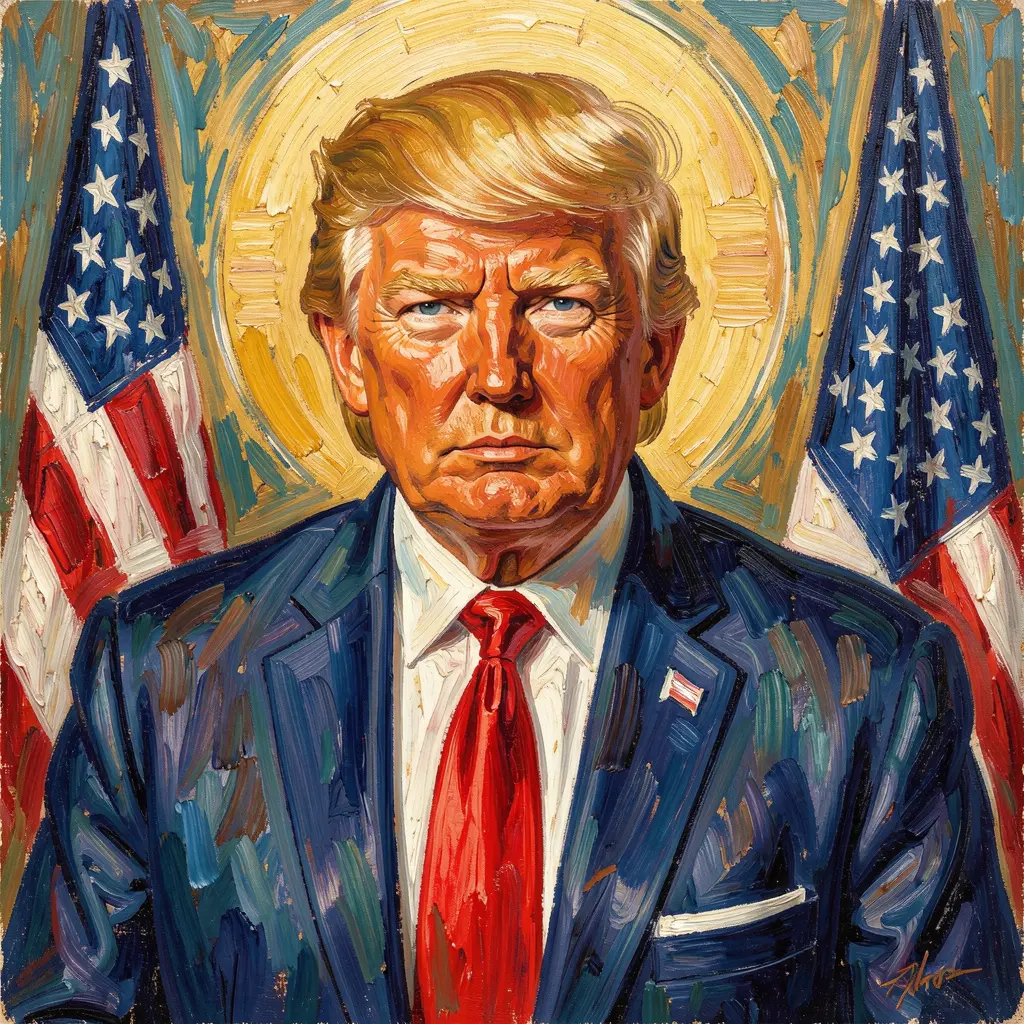
Recently, Donald Trump ignited a firestorm of controversy by posting an AI-generated image on Truth Social. The image depicted Trump dressed in white robes, placing a glowing hand over a sick or deceased man in a hospital bed, mimicking the act of healing or resurrection. To many observers, the imagery was an explicit attempt to present himself as a Messianic figure, effectively casting himself in the role of Jesus Christ.
Following a wave of backlash, Trump deleted the post the next morning. He attempted to downplay the incident, claiming he believed the image depicted him as a doctor. He dismissed the accusations of portraying himself as Jesus, labeling such interpretations as the work of "fake news."
Despite his denial, the reaction from religious circles was swift and severe. Even his traditional base of support—conservative Christians—expressed outrage.
"I don’t know if the President thought he was being funny or if he is under the influence of some substance... but he needs to take this down immediately and ask for forgiveness from the American people and then from God," declared Megan Basham, a prominent conservative Protestant writer.
Decoding Blasphemy: A Theological Evolution
To understand why a digital image caused such an uproar, one must understand the concept of blasphemy (the act of insulting or showing contempt for God or sacred things). Within the Christian tradition, this concept has shifted significantly over two millennia.
The Biblical Roots
Historically, the concept of blasphemy is rooted in the Old Testament, where reviling God was treated as a capital crime. In early Jewish and Christian contexts, the stakes were literal and lethal:
- Leviticus 24:16: Explicitly states that anyone who blasphemes the name of the Lord shall be put to death by stoning.
- The New Testament: Expanded this definition to include the rejection or mockery of Jesus Christ.
The Medieval and Reformation Era
During the Middle Ages, the definition grew to include impersonation. Posing as Jesus or claiming divine powers reserved for the Messiah was viewed as a dangerous heresy (a belief or opinion contrary to orthodox religious doctrine). Those who claimed to be "Christs" were often persecuted harshly.
By the 16th century, during the Protestant Reformation, the term became a tool for ideological warfare. Martin Luther, the catalyst of the Reformation, used the label of blasphemy not only against Catholics but also against Jews and Muslims, showing how the term often mirrored the political and social biases of the era.
From Divine Sin to Social Crime
As society transitioned into the early modern period, blasphemy shifted from being a sin against God to a crime against society. It was no longer just about offending the divine, but about threatening the social order and political stability.
Historical Examples of Prosecution
- James Naylor: A Quaker who was imprisoned in 1656 for reenacting Jesus's entry into Jerusalem. His "performance" was seen as a subversive act against the state's religious authority.
- Early American Law: Virginia's first law code mandated the death penalty for blaspheming the Holy Trinity (the Christian belief that God is one God in three persons: Father, Son, and Holy Spirit).
The Legal Shift in the West
While the First Amendment of the US Constitution protects free speech, blasphemy laws persisted in various states for decades. It was not until after World War II that the US Supreme Court firmly ruled that such laws infringed upon constitutional rights. Similarly, in England, the Blasphemy Act of 1697 influenced the legal codes of former colonies like Australia and New Zealand, where remnants of these laws still exist in some regional criminal codes today.
Blasphemy Beyond Christianity: The Islamic Perspective
While the term "blasphemy" is Western, the concept of offending the divine exists in Islam through the idea of the "word of infidelity." This involves the mockery of God (Allah), the Prophet Muhammad, or the broader Islamic tradition.
Trump's history of provocative statements has previously touched this nerve. In a recent post, he mockingly declared "Praise be to Allah," an act that the Council on American-Islamic Relations described as "disturbing" and "offensive to Muslims."
Unlike in the secularized West, blasphemy laws are still actively enforced in many modern Islamic states, where such actions can lead to severe legal consequences, highlighting the global tension between free expression and religious sanctity.
Conclusion: Does it Actually Matter?
In a modern, secular society, the question is whether we should view blasphemy as a theological sin or a matter of public morality. Simply holding a hostile opinion toward a religion is not inherently blasphemous; rather, the manner of the expression is what defines the offense.
The Critical Distinction: Intent vs. Expression
Experts suggest that the real concern should be when religious criticism evolves into religious hate speech (speech that attacks or threatens a group based on their religion). The key factor is intent.
- If the intent was to mock Islam: Then the "Praise be to Allah" post is blasphemous in a social sense.
- If the intent was to claim divinity: Then the AI image is blasphemous to Christians.
Ultimately, from a secular perspective, Trump's actions may be viewed more as self-indulgent foolishness than targeted hate speech. However, for a leader of the United States—a position requiring diplomacy and respect for a diverse citizenry—such imagery is widely regarded as extremely inappropriate and a breach of presidential decorum.