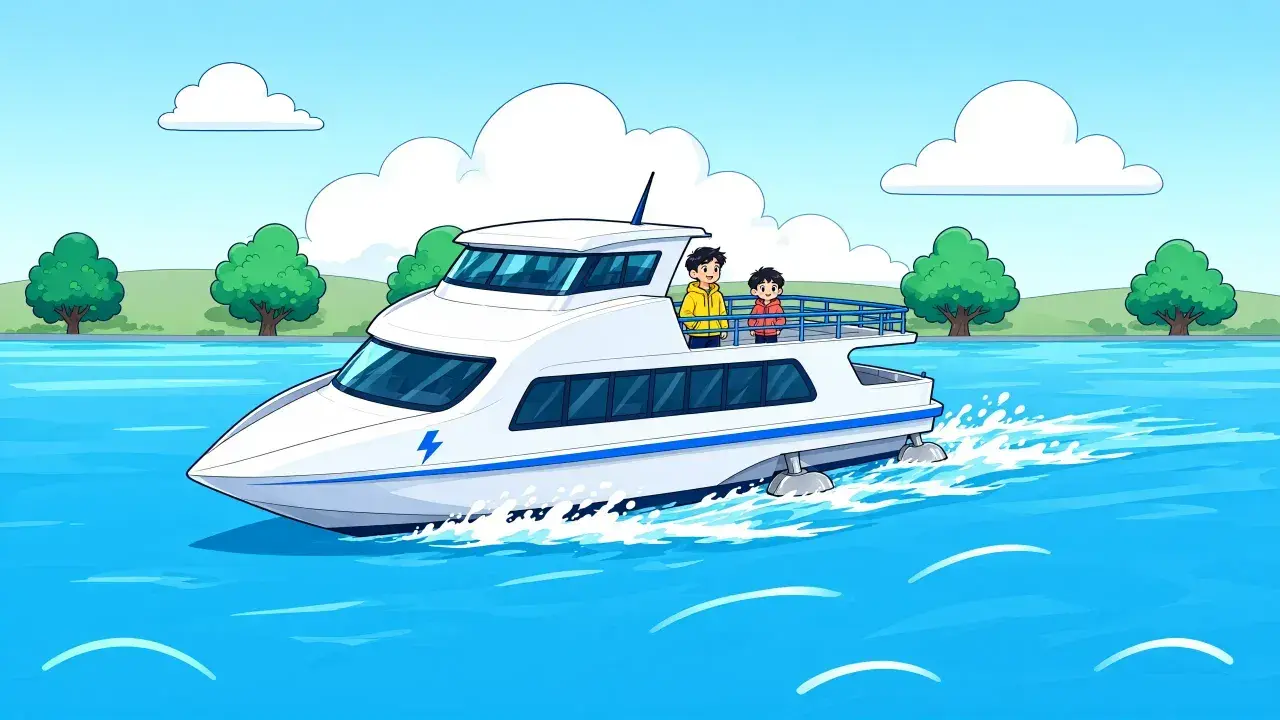
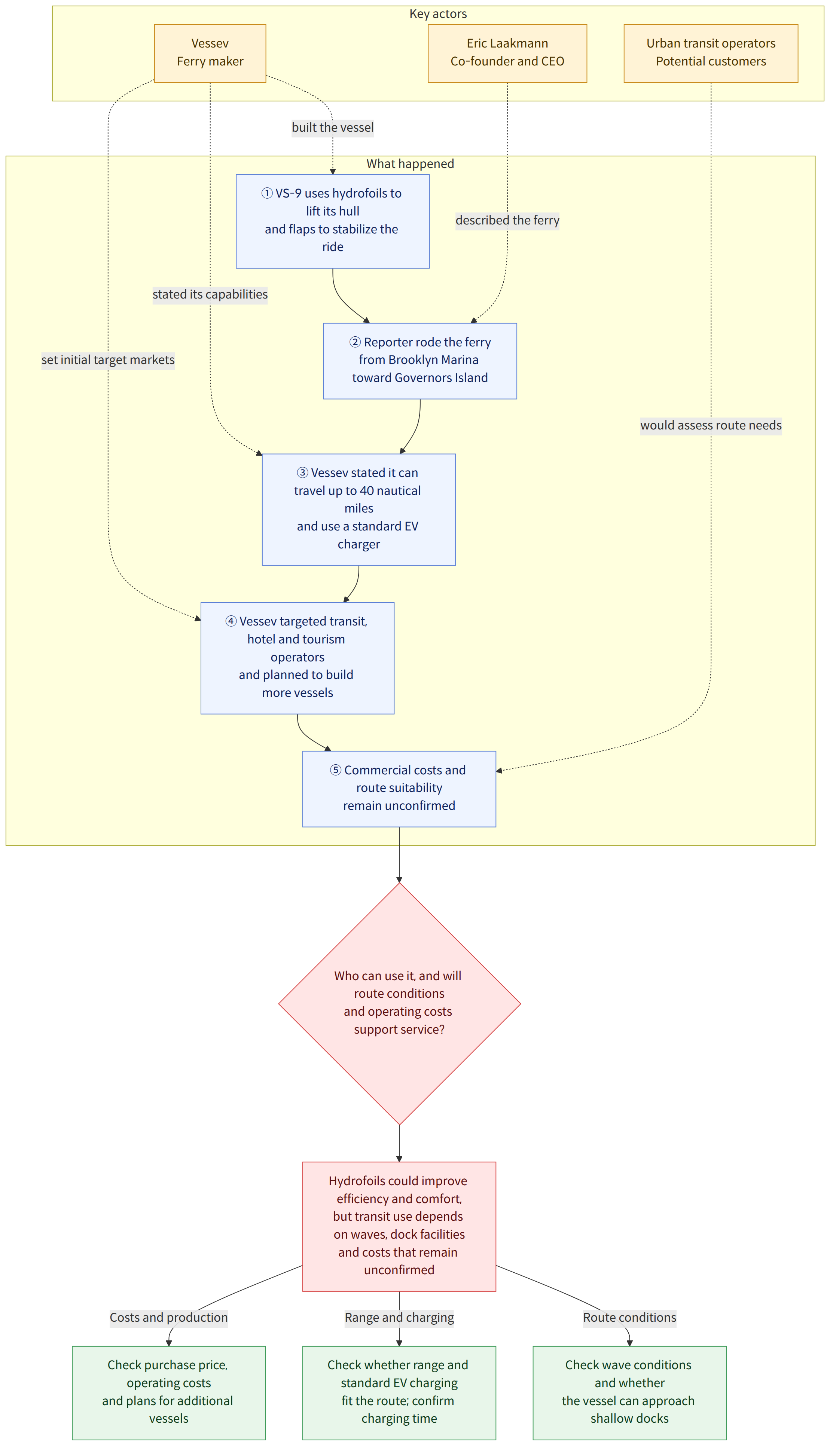
Vessev’s electric ferry, the VS-9, uses hydrofoils (wing-shaped structures beneath the water that generate lift to raise a boat) under its hull to glide across the water’s surface. The reporter took a short ride from Brooklyn Marina on New York’s East River toward Governors Island. Vessev co-founder and CEO Eric Laakmann described the vessel as a hydrofoil boat.
The VS-9 can travel up to 40 nautical miles (about 74 kilometers) with a full load of passengers and can be charged using a standard electric-vehicle charger. These are capabilities stated by the company; they do not mean that the vessel’s actual costs or operating performance have been confirmed.
Background and context
Two wing-shaped structures beneath the VS-9’s hull lift the vessel. The hydrofoils cut through the water and raise the hull above the surface, while computer-controlled underwater flaps stabilize the boat’s movement. The front hydrofoil generates most of the lift, with the rear hydrofoil providing about 20%.
An electric motor is mounted on the rear hydrofoil. Vessev builds the motor itself but does not make the battery. Laakmann explained that batteries are already commercially available. The design also allows the hydrofoils to be raised when approaching docks in shallow water.
Hydrofoil boats can operate more efficiently than other boats by lifting their hulls out of the water. This approach reduces the area where the water and hull meet, making it particularly significant for vessels such as electric boats, where the available energy matters. When riding on its hydrofoils, the VS-9 can travel through water with waves up to about 2.5 feet (0.75 meters) high. Higher waves may strike the hull, reducing passenger comfort and efficiency.
What this news means
For urban water transit operators, operating conditions on the waterways matter as much as efficiency. The VS-9’s hydrofoils could improve passenger comfort by reducing the hull’s contact with the water, but that advantage may diminish as waves get higher. Whether the vessel can supplement public transit therefore depends not only on its performance but also on water conditions along actual routes and the facilities at the docks.
For example, if an operator considers introducing the VS-9 on a river-crossing route, it would need to assess not only the vessel’s range with passengers aboard but also the waves on that route, whether it can approach shallow docks, and whether chargers are available. The source, however, does not provide information on the feasibility of operating on any specific route, charging times, or actual operating costs.
Vessev is initially targeting public transit operators. Hotels and tourism businesses are also potential early customers, and Laakmann said that wealthy people looking for an unusual vessel for public demonstrations had shown interest. In August, the company raised $19 million in Series A funding. The VS-9 the reporter rode was the only one at the time, and Laakmann said the company planned to build more.
In the longer term, the company has also mentioned the possibility of making electric hydrofoil kits that other boatbuilders could use on their own vessels. It is not yet known whether kit production will go ahead. Because supplying complete vessels and providing technology to other manufacturers are different business models, progress on this plan could offer an indication of how Vessev intends to expand its market.
What is confirmed and what is not yet known
Confirmed facts
- The VS-9 operates with its hull lifted by hydrofoils and uses computer-controlled underwater flaps to stabilize the ride.
- The rear hydrofoil is fitted with an electric motor built by Vessev, while the company does not make its own battery.
- The vessel can use a standard electric-vehicle charger and travel up to 40 nautical miles at full passenger capacity.
- Vessev is initially targeting public transit operators, hotels, and tourism businesses, and plans to build additional vessels.
What is not yet known
- The VS-9’s purchase price and actual commercial operating costs have not been provided.
- The timing and number of additional vessels to be produced have not been disclosed.
- The actual charging time has not been confirmed.
What readers should check
- Anyone considering adopting or riding the vessel should check whether wave conditions on the relevant route are suitable for hydrofoil operation and whether it can approach shallow docks.
- They can assess whether the maximum range at full capacity and the ability to use a standard electric-vehicle charger fit their operating plans. Charging time should be checked separately.
- The current information does not establish the price, commercial operating costs, or production schedule for additional vessels, so a concrete adoption decision will require further disclosures from the company.