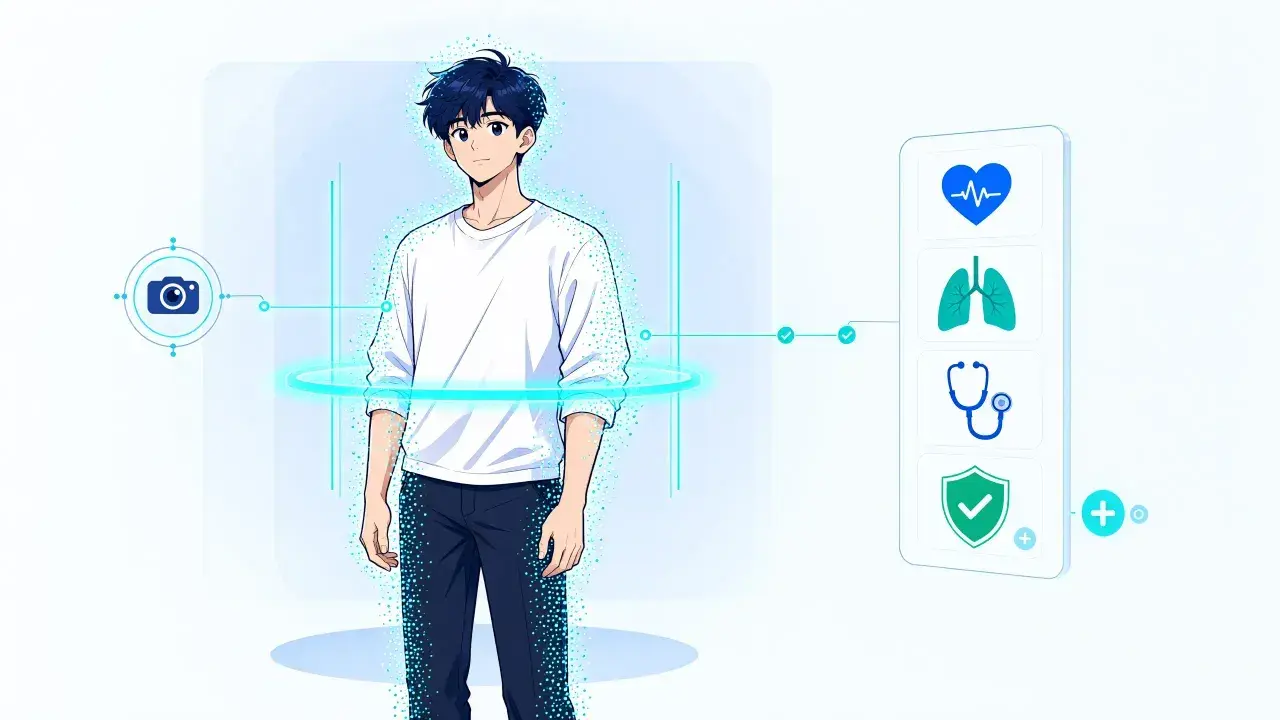
Swedish-founded body-scanning startup Neko Health has expanded to New York. The company uses advanced technology to examine blood, skin and metabolic issues, and says its global waitlist has already exceeded 300,000. According to the article, the company has raised nearly $1 billion to date.
Background and context
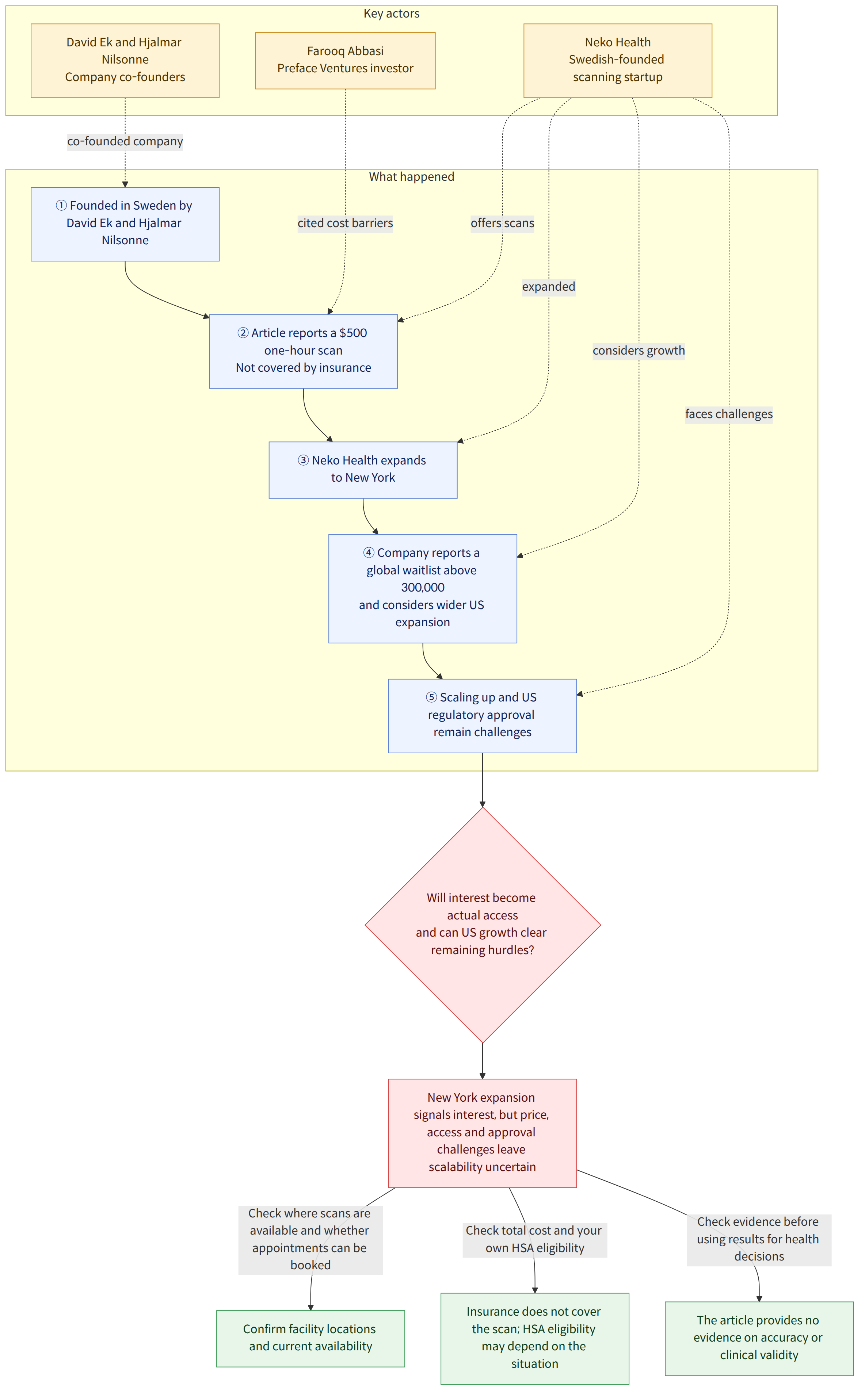
Neko Health was described as a company co-founded by Spotify’s David Ek and Hjalmar Nilsonne. TechCrunch interviewed Farooq Abbasi of investor Preface Ventures. Abbasi said he hoped the service would become the future of preventive medicine.
Abbasi argued that concerns about cost contribute to low use of preventive care in the United States. According to the article, Neko Health charges $500 for a one-hour scan. The scan is not covered by insurance, but it may qualify as an eligible expense for a Health Savings Account (HSA; 건강저축계좌·의료비용을 위해 마련한 계좌). However, the fact that this price and Neko Health’s New York expansion are mentioned together does not establish that scans are offered at this price at the New York facility.
Abbasi said he had undergone two scans. He said his first scan included 15 biomarkers (biological indicators used to assess the body’s condition), while his most recent one included 55. The company uses computer vision (technology that enables computers to analyze information in images or videos) in its scans, and Abbasi saw this as an example of AI improving health care.
What this news means
Neko Health’s expansion to New York and the size of its waitlist can be seen as signs of growing interest in technology-enabled preventive scans. Whether that interest translates into actual use, however, may depend on price and insurance coverage. In particular, since Abbasi cited concerns about cost as a reason for low use of preventive care, the $500 scan fee is a factor to consider when assessing the service’s potential to expand.
For example, even someone interested in using the scan may weigh the cost and the fact that insurance does not cover it. The statement that it may qualify as an HSA-eligible expense also does not establish that this applies to every user or every situation. Rather than assuming that interest or the size of the waitlist means access has actually expanded, it is important to consider the cost and eligibility conditions as well.
The company is considering expanding its business across the United States. Abbasi said the scans provide actionable insights that can improve people’s lives, but that is an investor’s assessment. The article also reported that the company still has a long way to go before it can scale up its business and obtain regulatory approval in the United States.
What is confirmed and what remains unknown
Confirmed facts
- Neko Health was founded in Sweden and has expanded to New York.
- The company says its global waitlist exceeds 300,000.
- According to the article, a one-hour scan costs $500 and is not covered by insurance.
- The company is considering expanding across the United States, and scaling up its business and obtaining regulatory approval in the country remain challenges.
What remains unknown
- The original article does not say exactly where the New York scan facilities are or how many are operating.
- The company has not disclosed additional U.S. expansion locations or a specific expansion timeline.
- No evidence evaluating the accuracy or clinical validity of the scan results is presented.
- The regulatory approval process required in the United States and the status of any such process are also unconfirmed.
What readers should check
- Anyone considering the service should check where scans are actually available and whether appointments can be booked. The fact that Neko Health has expanded to New York does not establish the facilities’ locations or the scope of their operations.
- Given that insurance does not cover the scan, check the total cost. It is also advisable to confirm separately whether it qualifies as an HSA-eligible expense in your own circumstances.
- If you plan to use the results to make health decisions, check what evidence supports the scan’s accuracy and clinical validity. The original article does not provide such evidence.