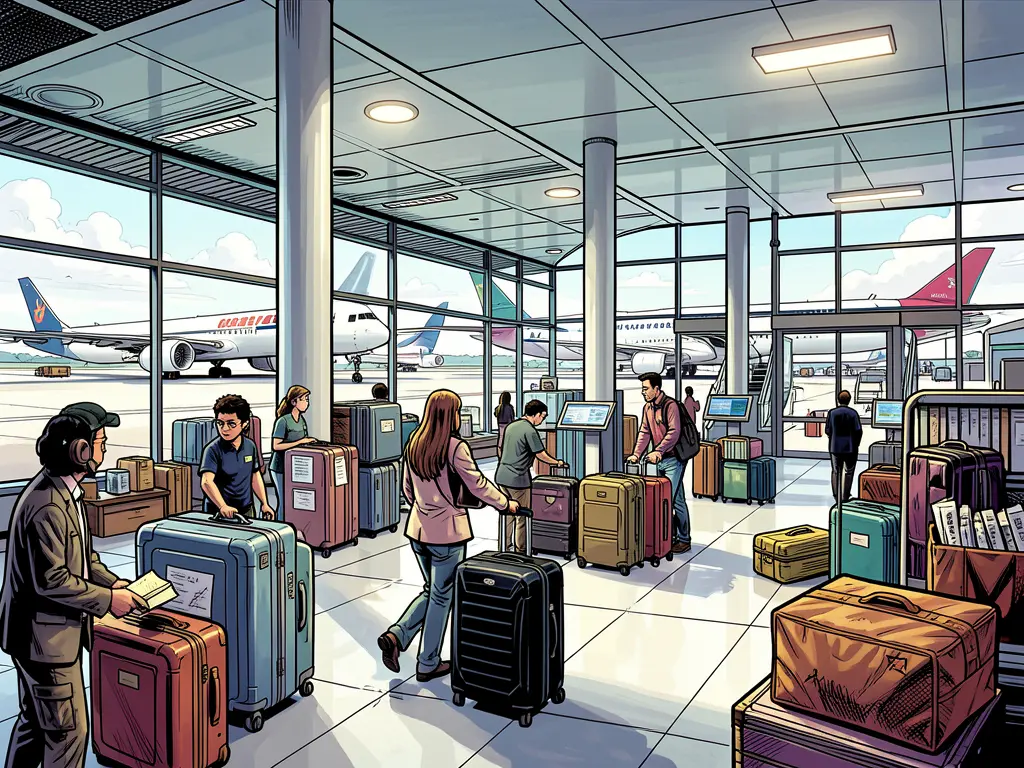
A New Era of Seamless Travel: The Expansion of IRBS
Traveling between South Korea and the United States has long been a grueling process, particularly for those with connecting flights. One of the most tedious aspects of this journey has been the requirement to claim checked luggage upon arrival at the first U.S. port of entry, clear customs, and then re-check those bags for the final domestic leg of the trip.
To eliminate this friction, the South Korean Ministry of Land, Infrastructure and Transport has announced a significant expansion of the International Remote Baggage Screening (IRBS) program. This system allows passengers departing from Incheon International Airport to have their luggage transferred directly to their final destination without the need for manual re-checking at the transfer airport.
Expanding the Reach: From Atlanta to Detroit and Minneapolis
Until recently, this streamlined experience was a luxury reserved only for those transferring through Hartsfield-Jackson Atlanta International Airport, where the program was first piloted in August of last year. However, starting this Thursday, the service is officially extending its reach to two more major hubs: Detroit Metropolitan Airport and Minneapolis-Saint Paul International Airport.
This expansion is the result of close diplomatic and technical cooperation between South Korea and key U.S. agencies, including the Transportation Security Administration (TSA) (the agency responsible for security screening at airports) and Customs and Border Protection (CBP) (the agency that manages border security and immigration).
The expansion of the IRBS program represents a strategic move to reduce congestion at U.S. airports and enhance the overall travel experience for thousands of passengers moving between the two nations.
How It Works: The Technology Behind the 'Magic'
Many travelers might wonder how baggage can be transferred without being physically inspected by a customs officer upon arrival. The secret lies in Remote Screening Technology, which digitizes the security process.
The Step-by-Step Process:
- Initial Screening: When a passenger checks their bag at Incheon International Airport, the luggage undergoes a high-resolution X-ray scan.
- Data Transmission: These X-ray images are not stored locally; they are transmitted electronically and in real-time to security officials in the United States.
- Pre-Arrival Analysis: U.S. security officials screen the images before the aircraft even touches down on American soil.
- Direct Transfer: If the baggage is cleared of any prohibited items, it is flagged as 'safe' and moved directly from the arriving aircraft to the connecting flight's cargo hold.
To put this in simple terms, it is like sending a digital photo of your suitcase to a security guard so they can approve it before you even arrive at the door, meaning you don't have to wait in line to show them the physical bag.
Tangible Benefits for the Modern Traveler
For the average traveler, this change is more than just a technical upgrade; it is a significant time-saver. The Ministry estimates that passengers on the Incheon-Detroit and Incheon-Minneapolis routes will save at least 20 minutes of transit time.
While 20 minutes may seem small, in the high-stress environment of an international airport, this can be the difference between a relaxed connection and a frantic sprint to the gate. The removal of the 'claim-and-recheck' cycle reduces the risk of luggage being lost or misplaced during the manual transfer process.
- Reduced Stress: No more hauling heavy suitcases through customs lines.
- Faster Transit: Shorter queues and streamlined movement through the terminal.
- Increased Efficiency: Better utilization of airport manpower and resources.
Future Outlook: Toward a Fully Integrated Global Transit System
This expansion is not the end goal but rather a stepping stone toward a more integrated global aviation network. Both South Korea and the U.S. have agreed to continue improving transfer procedures, suggesting that more airports may be added to the IRBS list in the coming years.
As AI and image recognition technology evolve, the screening process is expected to become even faster and more accurate. We may soon see a world where biometric data (unique physical characteristics like fingerprints or facial recognition) and remote baggage screening work in tandem to create a 'walk-through' airport experience where passengers barely stop moving from the curb to their final destination.
Summary of the New Route Availability:
- Atlanta (ATL): Already active since August last year.
- Detroit (DTW): Active starting this Thursday.
- Minneapolis (MSP): Active starting this Thursday.