
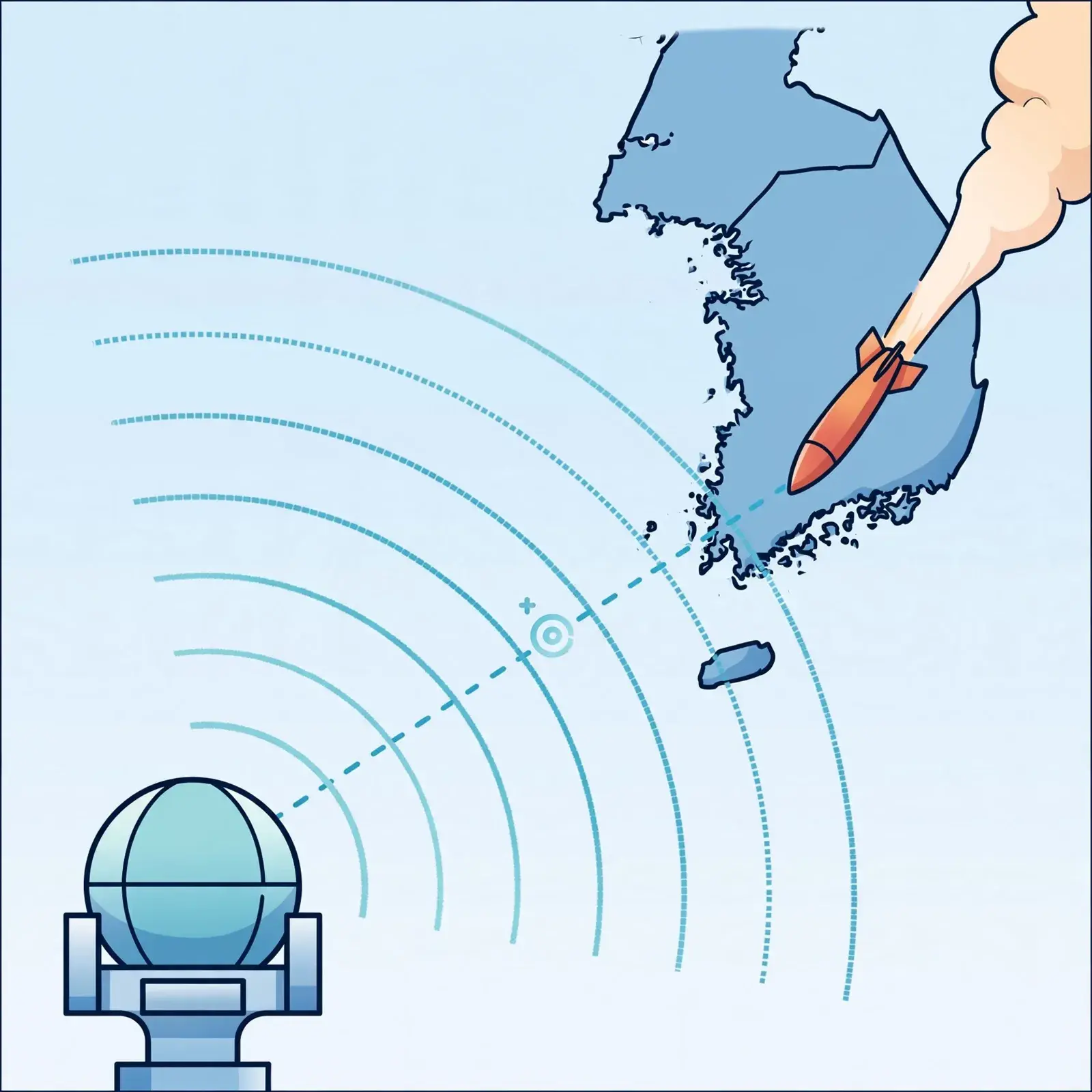
North Korea Says New Missile Maneuvers Could Defeat Interception
Kim Yo Jong, a senior North Korean official, claimed that a missile launched on October 3 could change its flight path in ways that make it difficult for South Korea and Japan to track. She also argued that the system’s reported use of artificial intelligence means there is effectively no way to avoid its strike. Those statements are North Korean claims, not independently confirmed assessments of the missile’s capabilities.
North Korea said the launch was a training exercise involving an intermediate-range strategic missile over the sea east of the country. Kim said leader Kim Jong Un watched the exercise in person. Pyongyang did not identify the missile’s exact model or disclose how far it actually flew.
Key point: South Korea and Japan announced different estimates of the missile’s range, while North Korea used the gap to question their tracking abilities. The available information does not establish that either country lost track of the missile in the way Pyongyang described.
What South Korea and Japan Reported
South Korea’s Joint Chiefs of Staff said it detected one ballistic missile launched from the Wonsan area at around 6:30 a.m. The military assessed that it flew more than 700 kilometers (about 435 miles), while saying that South Korean and U.S. intelligence agencies were still analyzing its precise characteristics.
Japan’s Defense Ministry gave a shorter estimate of about 680 kilometers (around 423 miles). Kim cited the difference between the two public figures as evidence, in her view, that the countries’ monitoring systems had limitations. However, estimates released during an early-stage assessment can differ because countries may use separate sensors, calculations, or reporting cutoffs.
The launch was North Korea’s first reported ballistic-missile test in 13 days, following a previous launch on September 20. A ballistic missile travels upward and then follows a path toward its target, although some newer designs may maneuver during parts of that flight.
Pyongyang’s Account of the Missile’s Flight
Kim said the missile used what she described as a “wave-like” flight path. She claimed that it changed course after an initial point in its trajectory and that South Korean and Japanese forces then lost track of it. In her account, the two countries estimated the distance using the descending portion of the path they had observed earlier.
A maneuvering missile can be harder to predict than one that follows a relatively simple, fixed route. For a defense system, this is a little like trying to intercept a car that repeatedly changes lanes rather than continuing straight down a road: the defender must keep updating where the object is likely to go. But the article provides no independent flight data confirming that the missile performed the maneuvers Kim described.
North Korea did not publish a verified flight distance, a detailed trajectory, or technical evidence showing exactly when or how its missile changed direction. The public statements therefore leave important questions unanswered, including whether the reported differences in range reflect a tracking gap, separate calculation methods, or incomplete information available immediately after launch.
Why a changing trajectory matters
- Tracking means using radar and other sensors to detect an object and estimate its position and movement.
- Trajectory is the path an object follows through the air. A change in trajectory can make its future position harder to predict.
- Interception means attempting to destroy or disable a missile before it reaches its target, often with a separate defensive missile.
These terms describe different parts of the process. A system may detect a launch but later have difficulty maintaining a continuous track; that does not, by itself, prove that interception is impossible.
What North Korea Said About Artificial Intelligence
Kim urged South Korea and Japan to consider North Korea’s previous statements that its missiles can change course at low altitude and incorporate artificial intelligence, or AI (computer systems designed to perform tasks that usually require human judgment). She said those features meant there was essentially no way to avoid a strike.
North Korea’s missile administration, Kim added, had briefed Kim Jong Un on technology capable of setting at least four different flight paths, depending on the mission and target. She said the leader believed other countries would not possess comparable technology for several years. The statement does not explain what the four paths are, how the system selects among them, or what role AI plays during flight.
An AI claim can refer to many different things, from software that helps process sensor information to systems that adjust a vehicle’s course. Without technical details or independent testing, it is not possible to determine what North Korea means by the term in this case. Nor does the label alone establish that a missile can reliably evade every defense system.
Important limitation: The reported AI features, the claim that the missile cannot be intercepted, and the assertion that rival forces lost track of it have not been independently verified in the information available about the launch.
Why Public Range Estimates May Differ
Missile range figures announced shortly after a launch are often preliminary. Military agencies may rely on radar observations, other sensors, and calculations to estimate an object’s speed, altitude, and path. If the missile changes direction, if observations are incomplete, or if agencies use different points to define the end of a flight, their early figures may not match exactly.
That does not mean the reported difference in this case has a known explanation. South Korea said it was working with U.S. intelligence agencies to examine the missile’s specifications, while Japan announced its own estimate. North Korea, meanwhile, did not provide a competing numerical range. As a result, readers cannot compare the countries’ public figures with a confirmed measurement from Pyongyang.
A more complete assessment would require information such as the missile’s full flight path, the timing and location of sensor observations, and evidence about any maneuvering. Much of that data is normally not made public, particularly when it concerns military surveillance capabilities.
Regional Security Stakes
North Korea’s statements come amid ongoing tensions over its weapons programs and the military readiness of neighboring countries. South Korea, Japan, and the United States monitor missile launches to assess potential threats and coordinate their responses. A missile that can maneuver, if the capability is confirmed, could make that monitoring and any defensive response more challenging.
At the same time, claims about advanced weapons can serve more than one purpose. They may describe a real technical development, seek to deter opponents, or project strength to domestic and international audiences. This is why governments and outside analysts typically distinguish between a public claim and a capability demonstrated through verifiable evidence.
The latest launch adds to the information regional defense agencies must assess, but the public record remains incomplete. Until further technical details or independent evidence emerge, the most careful conclusion is that North Korea has claimed new maneuvering and AI-related capabilities, while South Korea and Japan have reported their own initial tracking estimates.
What to Watch Next
- Updated assessments: South Korean and U.S. agencies said they were analyzing the missile’s precise characteristics. Further findings could clarify its type and flight path.
- Additional tests: Future launches may offer more evidence about whether North Korea can repeatedly perform the claimed maneuvers.
- Independent confirmation: Detailed radar or other sensor data could help establish whether the missile changed course and whether tracking was interrupted.
- North Korea’s technical disclosures: Pyongyang may provide more information about the four reported flight paths, though official statements alone cannot verify the system’s performance.
For now, the central issue is not simply whether the missile traveled about 680 or more than 700 kilometers. It is whether its flight path and technical features differ substantially from those of earlier missiles—and whether the claims made by North Korea can be supported by evidence beyond its own announcements.

















