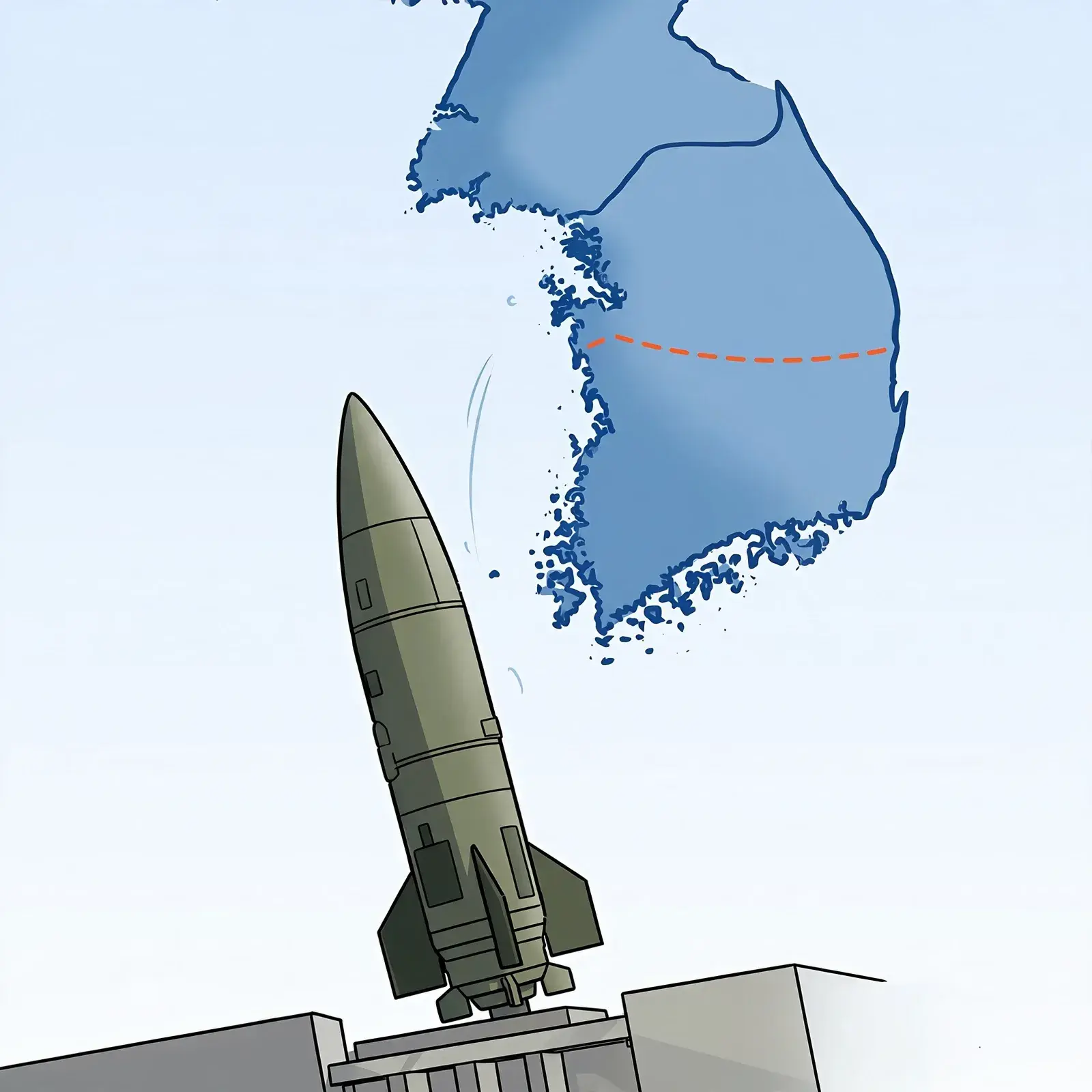
Missile Launch Adds to Rising Tensions
North Korea launched a ballistic missile toward the East Sea on the morning of October 3, South Korea’s Joint Chiefs of Staff said. It detected the launch from the Wonsan area at about 6:30 a.m. local time.
A ballistic missile is a weapon that travels along a high, arcing path after launch. The military had not yet released the missile’s range or other technical details, saying it was still analyzing the information. Those details can help identify a missile type and assess its capabilities, but no conclusions about this launch were available in the initial announcement.
The launch took place one day after Kim Yo Jong publicly rejected a South Korean appeal for renewed dialogue.
South Korea said it had strengthened surveillance and readiness in case of additional launches. It also said South Korea, the United States, and Japan were sharing information about the missile and maintaining a coordinated state of preparedness.
A Sharp Rejection of Seoul’s Appeal
On October 2, Kim Yo Jong, a senior official in North Korea’s ruling Workers’ Party, criticized President Lee Jae Myung’s call to restore inter-Korean talks and ease tensions. Lee had made the appeal in connection with a mine explosion in the Demilitarized Zone, or DMZ (the buffer area between North and South Korea).
Kim described the South Korean appeal as “the height of a farce,” according to the report. Her remarks signaled that Pyongyang was not accepting Seoul’s proposal at that point. The missile launch followed the statement, but the available information does not establish that it was directly caused by the exchange over dialogue.
Dialogue between the two Koreas has often been affected by military incidents and disagreements over security. In practice, a call for talks can be difficult to advance when the two governments disagree not only about what happened on the ground, but also about who is responsible and what steps should come next.
The Mine Incident Behind the Latest Dispute
The launch came amid tensions over an explosion on September 21 near the military demarcation line, or MDL (the line separating the two sides’ military positions). South Korea said North Korean mines had seriously injured South Korean troops. North Korea denied the accusation and called Seoul’s account a “clear fabrication.”
On September 30, South Korea’s Joint Chiefs of Staff called on North Korea to immediately stop work it described as “fortifying the border.” The disagreement over the mine explosion and border activity has added another point of friction to an already strained relationship.
- South Korea’s position: North Korean mines caused serious injuries to its troops, and border fortification work should stop.
- North Korea’s position: South Korea’s account of the incident was fabricated.
- What remains unresolved: The two sides have offered conflicting accounts, and the available report does not describe an agreed investigation or resolution.
Another Launch in a Short Period
The October 3 launch followed another North Korean missile firing from the Wonsan area on September 20. On that occasion, North Korea launched two ballistic missiles toward the East Sea. Two days later, it said the launch had tested the performance of an upgraded version of the Hwasong-11Ma, which it described as a hypersonic missile.
“Hypersonic” generally refers to speeds many times faster than the speed of sound. The term is widely used in discussions of advanced weapons, though the label alone does not establish how a particular missile performs in real-world conditions. North Korea’s description of the September test was its own account; the October 3 missile’s type and capabilities were still under analysis.
The recent launches make close monitoring important for South Korea and its partners. Tracking a missile’s flight path and characteristics helps militaries assess potential risks and prepare for further activity. In this case, officials had not publicly provided the October launch’s range, flight duration, or other measurements when they announced it.
What the Launch Does—and Does Not—Show
The timing is notable: the missile was fired a day after Kim rejected Lee’s proposal for renewed dialogue and amid an unresolved dispute over the border mine explosion. That sequence places the launch within a period of heightened political and military tension. However, timing alone does not reveal the North Korean leadership’s precise motive.
Missile launches can serve more than one purpose, including testing a weapon or signaling a political position. Without further official details, it would be premature to say which explanation best fits this launch. The clearest confirmed facts are the launch location and approximate time, the direction toward the East Sea, and the South Korean military’s ongoing analysis.
What officials were watching
- Whether North Korea would carry out additional launches.
- The missile’s range and technical characteristics, once the analysis is complete.
- Whether the dispute over the mine incident and border fortification would lead to further escalation.
- Whether the two governments would find any channel for communication despite Kim’s rejection of Seoul’s appeal.
Regional Coordination and the Outlook
South Korea said it was sharing information with the United States and Japan and maintaining a high level of readiness. Such coordination allows the three countries to compare observations and assess a launch more effectively than relying on a single report. The announcement did not provide further details about the information exchanged.
For now, the October 3 missile launch adds to a series of security concerns, but many important questions remain unanswered. The South Korean military was still working to determine the missile’s range and specifications, while the two Koreas continued to dispute responsibility for the mine explosion.
The immediate outlook will depend on whether North Korea launches again, whether additional information clarifies the missile’s capabilities, and whether either side takes steps to reduce tensions. Until those questions are answered, the latest launch is best understood as a significant development during a period of strained relations—not, on its own, proof that dialogue or further escalation is inevitable.