

A Historic Reunion in the Honam Region
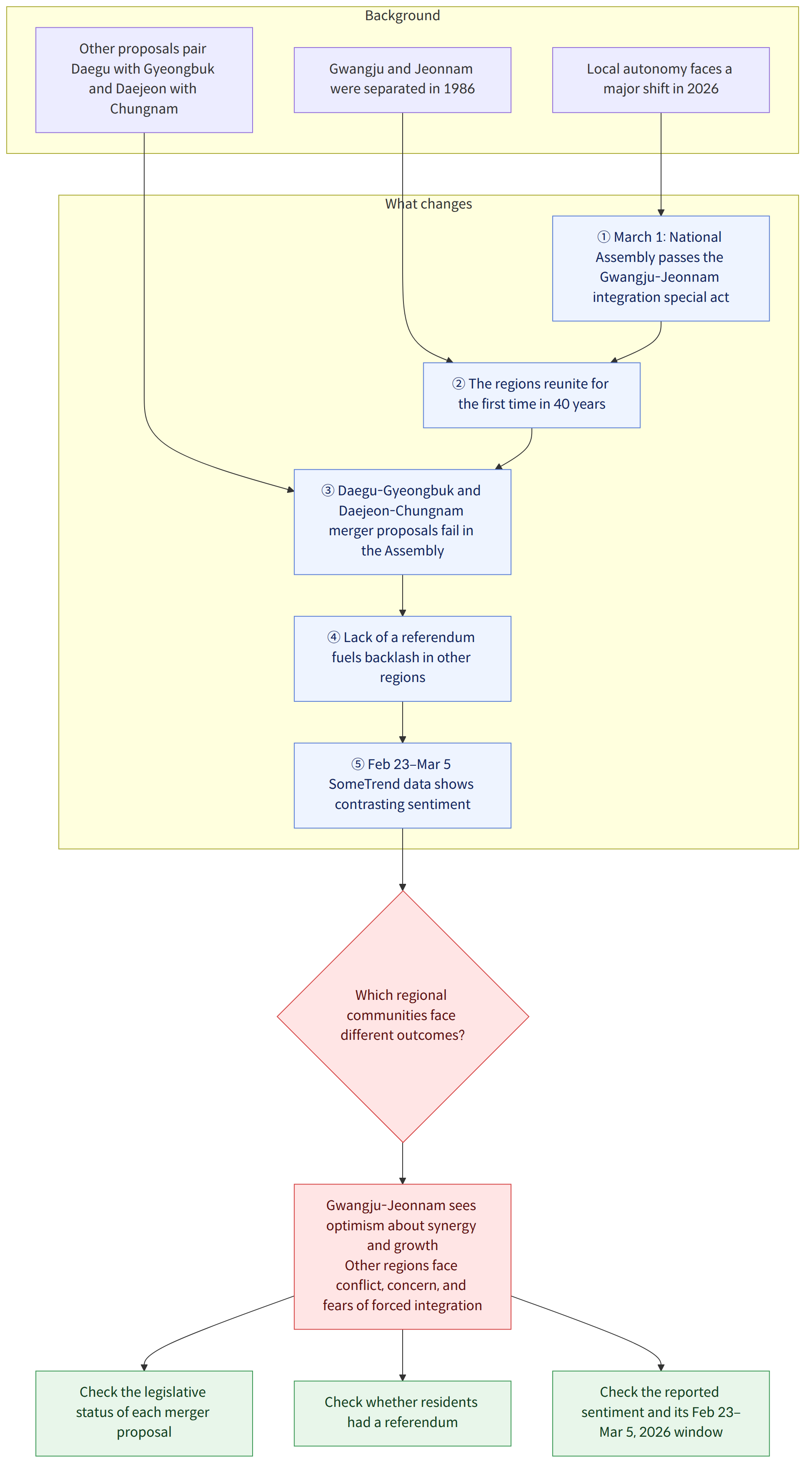
The landscape of local autonomy in 2026 is undergoing a massive shift. On March 1, the National Assembly passed the 'Special Act on the Establishment of Gwangju-Jeonnam Integrated Special City.'
This move marks a historic milestone, reuniting the two regions for the first time in 40 years since their separation in 1986. Unlike other regions, this integration is being met with relative optimism and a sense of shared destiny.
The Wall of Conflict: Daegu, Gyeongbuk, Daejeon, and Chungnam
While the Honam region celebrates, other regional merger attempts are hitting a wall. Discussions regarding the integration of Daegu-Gyeongbuk and Daejeon-Chungnam have failed to pass through the National Assembly.
These regions are currently facing a severe backlash. The primary issue is the lack of a referendum (a direct vote by the citizens to decide a public issue), leading to accusations that the government is pushing the mergers without public consent.
"The gap between administrative goals and public will is creating a swamp of conflict rather than a path to growth."
What the Data Says: Hope vs. Anxiety
Recent data from SomeTrend (a big data deep-analysis tool that tracks social media and news trends) reveals a stark contrast in public sentiment between February 23 and March 5, 2026.
- Gwangju-Jeonnam: High frequency of keywords related to 'synergy' and 'future growth.'
- Other Regions: Dominance of keywords such as 'conflict,' 'concern,' and 'forced integration.'
This suggests that while some regions see integration as a way to gain more power and resources—similar to how two small companies merge to become a market leader—others view it as a loss of local identity and autonomy.

















