As coal-fired power plants gradually close in Australia and renewable energy sources such as solar and wind expand, the large rotating turbines that helped stabilize the power grid are also disappearing. This is why synchronous condensers (large electrical machines connected to the grid that rotate) are once again drawing attention: they do not generate electricity but help maintain voltage. The Australian Energy Market Operator (호주 에너지시장운영자; AEMO) plans to install more synchronous condensers in areas where system strength (the grid’s ability to maintain stable voltage) is expected to become insufficient, or is already insufficient, as renewable energy and batteries expand and fossil-fuel power plants close.
Background and context
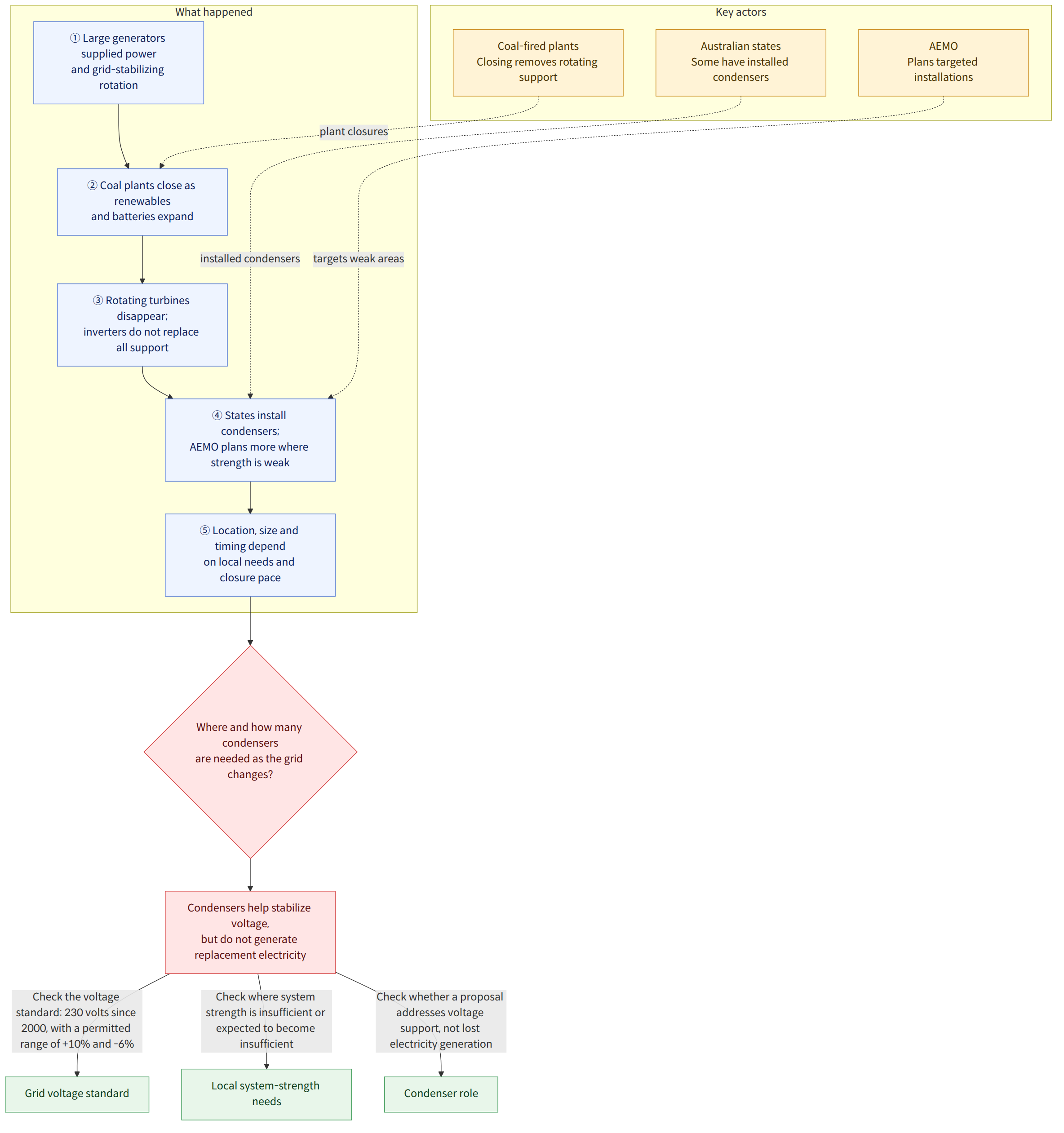
Traditional large power generators produced electricity while rotating, and also helped stabilize the grid. When a coal-fired power plant closes, it is not just the amount of electricity generated that declines; the rotating turbines that cushion shocks to the grid also disappear. Solar and wind power, as well as batteries, generally supply electricity through inverters (devices that convert direct current into alternating current), but conventional inverters do not automatically provide the system-strength support once supplied by large rotating generators.
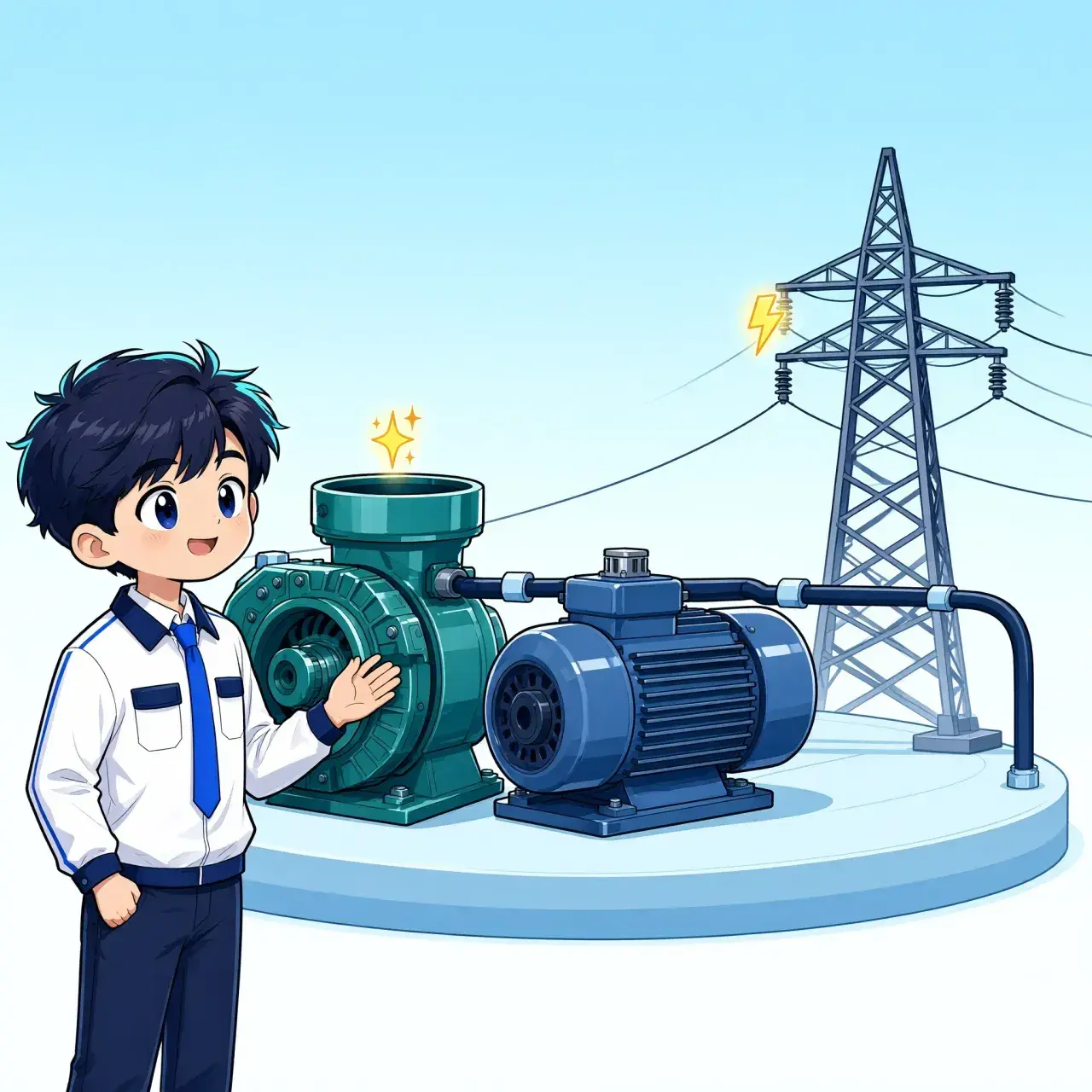
A synchronous condenser is a large electrical machine connected to the grid that rotates. It looks similar to a generator, but it does not produce electricity. Its rotation absorbs shocks to the grid and helps restore voltage to the normal operating range when it becomes unstable. Batteries can provide some stabilizing functions, but they cannot replace all of them.
Australia’s grid voltage standard has been 230 volts since 2000, with a permitted range of up to 10% above that level and 6% below it. Voltage can be compared to the water pressure inside a pipe. The concern raised in the article is that voltage can become unstable when, for example, electricity demand changes suddenly or a large power plant unexpectedly shuts down, potentially causing blackouts or damaging household appliances.
Synchronous condensers are not a new invention. They have been used for more than a century and were once widely used to stabilize power grids, but the need for them declined as grid technology advanced. Now, as the structure of electricity supply changes, the need for them is growing again. Several Australian states have already installed them to ensure grid reliability, and the need for further installations will depend on how quickly coal-fired power plants close.
What this means
Increasing the share of renewable energy involves more than simply changing the sources of electricity generation. As the stabilizing functions once provided by coal-fired power plants diminish, the grid also needs equipment to make up for them. Synchronous condensers address a different challenge from expanding renewable power generation: they do not supply new electricity, but help the grid remain stable when voltage fluctuates.
That is also why the location and scale of installations matter. Research has found synchronous condensers effective, but they are expensive. The conclusion of the research cited in the article is that they should therefore be installed at an appropriate size in the places where they are needed. AEMO’s plan likewise focuses on areas where insufficient system strength is expected or has already emerged as renewable energy and batteries expand and fossil-fuel power plants close. The key point is that the equipment needed, and when it is needed, may vary depending on the pace of power plant closures and the level of shortages in each area.
For example, if a coal-fired power plant closes in an area where renewable energy and batteries are expanding, planners need to consider how to secure voltage-stabilizing functions separately from replacing the plant’s electricity supply. Installing a synchronous condenser could be one way to make up for those functions, but the information cited does not make it possible to determine how many would actually be needed in that area.
A synchronous condenser is not a substitute for a power plant that generates electricity. It is a device that helps support voltage stability on the grid, and its location and scale must be chosen appropriately for it to be effective.
What is confirmed and what remains unknown
What is confirmed
- Coal-fired power plants are gradually closing in Australia, while renewable energy sources such as solar and wind are expanding.
- The closure of coal-fired power plants also means the loss of large rotating turbines that help stabilize the grid.
- Synchronous condensers do not generate electricity; they rotate and help stabilize voltage and absorb shocks.
- AEMO plans to install additional synchronous condensers, focusing on areas where system strength is expected to become insufficient or has already become insufficient.
- Research has recognized the effectiveness of synchronous condensers while also concluding that their high cost makes it important to choose appropriate locations and scales for installation.
What remains unknown
- The specific locations and number of synchronous condensers planned for Australia have not been provided.
- The cost of installing the equipment and how the funding will be secured have not been established.
- No specific explanation has been provided of how the scale and timing of additional installations will change according to the pace of coal-fired power plant closures.
What readers should look for
- Follow-up plans concerning Australia’s grid reliability should be checked for specific information about where synchronous condensers will be installed and how many.
- Since synchronous condensers are described as expensive, readers can also look to see whether installation plans disclose costs and how they will be funded.
- When reviewing regional grid plans, it is worth checking not only how electricity generation will be replaced, but also what equipment will make up for the voltage-stabilizing functions lost as coal-fired power plants close.