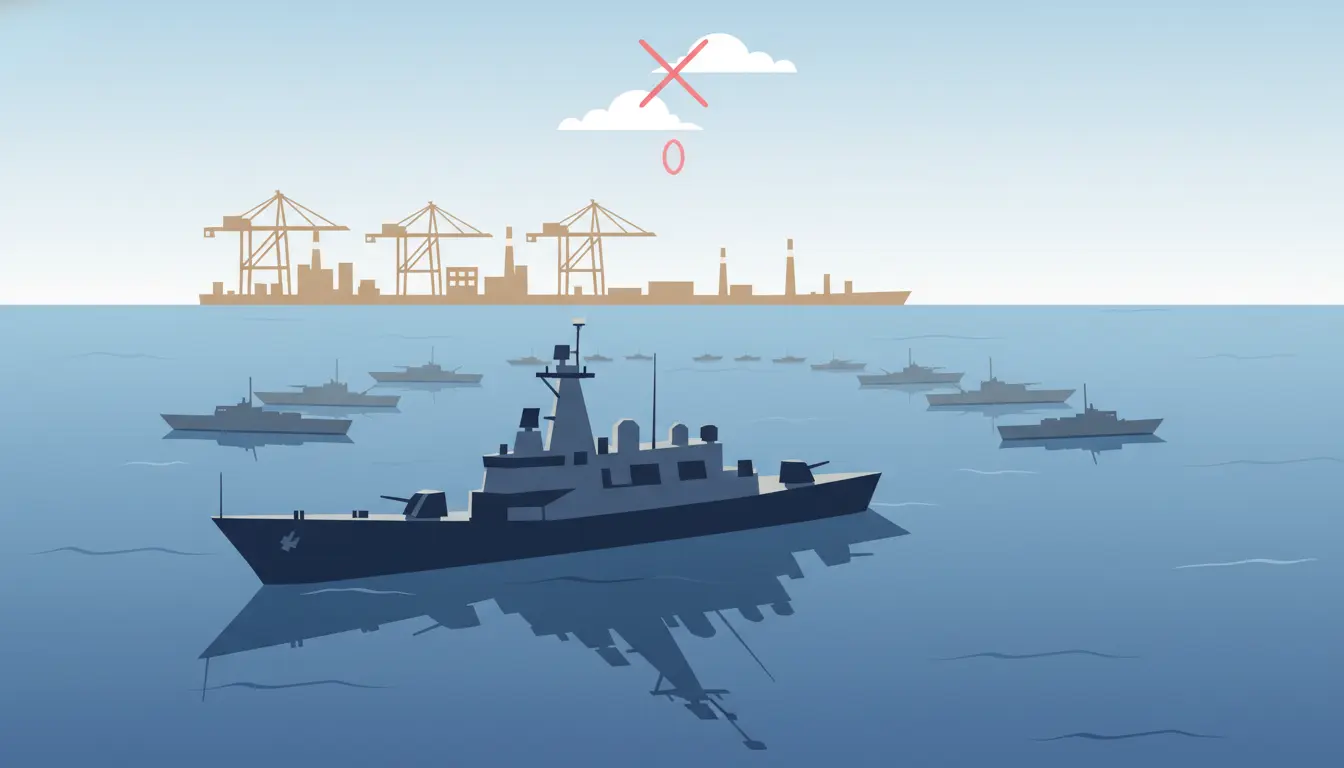
Total Lockdown: The First 24 Hours of the U.S. Blockade
U.S. Central Command (CENTCOM) announced that no ships were able to pass the naval blockade (a military action to prevent vessels from entering or leaving a port) of Iranian ports during its first 24 hours.
This operation functions like a massive security checkpoint at sea. Six merchant vessels have already complied with naval orders, turning around to reenter an Iranian port on the Gulf of Oman instead of proceeding with their planned routes.
The blockade, which began Monday morning, follows the failure of peace talks between Washington and Tehran in Pakistan over the weekend. This move signals a significant escalation in U.S. pressure on the Iranian government.
Massive Military Presence at Sea
Impartial Enforcement Across All Nations
To ensure the blockade is airtight, the U.S. has deployed a formidable force of over 10,000 sailors, Marines, and airmen. This force is supported by a dozen warships and dozens of aircraft patrolling the waters continuously.
CENTCOM emphasized that the blockade is being enforced "impartially." This means that whether a ship belongs to a partner or a neutral nation, it will be stopped if it attempts to enter or depart Iranian coastal areas.
"The mission is being executed strictly against all vessels entering or departing Iranian ports, including those on the Persian Gulf and Gulf of Oman."
Strategic Impact: Squeezing Iran's Economy
Why the Strait of Hormuz Matters
The blockade targets the Strait of Hormuz (a narrow, strategically vital waterway through which much of the world's oil passes). By controlling this area, the U.S. aims to restrict Tehran's ability to export oil, which is the country's primary source of revenue.
Iran has historically used its influence over this waterway as leverage to gain concessions from the international community. The U.S. is now turning that leverage around by cutting off the very routes Iran relies on for economic survival.
Importantly, the U.S. military clarified that it continues to support freedom of navigation for ships traveling to non-Iranian ports. This ensures that global trade for other countries in the region can continue while the pressure remains focused solely on Iran.