A Historic Ruling: Yoon Suk-yeol's First Conviction
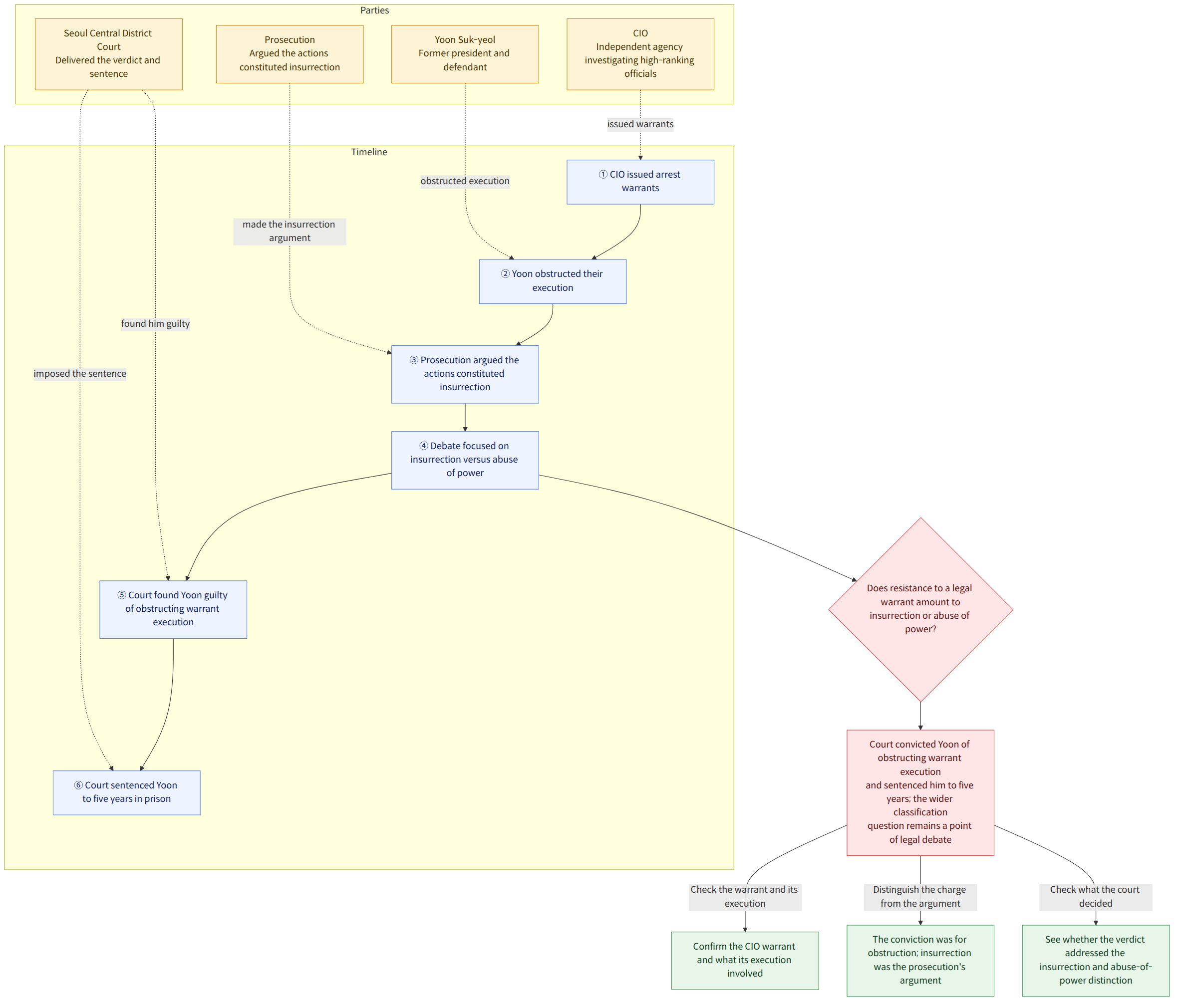
On the 16th, the Seoul Central District Court delivered a landmark verdict, sentencing former President Yoon Suk-yeol to five years in prison.
He was found guilty of obstructing the execution of arrest warrants issued by the CIO (Corruption Investigation Office), an independent agency tasked with investigating high-ranking officials.
The Core Legal Conflict: Insurrection vs. Abuse of Power
The court's decision hinges on a complex legal interpretation. The prosecution argued that the former president's actions constituted insurrection (an act of violent rebellion against the government).
However, the legal debate now focuses on whether these actions can be logically categorized as abuse of power (using one's official position to force others to do something illegal or unfair).
"The central question is whether the act of resisting a legal warrant by a head of state constitutes a systemic rebellion or a specific misuse of administrative authority."
Understanding the Implications
To put this in simple terms, it is like a manager using their company authority to stop a security guard from entering the office during an official audit.
While the manager has power, using that power to block a legal investigation is seen as a violation of the law rather than a legitimate exercise of duty.
- Sentence: 5 years of imprisonment
- Key Charge: Obstruction of justice/arrest warrant execution
- Legal Point: The logical link between insurrection and abuse of power