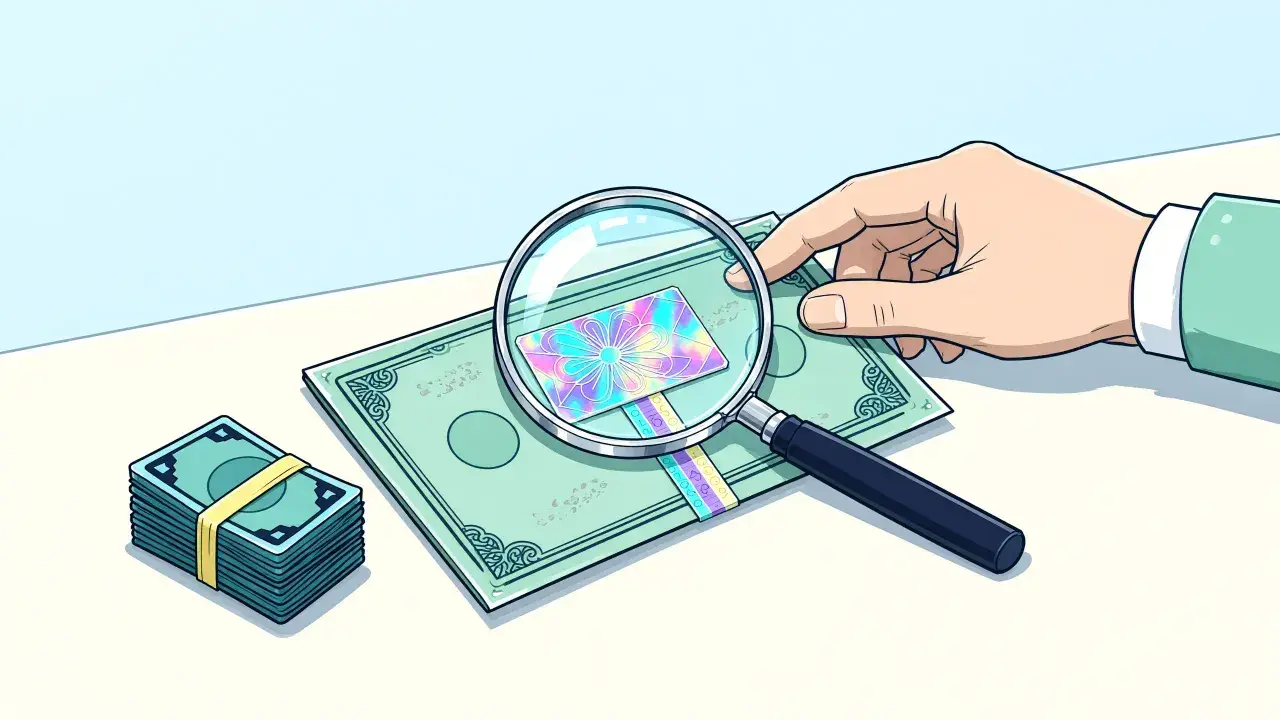
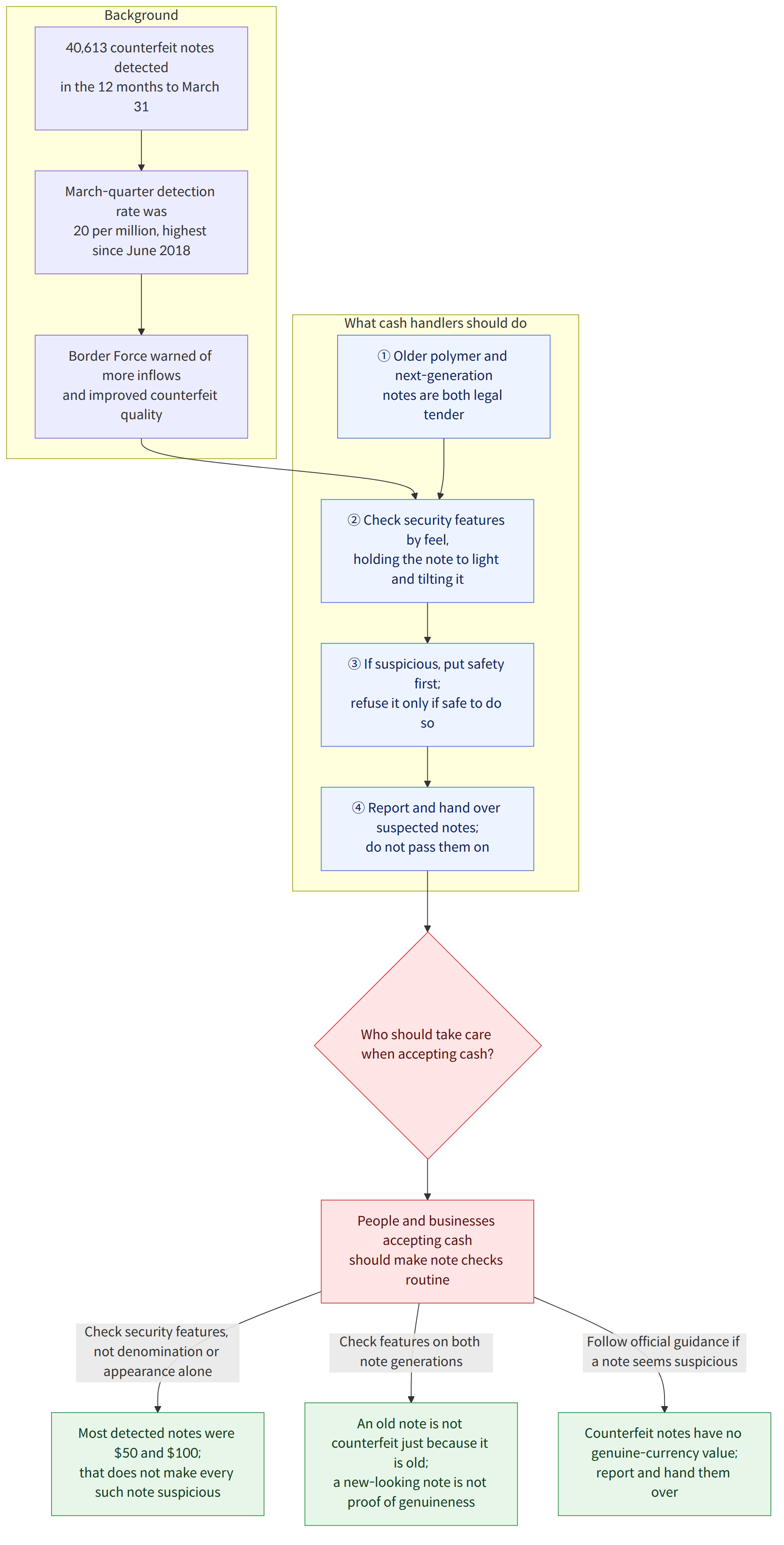
According to data released by the Reserve Bank of Australia (호주중앙은행), 40,613 counterfeit banknotes were detected in the 12 months to March 31 this year. Ninety-five percent of the notes detected were $50 and $100 Australian banknotes. The latest data for the March quarter puts the detection rate at 20 notes per million, the highest level since June 2018.
The counterfeit banknote detection rate fell to 5.3 per million in December 2024, then rose 277% over 15 months. The Australian Border Force warned that inflows of counterfeit currency via air cargo and international mail had increased significantly since early 2025, and that the quality of counterfeit notes had improved to a worrying degree.
Counterfeit banknotes have no value as genuine currency. If you accept one thinking it is genuine and later discover it is counterfeit, you may lose the amount it represents.
Background and context
The detection rate is not the same as the total number of counterfeit banknotes in circulation. The data show the number of counterfeit notes detected and the resulting detection rate. Therefore, the increase in detections alone cannot establish how many more counterfeit notes have been produced or how many may still be in circulation.
The Border Force’s warning points to two changes: the routes through which counterfeits are entering the country and the quality of the fakes. This is notable because more sophisticated counterfeit notes can make it harder for people handling cash to determine whether a note is genuine by simply glancing at it. The article’s photo caption also describes a case in June 2026 in which more than $2 million in counterfeit $100 Australian banknotes being brought into Queensland was detected.
The Reserve Bank of Australia oversaw the replacement of Australia’s banknotes with the next-generation series from 2007 to 2020. The next-generation notes added dynamic security features—devices whose appearance or color changes depending on the viewing angle—including a holographic bird in the clear window and a number that changes when viewed from different angles. Fine print in the window, more complex patterns and elements that glow under ultraviolet light were also added or enhanced.
However, both older polymer banknotes and next-generation notes are legal tender in Australia. A note is not counterfeit simply because it is old, and it should not be assumed genuine just because it looks new. Since both types are used in transactions, it is important to check the security features on each note.
What this news means
For individuals and businesses that accept cash for goods, these figures highlight the importance of making a habit of checking banknotes. The fact that most detected notes were $50 and $100 banknotes, along with the Border Force’s warning that counterfeit quality has improved, points to the need to check security features when accepting high-denomination notes. This does not mean that every high-denomination note is suspicious; it means that denomination or appearance alone should not be used to determine whether a note is genuine.
For example, someone selling a second-hand item for cash and receiving a $50 Australian banknote can check its texture and the features in its clear window, and hold it up to the light or tilt it. Even if the note seems suspicious, safety should come first if confronting the other person could put the seller at risk. The Reserve Bank of Australia’s guidance says that a person may refuse to accept a suspicious banknote if they consider it safe to do so.
Knowingly possessing or using counterfeit banknotes is illegal in Australia. Conversely, a person who received a counterfeit note without knowing it was fake still cannot use it as if it had the value of genuine currency. It is therefore important to report and hand over a suspected counterfeit in accordance with official guidance, rather than passing it on to someone else.
What is confirmed and what remains unknown
Confirmed facts
- A total of 40,613 counterfeit Australian banknotes were detected in the 12 months to March 31 this year.
- Ninety-five percent of the notes detected were $50 and $100 Australian banknotes.
- The detection rate for the March quarter was 20 notes per million, the highest since June 2018.
- The Australian Border Force warned of increased inflows of counterfeit currency via air cargo and international mail since early 2025, as well as improved counterfeit quality.
- The Reserve Bank of Australia recommends checking banknotes by feeling them, holding them up to the light and tilting them.
What remains unknown
- The data alone do not establish the cause of the sharp rise in the counterfeit banknote detection rate.
- The scale of counterfeit banknotes that have not been detected and remain in circulation has not been provided.
- It has not been established how the increase in the detection rate is connected to particular denominations or entry routes.
What readers should check
- When accepting a banknote, feel it, hold it up to the light and tilt it to check its security features. Older polymer notes and next-generation notes may have different security features.
- If a note is suspected to be counterfeit, put it in an envelope, record how you came by it, report it to police and hand over the note. State and territory police are the relevant authorities in Australia. Guidance also explains how to submit an online report about a suspicious note to the Australian Federal Police (호주 연방경찰).
- Before refusing a suspected counterfeit, first consider whether it is safe to do so. Keep in mind that knowingly possessing or using counterfeit banknotes is illegal in Australia.