The Ambition for a Comprehensive Reset
Vice President JD Vance has revealed that President Donald Trump is not interested in temporary fixes or limited agreements with the Islamic Republic of Iran. Instead, the administration is pursuing what Vance describes as a "grand bargain"—a comprehensive strategic agreement designed to resolve the long-standing hostilities between Washington and Tehran once and for all.
This approach marks a significant departure from "small deals," which are limited agreements that address only specific issues, such as a temporary ceasefire or a narrow trade arrangement. A grand bargain, by contrast, is like a total house renovation rather than just fixing a leaky faucet; it seeks to rebuild the entire foundation of the bilateral relationship.
The Core Terms: Normalization vs. Compliance
According to Vance, the Trump administration's offer is based on a simple but strict principle of reciprocity. The United States is prepared to treat Iran "economically like a normal country" if Iran is willing to behave like one on the global stage.
To achieve this status, the U.S. has set non-negotiable conditions that go beyond simple diplomacy:
- Complete Nuclear Denuclearization: Iran must permanently abandon its pursuit of nuclear weapons.
- End of State-Sponsored Terrorism: Iran must cease its support for militant groups and proxy forces across the Middle East.
- Economic Integration: In exchange, the U.S. would lift sanctions, allowing the Iranian people to thrive and rejoin the global economy.
"The reason why the deal is not yet done is because the president... he really wants a deal where Iran doesn't have a nuclear weapon, Iran is not a state sponsor of terrorism, but also the people of Iran can thrive and prosper and join the world economy."
The Islamabad Deadlock: A Clash of Timelines
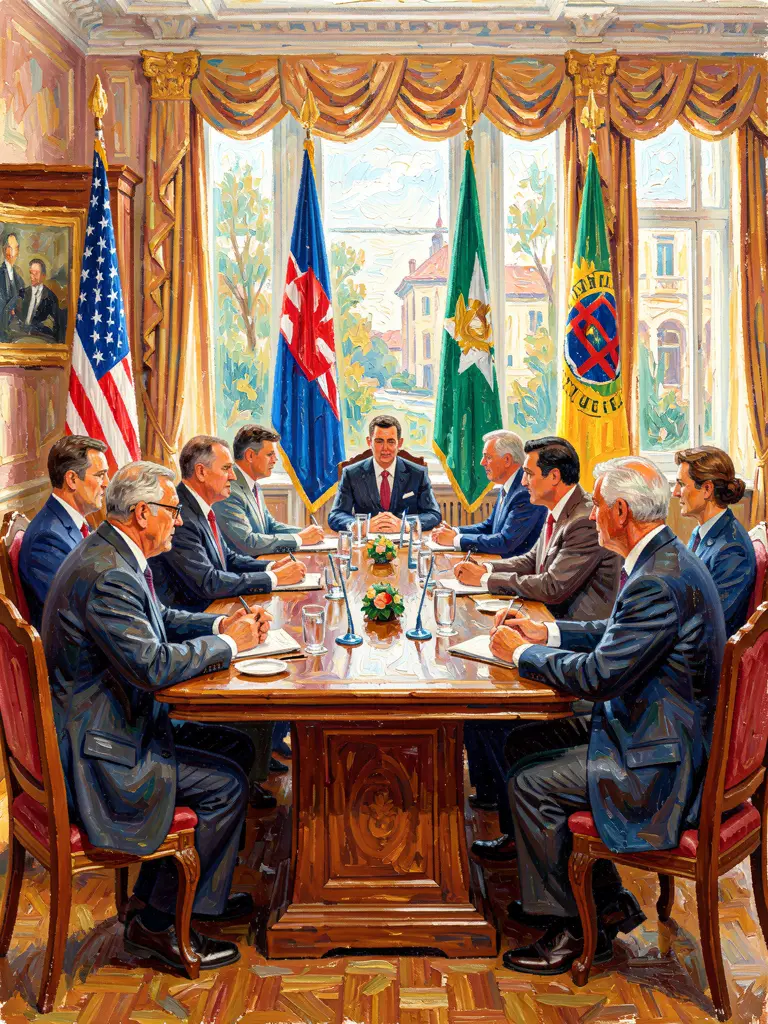
Recent high-level negotiations held in Islamabad, Pakistan, involving JD Vance, Special Envoy Steve Witkoff, and Jared Kushner, highlighted the deep divide between the two nations. While both sides expressed a desire for a deal, the specific terms regarding nuclear activity became a major sticking point.
Reports indicate a massive gap in the proposed timelines for suspending nuclear activity (the process of refining uranium to a level where it could potentially be used for weapons):
- The U.S. Proposal: Initially suggested a 20-year suspension of all nuclear activity to ensure long-term stability.
- The Iranian Counter-offer: Proposed a much shorter window of up to five years.
This discrepancy reflects a fundamental lack of trust. The U.S. views a short-term pause as a mere delay, while Iran views a 20-year ban as an infringement on its national sovereignty.
Trump's Reaction and the '20-Year' Controversy
Interestingly, President Trump has expressed dissatisfaction with the reports that his team proposed a 20-year suspension. In a communication with the New York Post, Trump clarified that his stance is more absolute than a timed suspension.
He emphasized that the core issue is not the length of the pause, but the permanent prohibition of nuclear weapons. By stating he "does not like the 20 years," Trump suggests that any deal allowing for the eventual return to nuclear capabilities is insufficient. He is seeking a permanent solution rather than a long-term lease on peace.
Future Outlook: The Looming Deadline
With a two-week ceasefire set to expire shortly, the pressure is mounting on both Washington and Tehran. The failure to reach an agreement in Pakistan leaves the region in a precarious state, where the risk of renewed escalation is high.
Potential Scenarios Moving Forward:
- The Breakthrough: Iran accepts the "grand bargain" terms, leading to a historic lifting of sanctions and a total shift in Middle Eastern geopolitics.
- The Stalemate: Both sides remain locked in their positions, leading to the expiration of the ceasefire and a return to "maximum pressure" tactics.
- The Compromise: A middle-ground deal is reached that provides a longer suspension than five years but shorter than twenty, though this would contradict Trump's desire for a "grand" rather than "small" deal.
Ultimately, the success of this strategy depends on whether Iran perceives the economic benefits of normalization (returning to a state of standard diplomatic and trade relations) as more valuable than its strategic ambition to possess nuclear capabilities.