
An attack in the cockpit
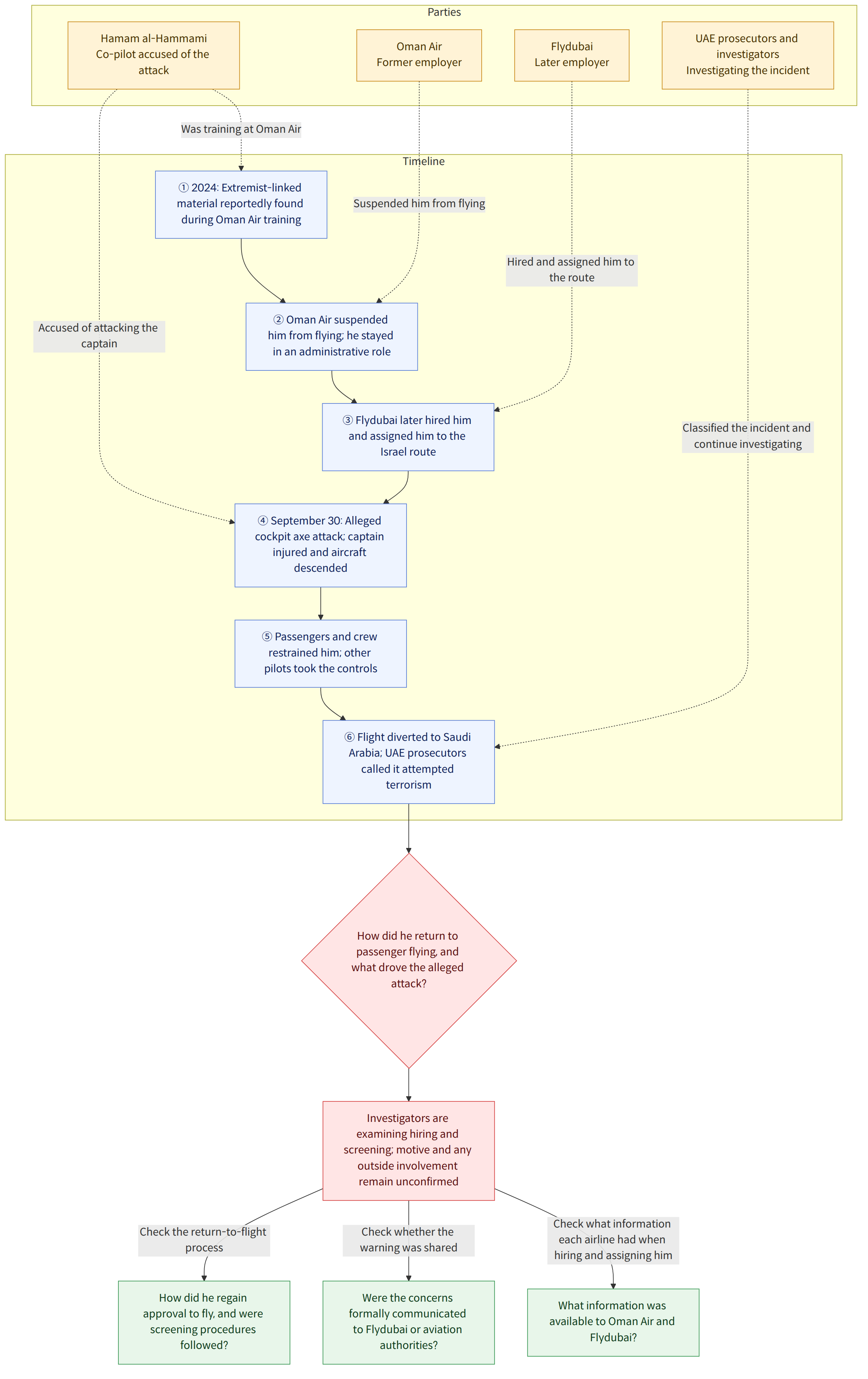
A co-pilot aboard a Flydubai passenger flight from Dubai to Tel Aviv allegedly attacked the captain with an emergency axe and tried to take control of the aircraft, according to the United Arab Emirates prosecutor general. UAE prosecutors have classified the incident as an attempted act of terrorism. The attack took place on September 30, and the flight was diverted to Saudi Arabia for an emergency landing.
The captain was injured, and the aircraft made a sudden descent during the confrontation. After the captain unlocked the cockpit door, passengers and crew members entered and helped restrain the co-pilot. Other pilots on board then took over the controls, and the aircraft landed safely.
The emergency landing followed a rapid chain of events: the captain was attacked, other people on board intervened, and fellow pilots assumed control of the aircraft.
A previous warning about the co-pilot
The co-pilot has been identified as Hamam al-Hammami, a 29-year-old Omani national. Accounts of the investigation say he was training as a co-pilot at Oman Air in 2024 when material linked to extremism was reportedly found in his possession. He was subsequently suspended from flying duties, though he was allowed to remain with the company in an administrative role.
He was later hired by Flydubai and assigned to a route to Israel, according to reports about the investigation. It remains unclear whether the concerns raised at his former workplace were shared with his new employer. Investigators are examining how he was able to return to a position involving passenger flights after he had been removed from flight duties elsewhere.
What investigators still need to establish
- What information was available to each airline when the co-pilot was hired and assigned to the flight.
- Whether the earlier concerns were formally communicated to Flydubai or to aviation authorities.
- How the co-pilot regained approval to fly, and whether screening or employment procedures were followed.
- What motivated the alleged attack and whether anyone else was involved.
What happened during the flight
The aircraft was traveling from Dubai to Tel Aviv when the attack occurred. The emergency axe was kept on board as safety equipment for use in situations such as helping people escape after an accident; prosecutors say it was used as a weapon in the confrontation. The captain was hurt, while the plane’s sudden descent added to the danger facing everyone on board.
Aviation procedures are designed to keep the cockpit secure and ensure that pilots can focus on controlling the aircraft. In this case, the injured captain reportedly unlocked the cockpit door, allowing passengers and crew to help restrain the co-pilot. The presence of other pilots on board also proved important: they were able to take over flight duties while the plane was diverted.
Why the emergency landing mattered
An emergency landing is a decision to bring an aircraft down as soon as safely possible when a serious problem makes continuing the planned journey unsafe. The plane landed in Saudi Arabia rather than continuing to Israel, allowing the crew to end the immediate danger and enabling authorities to respond. The captain’s actions, the intervention of passengers and crew, and the assistance of the other pilots helped prevent a more serious outcome.
The investigation: motive and possible connections
The UAE prosecutor general said the co-pilot attacked the captain and tried to take control of the aircraft. Reports on the investigation say the co-pilot made statements suggesting that he intended to crash the plane in Israel. His motive has not been established, and it is not yet known whether he acted alone or received instructions from anyone else.
Prosecutors say they are continuing to investigate both the reason for the alleged attack and any possible links to outside groups. Those are separate questions: investigators must establish what the co-pilot intended to do, and also whether another person or organization planned, encouraged, or supported the act. Until the investigation produces further evidence, the alleged motive and any outside involvement remain unconfirmed.
The central questions remain unanswered: why the attack was allegedly carried out, whether anyone else was connected to it, and how the co-pilot returned to flying duties.
A wider aviation-safety concern
The case raises a difficult question for airlines and regulators: how should safety concerns about an employee follow that person when they move between companies? Pilots are responsible for operating aircraft and protecting passengers, so hiring and licensing systems must consider both professional qualifications and relevant safety information. At the same time, decisions must be based on reliable evidence and fair procedures rather than unverified claims.
The reported history highlights the difference between removing someone from flight duties and sharing a safety concern across employers or authorities. An airline may restrict an employee’s work internally, but investigators will need to determine whether that restriction was recorded, communicated, or considered during later hiring. The available information does not yet show whether any employer or regulator failed to follow required procedures.
What may come next
- Investigators may review the co-pilot’s employment history, training records, and any earlier decisions about his fitness to fly.
- Authorities may examine how aviation employers exchange information about safety-related restrictions, while respecting legal protections and the need for accurate records.
- The UAE investigation may clarify the alleged motive, the sequence of events in the cockpit, and whether anyone else had a role.
- Airlines and regulators may face pressure to assess whether existing hiring and reporting systems are sufficient to identify serious risks before a pilot is assigned to a passenger flight.
What is known—and what is not
The reported sequence is clear in broad outline: during the September 30 flight, the co-pilot allegedly attacked the captain; passengers and crew helped restrain him after the cockpit door was opened; other pilots took control; and the aircraft made an emergency landing in Saudi Arabia. The captain was injured, but the flight ended without the aircraft crashing.
However, important details remain unresolved. The authorities have not publicly established the co-pilot’s motive or confirmed whether he had help, and it is unclear whether his former employer’s concerns reached Flydubai. The investigation will also need to determine how he was cleared to fly again and whether the relevant safeguards worked as intended.